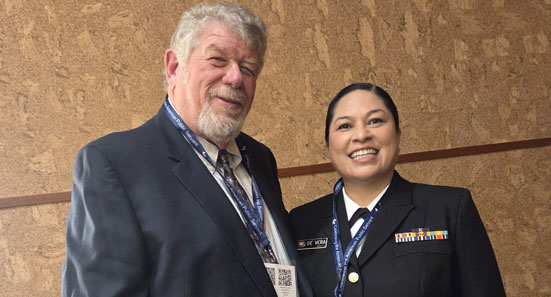
Lt Cmdr Melissa De Vera is a recent Flemming Award winner. She helped implement $3.5 billion dollar projects for clean water and improving sanitation for her agency, the Indian Health Services. This from a woman who used to get notes from her mother saying the tap water wasn’t clean today.
GoodGovernmentShow.com Thanks to our sponsors:
The Royal Cousins: How Three Cousins Could Have Stopped A World War by Jim Ludlow
- Ourco
- Good News For Lefties (and America!) – Daily News for Democracy (Apple Podcasts | Spotify)
- How to Really Run a City
- Leading Iowa: Good Government in Iowa’s Cities (Apple Podcasts | Spotify)
The Good Government Show is part of The Democracy Group, a network of podcasts that examines what’s broken in our democracy and how we can work together to fix it.
Executive Producers: David Martin, David Snyder, Jim Ludlow
Host/Reporter: David Martin
Producers: David Martin, Jason Stershic
Editor: Jason Stershic
Transcription
David Martin: This is the good government show.
Melissa de Vera: The Indian Health Service. Our overall mission is to raise the health and well-being of Native American tribes to the highest level possible. And we’re able to actually address projects that were not considered economically feasible for. Me no solution is going to be all positive. You know, there’s there’s give and take, there’s risk. There’s there’s risks in every every single solution.
You’re working with them to help them find the best solution. You’re not telling them what the best solution is.
I think I would want people to know that there are really great ways to serve the public in in government.
David Martin: Imagine you get a note from your mother telling you not to drink the water today. That’s what happened to today’s guest. And now her job with the Indian Health Service is to make sure everyone has clean water. Welcome to the Good Government show. I’m Dave Martin first. Right now, wherever you are, subscribe to our show now. Follow us on your favorite social media site.
Now that you subscribe and like us, share us. All right. Good. Thank you. Sometimes you meet people in government that just, well, they blow you away. Often their personal story explains why and how they get into public service. On this episode. Get ready to be blown away. Today’s guest is Lieutenant Commander Melissa Devera. She’s an engineer for the Indian Health Service Sanitation Facilities Construction program, and she’s also a winner of the National Academy of Public Administration and George Washington University’s Fleming Award.
Her leadership led to $3.5 billion in clean water and sanitation projects for her agency. She’s also good at recruiting others, especially other Native Americans, to come and work for the government. As she will tell you. Working for the government is a place where you can have a real impact on people’s lives. Up next, Lieutenant Commander Melissa Devera and the U.S. Indian Health Service and the Fleming Award winner.
The Good Government Show is sponsored by our. That’s o u r for our community. Get involved. We hear that all the time from government leaders. Our co-branded with your governments name and logo. Your staff and the people you serve are connected and part of your community. From any device, your members provide reliable data and meaningful feedback. Ask a question like do we want more parkland or better homeless services?
More engage conversations come through the our app. Visit our co that’s ou rco.com and book a demonstration. Once you wrap up this episode of the Good Government Show, give a listen to our friends over at Good News for lefties. This daily podcast highlights news stories that show there’s more good news out there. Other people in government are really trying to do the right thing.
That’s good news for lefties. Listen, we’re listening now. Welcome to the Good Government show. I’m happy to have with me Melissa de Vera. She is the assistant director of the Division of Sanitation Facilities Construction with the Indian Health Service. Did I get it all right?
Melissa de Vera: Yes, you did, Lieutenant commander.
David Martin: Yes, Lieutenant commander. And the. And the National Health Service. You’re an engineer? I am your arch. And you want an award? We’re here at the, Fleming Awards. We’re here at the National Academy of Public Administrations. Fleming awards. And you an award winner. Congratulations on your award. And as I understand it, it’s for two things sanitation, clean water and getting people to become also members of the Indian Health Services.
Correct. Correct. All right. Why did you get involved in sanitation? What was it about sanitation, you said. This is where I want to spend my career.
Melissa de Vera: Well, you know, drinking water and wastewater and solid waste are very glamorous.
David Martin: Very glamorous.
Melissa de Vera: Very sarcastic, of course.
David Martin: You must be funny parties. If people say, what do you do?
Melissa de Vera: Yeah. Really? You want to talk about septic systems? Yes. Yeah. So I, you know, there were you growing up? You know, I had a lot of experiences when I, you know, looking back, that really kind of impacted, in, in shape, like where my interests are going to be. So, you know, the first one is, you know, my my mother, she is, an enrolled member of the Rocky Boy Chippewa Creed.
Some I but she was actually born, outside of Great Falls, Montana.
David Martin: Right?
Melissa de Vera: At Hill 57. So I remember going to visit there because her brother and sisters, they still lived in homes that were out there and at Hill 57. And so my cousins and so they, hauled water from a community. Well. So I did not, you know, when I was a kid and we’d go visit like it never occurred to me, oh my gosh, you know, having to haul water is, a hardship.
Like it should never occurred to me. I always, like, kind of associated, you know, that time frame with a lot of love and family. So, you know, it wasn’t something that I realized later on in life.
David Martin: That was weird.
Melissa de Vera: Yeah, that it was like.
David Martin: Yeah. Well, I think I read Also normal. I read somewhere in one of the things I read about you that said, in 1952, less than 20%, less than 20% of Native Americans homes had fresh water facilities and fresh wastewater. And your mother was one of those people?
Melissa de Vera: Yes.
David Martin: Yes. 20%.
Melissa de Vera: Yeah.
David Martin: That’s a lot of folks.
Melissa de Vera: Yeah. Yeah.
David Martin: So how did you. Where this award. What wonderful thing did you do?
Melissa de Vera: So the wonderful thing that I did was, is actually with recruiting. And so I definitely my background helped. Yeah. So, you know, I think we had historically relied on interns to kind of, you know, to feed. That was our pipeline of, engineers. And so we like the rest of Indian Health Service, we were facing like vacancy rates of like 30% on average.
You know, across the board. But vacancy rates were, of course, there higher in the more remote locations. And the more remote location is, the higher the need, actually. Sure. So, what happened was the bipartisan infrastructure law, the Indian Health Service got $3.5 billion to address some sanitation, needs for tribes. And so we already had chronic vacancy rates.
So we really, really needed to recruit. So.
David Martin: How do you recruit? How do you how do you get people to come work for the Indian Health Services or come work for the government, or come work for sanitation? I don’t think anybody dreams of working in sanitation when they’re, you know, high school or college student. Do they?
Melissa de Vera: Well.
David Martin: Well, funny enough.
Melissa de Vera: It’s funny story now. So, you know, I think, like, the key to our success, with recruiting was we stopped casting a wide net. We went very, focused, and then we started to just kind of focus more on, student trying to find the students that had a public service drive.
David Martin: Okay.
Melissa de Vera: So, you know, of course, like, you know, Engineers Without Borders, students involved with, you know, with that, specific engineering society that, you know, that one was a big boon for us to find, students interested in engineering, but, you know, going really, really focus was definitely, you know, it was it was definitely the way to go for us.
We were utilizing some, tracking methods. We were, you.
David Martin: Know, the party part of your pitch has got to be. How would you like to work for the government? Make less money, work harder at being a remote location. But yet you managed to get people to sign up. How do you do that?
Melissa de Vera: You know.
David Martin: Am I wrong? I mean, that’s kind of the pitch.
Melissa de Vera: Is that is this totally the pitch? Okay, so what we so what we do is we just we just hold, we have a lot of teams or we have, we have a lot partnerships and a lot of teams. And we hold a lot of recruiting, like recruiting, like virtual recruiting events. And we just really talk about what we do.
And the students kind of tend to like, you know, they find their, you know, they they either come back and attend, additional recruiting sessions and then eventually apply or they’re like, this isn’t for me. So yeah. Yeah. And, you know, the funny thing is that, you know, at the end of towards the end of the summer, after you know, when the students have done their, internships, we have them present, tried to do like a five minute presentation, and you can always tell who was a good fit because they’ll say something like, my favorite was the wastewater lagoon.
So my favorite was the septic system there.
David Martin: What do you do where your heart is.
Melissa de Vera: Right. You’re like, no, that’s an environmental engineer. Okay.
David Martin: So we got that.
Melissa de Vera: All right.
David Martin: But I mean, you know, I want to get back to what I said because, you know, you sort of said. That’s correct. You know, you’re working with the government, you’re going to work long hours for less money at a remote location. And you. Yeah, you make it attractive.
Melissa de Vera: We’re just trying to find the mission driven students, and we’re just really focused, and they’re awesome. There’s a lot of them out there. And so I think that it’s really important to be able to give them this, you know, 2 to 3 month experience so that they can check and see if this is for them. We have had a couple of students come through.
And, you know, in the end they were like, you know what? This wasn’t for me, but it was one of the best experiences of my life.
David Martin: You’re going to deny this, but you must inspire some of these students.
Melissa de Vera: I.
David Martin: Well, they see a woman, they see an engineer, they see someone, you know, perhaps, you know, from from your same tribe. And they go, oh, well, I can do this too, right?
Melissa de Vera: Yeah. Well, I hope I hope so, okay. I hope so, and I mean, they should think, you know, like, I. Well, I always try to say that the internship is like, it’s such it’s such a, it’s such a non commitment way for both the agency and for both the student to figure out is this really for me. Because you know, you come you do you know you do two three months and you know it’s either for you and you come back or it’s not.
And you move on and you find something that is a better fit for you. So but you know, regardless of whether it’s a good fit for the student or not, I want them to walk away feeling like this was a really good experience. You know, taking something away from it. And, you know, really still feeling positive about our agency and about our mission and about what we do.
And it’s okay if it’s not for them. Okay.
David Martin: Tell me about the Indian Health Service. What’s your what do you do?
Melissa de Vera: So the Indian Health Service, our overall mission is to raise the health and well-being of Native American tribes to the highest level possible. And so, our mission so our, you know, division is, of course, you know, water and sanitation. So, you know, we’re really kind of like that foundation, you know, people want to be able to wash their hands and flush their toilets.
And we definitely want to be able to do that in hospitals and clinics.
David Martin: So, so at some point you deliver $3.5 billion in sanitation projects. Tell me what you did. Tell me what some of these projects are and what impacting.
Melissa de Vera: Well our division is still in the process of delivering those services, I think. We’re we’re actually in the last year of our, of $3.5 billion in appropriations. So that was probably just over five years. 700.
David Martin: So what are the projects?
Melissa de Vera: What are you doing? So we have projects like in Minnesota. There are some there’s a water treatment plant that’s going up that’s going to resolve some long term. Copper violations coffers, kind of a work on, you know, not one that you see very often. So that that one is going to be, I think, the first biological water treatment plant in Indian Health Service.
So, you know, we’re pretty excited about that one. That.
David Martin: Sounds like a big deal.
Melissa de Vera: Yeah, we’ve got a lot of projects. When I was kind of looking we have a lot of projects to address. You know, disinfection byproducts is another issue that kind of came up. That’s a newer regulation. Maybe not newer to the municipalities, but, newer to, you know, to the reservation, you know, to small communities. You know, a lot of the issues that our tribes face, you know, because they’re very small, very rural, are very similar to small towns also.
So, you know, the the disinfection byproducts rule really didn’t check in until like around 2013 ish. Don’t quote me on that. But, you know, we have a lot of projects to try to, address those issues. I think, that was a little bit more pervasive than maybe we previously believed it was going to be. So, that one kind of was a surprise impact on our communities.
Let’s see what.
David Martin: Else you talk about. Safe drinking water. What things did you have to do to make sure that you have safe drinking water? What are the projects that you work on for that? They must be impressive because you’re winning an award.
Melissa de Vera: It.
David Martin: Well, you don’t buy everything.
Melissa de Vera: There’s there’s all kinds of projects. Yeah. So we have, like, you know, like the we’re talking about, like, the big talk.
David Martin: About safe water, like what’s, what’s the what’s the thing that, that you’re able to accomplish, you know, to, to deliver cleaner water.
Melissa de Vera: You know, I think the thing that we’re able to accomplish, with the $3.5 billion is we’re able to actually address projects that were not considered economically feasible for, okay. So we’re able to kind of to put a dent in that need. It’s not going to resolve all of the need, but it’s going to resolve a bulk of it.
You know, the so the most expensive projects unfortunately and I mean, rural homeowners probably know this too. But, you know, our kind of like those rural homes where you can’t be connected on to, you know, where they can’t be connected to, a community water or sewer system. So you don’t get that cost savings. So we’re able to deliver a lot of individual water and, sewer to, you know, to remotely remote homes.
So and then with that, you know, we even though even though we technically don’t have to, you know, with an individual water well for an individual home, you know, the, national primary drinking water regulations actually don’t apply. But we go ahead and, you know, the the Indian house, why don’t we apply? Because it’s not a community system that those, regulations only apply to community systems.
They don’t necessarily apply to, individual homeowner wells. But we also make it our mission to make sure that, like, regardless of whether you’re on a community system or not, that you’re getting safe drinking water. Either way.
David Martin: What’s the reaction to the people that you serve on the tribal lands, on reservations? And, you know, just people who are, you know, feeling the impact of the work you do?
Melissa de Vera: I hope they’re happy.
David Martin: Is there every I mean, everybody wants clean water and better sanitation facilities is you ever push back, like, why are you doing this or why are you doing that? Or why do you have to dig up my yard? Why do you have to move that? Does that happen?
Melissa de Vera: Using you could be an it shouldn’t, it should, it shouldn’t. Usually we try to only put, you know, install services where people are requesting them. And then we also want to try to work collaboratively with the tribe. You know, one of the biggest things, one of the biggest things about, that our division, does do and just try to focus on as we try to advance tribal self-determination.
So, like with engineering or with anything, you know what that really means? That we got we need to work. We need to get to know our customer. So we need to get to know our tribes, what their needs are, what their capabilities are. And then we need to come up with solutions. And when we come up with the solutions, we need to give them all the information, good and bad, on every option, so that they can make a choice so that they can choose the solution that is best for their communities.
You know, best for, you know, for their vision for, you know, for their nations.
David Martin: And how do you help them come to that best decision?
Melissa de Vera: We give them all the information. So if so, no solution is going to be all positive. You know, there’s there’s give and take. There’s yes, there’s there’s risks in every, every single solution. And so we just need to help them identify, you know, what the risks are. And you know I don’t know necessarily what risks are acceptable. You know to you I don’t know that you’re you know, what’s what’s an acceptable risk to you is necessarily going to be an acceptable risk to me.
So we just have to make sure that we’re getting all that information out there to them, and that we’re able to communicate that the risks to them so that they can, you know, choose what they think that they can manage.
David Martin: When you talk about the, wastewater projects and clean water projects, is there any that stand out to you and go, that’s something we accomplished. That’s the one.
Melissa de Vera: Oh, let’s see,
David Martin: I have a feeling there are several.
Melissa de Vera: There are, you know, there’s there’s so many there.
David Martin: That’s good, that’s good. Very good. Clean water projects is good.
Melissa de Vera: Yeah.
David Martin: What’s the one that you like? You know, they might mention to students or say, hey, here’s here’s where we made an impact. You know, that’s what I’m kind of looking at.
Melissa de Vera: My favorite is probably the biological water treatment plant. But I’m biased on that because those that I work oh okay.
David Martin: You’re the you’re the award winner. You could be biased. Yeah. That’s okay. So tell me about it. What is it? So, it’s just a copper project. There’s something about this. The copper.
Melissa de Vera: This this this was the on and off copper violations, right? Yeah. That one. You know, that one took a lot of planning. A lot you know, a lot of, a lot of coordination with not only the tribe, but also with the, EPA. So the tricky part about getting that project off the ground, right off the gate was the fact that the pilot study, was one that is, you don’t hold that that pilot study is not really a two week pilot study, which is, I think, you know, at the time, you know, where people were really kind of targeting, you know, the studies for drinking water, the pilot study in a
biological water treatment plant actually runs a couple of months, because what you need to do is you need to give time for the microbes to grow, and then you need to give time for the microbes to mature. And then you got to let it go and you find out like what contaminants the you know, those microbes are actually going to take out before you send your water on to the next, stages of the water treatment process.
David Martin: It sounds like a lot of engineering.
Melissa de Vera: It’s actually really it’s it’s it’s it’s it’s all it is is really it’s it’s it’s you’re just you got an extra filter and you’re just feeding more oxygen and a little bit of phosphorus to feed the microbes, to get them to grow.
David Martin: You do a little faster. Accomplishments go to yes. Yeah. It’s not a big deal. It’s no big deal. I have a feeling it is. All right. That was the easy part. Are you ready for the hard part? Yeah. All right. This is the hard part. It was called the War to End All Wars. But it didn’t. Three royal cousins, all kings, one from England, one from Germany and one from Russia blundered their way into a war, a completely avoidable war that left millions dead in the trenches across Europe.
Good government show executive producer Jim Ludlow details the blunders, mistakes and bluster that started World War One that didn’t end all wars. The book The Royal Cousins details the events and creates an alternative history. Imagine if World War One never happened. It didn’t have to just read it yourself. Download the book today on Amazon. It’s just $0.99 and a timely look at history.
After you get done with this episode, hear more good government stories with our friends at How to Really Run a City for members Kasim Reed of Atlanta and Michael Nutter of Philadelphia, and their co-host, journalist and author Larry Platt talk with guests and other mayors about how to really get stuff done in cities around the nation. Check them out where you’re listening now or through their nonprofit news site, The Philadelphia Citizen.
Dot org slash podcasts.
Lieutenant Commander Melissa de Vera. You work for government. You work for the Indian Health Services to find good government. What is it?
Melissa de Vera: Well, good government is clearly good stewardship of the taxpayer dollars. I mean, I want to make sure that my tax, that my dollars, you know, are going, you know, to something that’s useful. And so I think you touched on it a little bit this a little bit earlier. And that’s really making sure that, you know, when you’re working with communities, whether it’s a tribal community or not, that you’re understanding what their what their problems are, your understanding what their capabilities are, what their resources are.
And, you know, you’re working with them to help them find the best solution. You’re not telling them what the best solution is. You’re providing them the information. And you’re you’re educating them to the point where they can make those decisions for themselves. And I think that that’s, you know, when you get that kind of buy in, I think that, you know, we can be really confident that our taxpayer dollars were were spent appropriately and in the best way.
David Martin: If people are frustrated with government, and I have a feeling that probably eventually Native American tribes on some of their tribal lands, they’re a little bit frustrated with government. What should they do? You know, specifically as it relates to, you know, the Indian health services, what should they do?
Melissa de Vera: Well, I guess you got to really figure out where you’re frustrated. Like, I would hope that, you know, I before I was in this position, I was a district engineer for Minnesota. Okay. And so if there was like an individual homeowner that was frustrated with the government, you know, frustrated, maybe, you know, with not getting service, I would hope that they would, you know, come to us directly and, you know, give us an opportunity to kind of understand what the situation is and to kind of figure out, you know, is are we a resource that they can utilize or, you know, do we need to, you know, do we need to help direct them to
another resource? So I, you know, I think I might be a little bit more on the grass roots. So I’m like, just come talk to me. I’ll come help you out. All right.
David Martin: Well, well put your number into the show. You know, some people can just call. Yeah, that’ll be great. So I know you talked a little bit about this. You know, your background with, you know, the fact that, you know, some people, some of your family didn’t have clean water. But what drew you to public service and what inspires you?
Melissa de Vera: You know, I think just knowing that what we do can improve people’s lives. And I mean, like it, it can improve their situation. And, just knowing that, you know, we can we can make a difference and that we don’t really need to have to know that person. I think that that is one of the things that draws me to public service is that I can kind of like, help somebody, but I don’t have to like, you know, to call you.
David Martin: Yeah.
Melissa de Vera: Yeah. Like I probably make a terrible nurse.
David Martin: All right, all right. Who inspires you?
Melissa de Vera: Well, I would say my mother probably inspires me. You know, she’s been in federal service for, like, decades. Since since I can remember. She’s a security manager on a naval base right now. But, you know, I, I remember she, you know, she worked her way up like I believe she started, like, as a GS. 2 or 3, like a G, a civil I didn’t even know existed.
David Martin: Okay.
Melissa de Vera: And so, you know, I think that she inspires me and, you know, just kind of, you know, watching her stick with the government, with government service for so many years. And I think that that is really inspiring. And I’ll probably only, like, make half the years that she did. But, you know, I think.
David Martin: We you probably.
Melissa de Vera: Mommy.
David Martin: All right. Think that you’re not the first person to say their mother. Were you student council president or anything like that when you were at high school or in school?
Melissa de Vera: Absolutely not. It was probably so unpopular.
David Martin: Oh. I’m sorry. Well, I doubt that. I doubt that, but did you always think that this is where you would wind up in public service, or did you. You know, I mean, you’re an engineer. Did you think about, you know.
Melissa de Vera: Absolutely not. Yeah, I had no clue. I had absolutely no clue that this is where I was going to end up. I actually didn’t know what I wanted to do, and I just started taking classes at the community college, so I didn’t know exactly. I was like, you know, I didn’t know what I was good at. I didn’t know what I liked.
You know, I really didn’t shy away from my high school experience. All right. So I, I felt like I almost had to, like, redo it again, the degree to do it again. And, I had I was actually pretty good at math. And then things just kind of developed there. And I made, you know, a lot of a lot of friends in my math class.
So, you know, friends with kids.
David Martin: More popular, did.
Melissa de Vera: I? Yeah.
David Martin: What would you like people to know about government and the the division of sanitation at the Union Health Service? And you need health service. What would you like people to know about what you do in government?
Melissa de Vera: You know, I think I would want people to know that there are really great ways to serve the public in, in government and that, you know, the, you know, the, the services. Like, I don’t think anybody thinks very often, you know, like, you know what I want to do water and sewer. And I want to do it for the government.
But you know, those jobs, they’re out there. I would say like, definitely, you know, if, if you’re, you know, if you’re if you’re if you’re struggling in any way, shape or form to like, you know, find satisfaction, there’s probably a government position out there or a government job that you can do that will bring you that, that satisfaction.
There’s just, so much good that I think that government workers do. And, you know, they do it just in so many different facets.
David Martin: Well, you’re an award winning recruiter, so I guess you’re right. You’re from Minnesota. What’s the dish of Minnesota? What’s your favorite dish up there? What do you eat when you when you’re having where you’re going.
Melissa de Vera: Yeah I’m a I’m a transplant. Oh. All right. But let me tell you you can’t leave here without, you know, the wild rice is phenomenal. Yeah. I didn’t, you know, this is real wild rice. Like, definitely make sure you take some home, okay? Wild rice? Yeah. Wild wild rice.
David Martin: Well, that it that is what, Minnesota is one of the things Minnesota is famous for. What do you do for fun?
Melissa de Vera: This.
David Martin: No good? Of course. That’s for sure. All right. I’ll go with you.
Melissa de Vera: As you know, spend a lot of spend a lot of time with family, okay?
David Martin: All right. This is the good government show. We always try to end it with a good government story. Tell me about something that you know that you were able to really feel like you made a difference in your community.
Melissa de Vera: Yeah. You know, with the recruiting, I, you know, it was one of those, like, now this just seems like too good to be true. It’s like kind of just fun. But, you know, I got one of, you know, one of the recruiting events that I went to was, you know, at the was an American Indian science and Engineering Society recruiting event.
And I ran into, you know, a lot of students there. And I got to talk to them. And I got, you know, I got to convince them that they were eligible for internships, and I got to convince them to apply. And, you know, that was really satisfying and was really satisfying to hear how well they had done. But I don’t think that it really hit me that, you know, that I can make a difference in the community until they return for tell you, no one in particular returned for a second internship.
So I know she’ll come back for a third before she graduates. And I know she’s going to come work for us. And. All right, you know, just to kind of see her build that confidence and then find her mission and, and, and find her mission with us is I think that that’s just it’s it that was probably one of the most incredible moments of, you know what?
David Martin: Well, the way.
Melissa de Vera: This is the.
David Martin: Way you’re smiling. I guess that was. Yeah. You’re you’re proud of her. That’s great. Lieutenant Commander Melissa Devera, the assistant director of the Division of Sanitation Facilities Construction with the Indian Health Services. Congratulations on your funding award. From the Fleming Award and the National Academy of Public Administration. Thanks for coming on. Thanks for sharing your story.
Melissa de Vera: Thanks for having me.
David Martin: Thank you. Want to hear more about good government? Check out another show I host leading Iowa Good Government in Iowa cities. I host the show with Brad Cavanaugh, mayor of Dubuque, Iowa, and the immediate past president of the Iowa League of Cities. Together, we talk to leaders in Iowa cities. We talk about what works and what good government looks like in Iowa.
Join us right here. We listening now that’s leading Iowa. Good government in Iowa. Cities.
We want people to be able to wash their hands and flush their toilets. Sounds pretty basic. Pretty simple right. Well for some people it wasn’t that easy or it wasn’t until Lieutenant Commander Melissa joined the Indian Health Service. When you think about public service, I hope you now think about Lieutenant Commander de Vera and people just like her. And if you couldn’t tell, Lieutenant Commander isn’t one to boast about her accomplishments.
She just goes about her work every day. By the way, there were 12 Fleming Award winners. The Academy picked Lieutenant Commander Melissa de Vera. Speak on behalf of all the winners. She congratulated the other winners. She spoke about her team and downplayed her success. That makes her a typical public servant. Well, that’s our show. Thanks for listening. Tell your friends about good government and about our show.
Don’t forget to review is and check out our website Good Government show.com for extras. Help us keep telling stories of good government in action everywhere. Join us again for another episode right here. I’m Dave Martin and this is the Good Government show. The Good Government show is a Valley Park production. Jim Ludlow, Dave Martin, that’s me and David Snyder are the executive producers.
Our show is edited and produced by Jason Stershic. Please subscribe, then share and like us and review us. That’s the best way to make sure we’re able to keep telling these stories of our government working for all of us. Then listen to the next episode of The Good Government Show.
Narrator: This podcast is part of the democracy Group.
**This transcription was created using digital tools and has not been edited by a live person. We apologize for any discrepancies or errors.