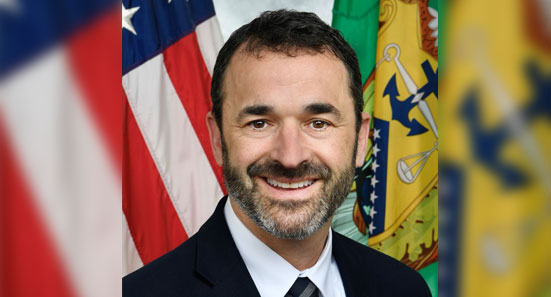
Imagine getting a call from the President to tell you he wants you to be the head of the IRS. That happened to Danny Werfel. Listen to how he explains the mission of the IRS.
For more you can listen to David Martin talk to our previous guest from the IRS: A Conversation with Kristen Deazeley Management and Program Analyst for the IRS
GoodGovernmentShow.com Thanks to our sponsors:
The Royal Cousins: How Three Cousins Could Have Stopped A World War by Jim Ludlow
- HelloNation
- Ourco
- Good News For Lefties (and America!) – Daily News for Democracy (Apple Podcasts | Spotify)
- How to Really Run a City
- Leading Iowa: Good Government in Iowa’s Cities (Apple Podcasts | Spotify)
The Good Government Show is part of The Democracy Group, a network of podcasts that examines what’s broken in our democracy and how we can work together to fix it.
Executive Producers: David Martin, David Snyder, Jim Ludlow
Host/Reporter: David Martin
Producers: David Martin, Jason Stershic
Editor: Jason Stershic
Transcription
David Martin: This is the good government show.
Danny Werfel: The IRS is actually set up around these two functions, service and Enforcement. A messy IRS, a smaller IRS, a less functional IRS does not mean lower taxes for you. Only Congress can lower your taxes. Every IRS employee earns 4 to $6. Back to the Treasury. Back to the bottom line of the US government’s finances. For every dollar we spend on their salary.
The only way to hold leaders accountable is through engagement. 90 plus percent of government is something we all actually agree on. We tend to spend all of our brain energy on the 10%.
David Martin: You’re in your office hard at work, and your assistant tells you that you have to get over to the white House, to the West Wing, and you’re about to meet the president. That’s how the former IRS commissioner found out he got the job. Welcome to the Good Government show. I’m Dave Martin first. Right now, wherever you are, subscribe to our show.
Now follow us on your favorite social media sites. Now that you’ve subscribed, like us and share us. Okay, good. Thanks. Danny. Worthless, the former commissioner of the Internal Revenue Service. Yep. The IRS actually, he’s the second person connected with the IRS we’ve had on the show. Just before Tax day in 2024. We had Kristen Deazeley on the show.
She’s an IRS community liaison. Go back and listen and you’ll learn something about the IRS and find out that the IRS is very much good government. Really just listen to that show. Okay. On this show, I had a great conversation with Danny Werfel. Just listen to tell you how he got the job. He was called from the white House to President Barack Obama’s Oval Office and also the job of IRS commissioner.
Spoiler alert he took it. Okay, here’s the thing. The IRS really doesn’t want to reach into your pocket and take your money. As Danny Werfel will tell you, what he does want is a strong, well-managed IRS that helps people and responds to what people need well enough. Introduction. I had a really great conversation about the IRS. I learned a few things and about good government and where we are in America.
Danny has a lot to say about government and the current administration. So next, my conversation with Danny Werfel, the former IRS commissioner.
We have a new partner here in the Good Government Show. Hello, nation. This is a new digital magazine that showcases the best of cities across the nation. We’d all prefer if good news traveled faster. And hello, nation. Positive stories don’t just get told, they get amplified. Hello nation helps businesses, leaders and communities share positive stories that matter building trust, credibility and meaningful connection through professionally produced podcast, digital features and targeted distribution.
Hello nation positions you is the answer regular folks are looking for while expanding and scaling your digital footprint across the platforms that people trust. Good news deserves momentum. Your city or your business can help spread the word of good news across the nation and hello nation! They don’t just have advertisers, they have advertisers. Editorial content from trusted community leaders and cities that are helping spread the good news.
Let Hello Nation lift you up and lead the conversation. Visit Hello nation.com to learn more.
Once you wrap up this episode of The Good Government Show, give a listen to our friends over at Good News for lefties. This daily podcast highlights news stories that show there’s more good news out there. Other people in government are really trying to do the right thing. That’s good news for lefties. Listen, we’re listening now. Welcome to the Good Government show.
I’m very happy to have with me Danny Werfel, the former commissioner of the Internal Revenue Service, everyone’s favorite agency, the IRS. Welcome to the good Government show. Glad to have you.
Danny Werfel: It’s good to be here, Dave.
David Martin: Thank you. There is so much I wanted to talk to you about, but first we must go back. You are our second IRS official we had on just before tax day in 2024. We had Kristen Teasley on. We had a great conversation about taxes. And I want to start off with what she said. And what I took away from that is the IRS is here to make sure you pay what you owe, not a penny more.
And they’re here to help you make sure you pay the right amount. Is she correct?
Danny Werfel: Absolutely. I mean, the underlying mission of the IRS. And it’s right in the mission statement. There’s two parts. Part one is to assist taxpayers in meeting their obligations under the tax laws. So it’s all about assistance and support. And the second part is to enforce the tax laws fairly and equitably. And the IRS is actually set up around these two functions of service and enforcement.
And both are really intended to ease the stress of taxpayers because we have a complicated tax system. It’s stressful. I’m a taxpayer. I go through the process and you do.
David Martin: Your own taxes.
Danny Werfel: I don’t comment on how I do my taxes. I look at it, but I will say that I’ve done it all. Okay. I have sampled the entire menu of how to do your taxes online with software. I’ve tried the accountant route out. I’ve done it all. And I think that’s an important part of what how the IRS serves taxpayers effectively is they keep a menu of options available and support a menu of options that taxpayers can have, all with the design of you.
Find the right filing method for you. And it should be as easy as it can be, or is less burdensome as it can be. Given the backdrop here, which is it’s a complicated set of tax laws that that we have in this country.
David Martin: When you tell people, when you told people you worked at the IRS, what was the reaction you got?
Danny Werfel: It was never a, a hug. Or twice.
David Martin: I’m sorry we didn’t shake hands with that. So does that count for something? Yeah.
Danny Werfel: Yeah, I mean, that’s part of the book. I always say it’s in the brochure of being the tax collector or being a part of the tax authority. That is, it’s not the most popular job. But I liken it, to and I said this a lot when I was at the IRS to the team and publicly, I liken it to having the role of NFL referee.
And what I mean by that is when you get the call wrong, 50,000 people will stand up and boo when you get the call, right. 50,000 people will stand up and boo. Right. Even if you can count on it and replay that you got the call right, people will still boo. But at the end of the Super Bowl, which is this amazing, a truly American event that, creates a lot of happiness and joy and economic value.
And it’s iconic. They don’t throw a parade for the refs.
David Martin: No, they don’t have a recognized. I’ve never seen a parade.
Danny Werfel: But you don’t have the game without the right. You just have chaos. So it’s okay to have a role where you get booed. It’s okay to have a role where you’re not what is celebrated. Where it becomes less okay is when we make dumb decisions. I say about the operational capacity of the refs. They should have training. We should have the right amount of refs.
They should be able to do their jobs as effectively as possible to ensure that we have a game where the right calls are made, more increasingly than the other wrong calls.
David Martin: What would you like people to know about the IRS that they don’t know?
Danny Werfel: I think the main thing that that is that is that the entire organization is set up to try to help taxpayers and I and I think the biggest thing right now, like, I could go, I can, I can basically, if you gave me a generic point in time over the last 50 years, I would talk about the IRS and their customer service and how we train people to be empathetic, and how I talked to many, many employees who think it’s their mission to ease the stress of taxpayers.
But today, right now, I think the biggest thing that I want to share with people is that a messy IRS, a smaller IRS, a less functional IRS does not mean lower taxes for you. Only Congress can lower your taxes. What a messy, dysfunctional, less capable IRS means is two things. One, they’re going to be more difficult to get to when you need them to resolve a mistake or an issue that inevitably happens in a complex tax system.
And the other means that if you play by the rules, you’re going to shoulder more of the burden of paying for our government than those that don’t play by the rules. Those are the two implications of a messy under-invested IRS with limited capacity.
David Martin: Is that where we are now with the IRS?
Danny Werfel: Well, I mean, look, there’s been a lot of the funds have been taken away. The new funds that were awarded under the Inflation Reduction Act. There’s been steep cuts to the staff. There’s been a tremendous amount of volatility around the IRS leadership. There’s been loss of institutional leadership at the IRS. I think there are risk indicators here. And there’s been rhetoric from the administration.
You know, when I was commissioner and leading up that, you know, celebrating the downsizing, of the IRS. And I don’t want that to get confused. This idea of a downsized IRS is a good thing. The way we should be talking about the IRS is, does it have the capability to do its job if it has the capability to do its job, regardless of its size?
That means less mistakes will be made. That means it’ll be able to help you more effectively meet your tax obligation file. It’ll have more options for you to file. It will be less expensive for you to file. And it will mean that, that if you play by the rules, you’re not shouldering all of the burden of paying for our government.
David Martin: I think I read recently, I think it was like something like 25,000 people have left the IRS since the current administration took over.
Danny Werfel: Yeah. So when I joined, we were and I think about, in the low 80,000 range, we went with our new resources under the Inflation Reduction Act and hired we got the staff total to about just north of 100,000. Why did we hire? We hired because at the point I took over, we had record low customer service on our phone lines or walking centers were shut down or understaffed across the country.
We had a record high paper backlog, which was, clogging up the system. We had stagnant technology on our web and our ad platforms, which meant we were not improving the functionality by how taxpayers, engage with that digitally. And we had anemic audit rates at every level, which meant, again, that those that play by the rules were shouldering too much of the burden of our tax system.
And so it is really, really important.
David Martin: Do you turn that around?
Danny Werfel: We did we absolutely turn that around by doing two things. By hiring people and technology. The reason why I think it’s important to talk about people and technology is because it’s easy to think, as we begin this AI revolution that we’re on, that you can do a lot of things without people. The reality is, is that our tax system is so large and so complicated that you need both.
And Dave, I want to tell a quick story, but I also think this is important to understand when people say, gosh, the IRS has, had 100,000 people when you were there. That seems like way too many. It’s not. And here’s the story that that amplifies that. On April 13th, 2024, two days before the filing deadline of April 15th, we had sufficient funding at the IRS to open up walk in centers on a Saturday around the country to offer last minute support for anyone who needed it.
Typically, we go by appointment. A lot of people can’t make appointments during the week because they’re working. So we opened up our offices periodically throughout filing season on a Saturday, and this was one of the Saturdays that we chose here. It’s not appointment is first come, first serve. Now on a good day where you’re fully staffed, picture an IRS walk in center, kind of like a Department of Motor Vehicles.
You can serve about 300 people through 9 a.m. and 4 p.m. in many locations. We had 1500 people online by 5 a.m..
David Martin: Wow.
Danny Werfel: So that means that hours before we were even set to open, we have to turn away 1200 people who won’t even get in. This is not about an incompetent IRS. This is about an IRS that has a lot of people that need to get in touch with it for help. And the more people we have, the more walk in centers we have, the less people we can turn away and can technology help?
Absolutely. Can you create more digital tools? So the taxpayers can get some of those questions answered digitally? Yes. But not all 1200 of those people that got turned away. So to meet the demands of of of our taxpayers for the help they need in meeting their filing obligations, you need both tech and people.
David Martin: You’ve been quoted as saying that you’re concerned about, the people that are leaving, that the leadership of the IRS is kind of walking out the door. Are you concerned for the way that the IRS is being handled under this administration?
Danny Werfel: I see risks and, I, you know, it’s very intuitive to me that as both just a taxpayer and as the former IRS commissioner, the IRS is a large scale logistics operation. It’s kind of like an assembly line incoming. You have people walk into the walk in centers, phone calls. Obviously tax forms, tax payments, correspondence, they’re all coming in the eye.
On the way out of the assembly line are checks like your refunds and your credits, your correspondence back, your audits. And that assembly line needs to operate effectively to serve our nation’s tax system well. And it operates effectively when it is increasingly modernized and and becomes more automated and therefore subject less to human error. It works well when problems are solved quickly.
When something gets jammed in the line, and it works well when you have a trained people with expertise, they know how to avoid mistakes, how to solve problems, and how to help taxpayers. And on the audit side, know where to look for tax evasion so that if you’re playing by the rules, you never get an audit letter because the IRS has clear line of sight that you’re playing by the rules.
And so they don’t bother you, they bother the the person or the business that’s actually not playing by the rules. For all of that to work effectively, you need a lot of ingredients. You need obviously a talented workforce, a trained workforce of the right size. You need a technology implementation plan strategy that’s working effectively, but you also need leaders that, understand how to solve these problems, understand who to go to, when and how to get the resources needed to, clean up things that are going wrong on the assembly line.
And when you lose subject matter experts, when you lose institutional leaders that have a lot of experience and exactly how to run this assembly line and how to keep it running smoothly, you create risk. And so I am concerned. I am a champion for an IRS that’s fully staffed, that’s fully funded, and that has a healthy mix of stable leaders with long term institutional understanding of the organization, mixed with new entrants into the IRS.
That can really disrupt old ways of thinking and help innovate. That is what I tried to bring to the IRS when I was commissioner. My concern now is that blend, that that healthy mix of new and an established feels out of kilter to me. But like everyone else, I’m I’m monitoring. I think my biggest concern, Dave, right now that I’ve articulated is that I really think a plan needs to be produced on how the IRS is going to modernize going forward to meet the, the critical mission of the IRS.
I’ve heard at a high level a discussion of how all these staff cuts and these downsizing will be replaced by technology so that the IRS can still do its job, still collect the taxes, still have good customer service, still protect the privacy of taxpayer data. They’re going to do with technology instead of the larger staff size that we had.
And my attitude is, if that can be achieved, that’s great. What’s the plan? And right now we don’t have the plan of what’s going to be modernized by when and with what budget resources to make that statement, that vision of a smaller, more tech enabled IRS a reality.
David Martin: There was some talk, you know, a while back, it seems to have died down a little bit now. Perhaps not. At one point, it was a move to hire a lot of new inspectors to go after people who weren’t paying their taxes properly. And, as I understand it, those of all the either not been hired or been eliminated, what does that mean?
Danny Werfel: Yeah, we had new funds under the Inflation Reduction Act, by the way. Those new funds were expected, according to the budget scorekeepers on Congress, they called the Congressional Budget Office as an entity in the legislative branch that essentially tracks our budget deficit. Are we growing that deficit or are we shrinking it? And when you add capacity to the IRS people capacity, these scorekeepers say you reduce the deficit because every IRS employee earns 4 to $6.
Back to the Treasury, back to the bottom line of the US government’s finances. For every dollar we spent on their salary, they earned $4 in in return. And so when you downsize from that, you lose, that revenue especially. And if you want to argue that you can replace that with technology again I go back to that may be possible, but show show me the the plan.
So I have stated that, you know, when you lose those people, when you lose those subject matter experts, you you risk growing our tax cap. What’s our tax cap? It’s the difference between what is owed and what is paid that currently sits at $700 billion a year. That is uncollected tax.
David Martin: $700 billion is uncollected.
Danny Werfel: Yeah. Uncollected, each year. And it’s the difference between what is owed and what is paid. And the idea is to shrink that again a week. That’s a lot of money. That’s, you know.
David Martin: That’s a lot of money that’s.
Danny Werfel: Like virtually the whole defense Department budget. Right? Could be funded just based on not a single increase to anyone’s taxes, just collecting what has already been assessed by Congress as the the right tax. And so this is the, you know, a real game changer if we can do a lot better, in terms of preserving our financial strength and our financial fidelity as a government, as a nation, if we, again, not new taxes, but ensure, as your previous guest so aptly put it, collect what is owed and not a penny more.
David Martin: Do people get more back in government services than they pay in taxes?
Danny Werfel: They absolutely do. And, we could do a whole separate podcast on this. Look, we have a great country, a really great country where a lot of what makes and it’s very imperfect too. It’s and the government’s imperfect. But, Dave, I would argue that the government has supported you today in ways that you have no idea that it’s supported you.
Right? It’s everything from the food you eat for breakfast to the air, that you breathe, to the safety mechanisms on the cars in your neighborhood that reduce the risk of of a car accident dramatically. The electricity that comes out of your outlets, which you don’t currently have to worry. You do not have to worry that your electricity bill next month is going to jump by 10,000%, because someone just decided that they want to exploit you as a paying customer.
There are things that you just don’t need to worry about. There are other things you can worry about. There are things that you don’t need to worry about because of the government infrastructure that’s in place to support the ordinariness of life on a day to day basis. It’s because it’s ordinary. We don’t appreciate it, but it’s all part of the compact between taxpayer and government.
I was once asked David on a podcast, what is the role of government? And, to answer that, to get.
David Martin: To that, to better. But go ahead.
Danny Werfel: You that’s my what I’d like to answer in practical terms. So I so I tell people to picture the, the frontier, the wild west, you know, and how life existed back then. Right. It was vigilante justice. It was no roads. It was, very uncertain in terms of starting a business. There’s a lot of bribes that would happen in terms of how to make sure that you could your family could be safe.
David Martin: And there was no there was no law.
Danny Werfel: There’s lawlessness, right, right on the East Coast where there was government, skyscrapers started to grow and industry and plumbing and an electricity grid and protections and and the American dream could be achieved. You could start a small business and you didn’t have to worry about bribes. And you said sometimes, but but the idea was the government was there to help prevent that.
And so all of that leads to where we are today. And I know life isn’t perfect, and I know people are rightfully frustrated with a government that can often not be as responsive as you want it to be, but everything from the minuscule probability that you’re going to get food poisoning today or something worse, and the absolutely minuscule probability of there being a plane crash, if you were to fly.
All of that is driven by government. Is a professor at Yale who I got to meet who, starts her lectures with telling the students that they got to that class today alive in large measure because of government. And she can show mortality rates based on different issues that used to like, if you go back to the 50s, the 60s, the 70s and the 80s, and you look at why people died and you see that, that those numbers are decreasing each decade they decrease.
And her research points to a government intervention. That was the causal effect of that decrease. So yeah, you get you definitely get your money’s worth.
David Martin: All right. Well, you are a certainly a good government advocate. And we’re glad to have you here. The good government show I just want to ask you you I’m looking at your resume here. You were in the Department of Justice. You worked at the US Office of Management and Budget. And, how did you wind up in the IRS?
Danny Werfel: Well, this year.
David Martin: 30 years of public service. Yes.
Danny Werfel: Yeah. So in 2013, I was, serving as the acting deputy director of OMB. I was a presidential appointee, Senate confirmed official at the white House budget office in the Obama administration. Joe Biden was vice president, at that time, as you all know. And the IRS, which wasn’t on my radar screen as a place to work at that moment, had a crisis.
There was a scandal associated with the review of organizations for tax exempt status and an allegation, a report, a finding from the inspector general that the IRS was, scrutinizing conservative organizations for tax exempt status in a in a more deliberate and aggressive way than they were scrutinizing less conservative organizations. This was a big scandal, and it led to the resignation of, many IRS leaders, including, the top, the very top of the of the organization.
And, President Obama called me in and asked me to leave my post at OMB and go be the acting commissioner of the IRS to help steward that, the agency at that time, through this crisis,
David Martin: The president asked you to do that. You have to say yes, don’t you?
Danny Werfel: Yeah. So, yes, of course. So that was my first entree. And even though he would like.
David Martin: To get called into the white House and say, hey, I want you to do this job.
Danny Werfel: It’s it’s it’s, humbling. It’s inspiring. It’s why you it’s kind of like.
David Martin: Was it a surprise or did you say.
Danny Werfel: It’s it’s no different in my it’s it’s on a level at least it’s my version of getting called out of the bullpen in the ninth inning of the World Series in game seven. That’s what it feels like. It feels like you’ve been training for this, and the leader has the confidence that you can handle this high stakes moment.
And so it is tremendously humbling and rewarding. But also when you go and you get on that mound, the lights are as bright as you can imagine and the pressure is high and everyone’s watching your every move. And for me, this moment in that moment, TV cameras at my house and it featured the featured person on Fox News every night is is not the most popular person in the world.
Even though I wasn’t there during the scandal. But of course now I was being accused of not being, you know, covering things up, even though I was all about my true north, which was to, allow the Inspector general, the Justice Room and the congressional investigators to get to the bottom of the issue and to figure out exactly what happened and to hold people accountable as appropriate.
And as importantly, make sure we still did our job in running the nation’s tax system while we were getting ourselves resettled after this very challenging moment and crisis for the organization. So that was my first foray into the IRS, and I was blown away by by what I found when I got there. In terms of a workforce that was completely committed to good government, to good tax administration, they, they cared so deeply about the mission of the organization.
It inspired me. And, and I was really, really fortunate to to have this unique experience of walking out of the commissioner’s office on my last day in the Obama administration, and then almost ten years to the day walking back into the same offices, IRS commissioner and the Biden administration and in the in the ten years in between, to grow as a person, to grow as a leader, to reflect on what I could have done better or differently during my government career, during my stint, my first stint as commissioner, not many people get a second shot, and I had that second shot and I was really appreciative of that.
David Martin: If you could be, would you still be working for the IRS and still working in government and still being commissioner?
Danny Werfel: Yeah, my term, was supposed to run to, through November of 2027, right after the election of Donald Trump. I, I got asked by Secretary Yellen if I was willing to stay on. I said, absolutely, I’m ready to finish my term. And we started a process at that point to engage the incoming Trump team to, to remind them that my term is statutory, remind them that IRS commissioners serve across administrations, regardless of who’s president.
But those efforts fell up short. And then president nominated someone else to be IRS commissioner in December, signaling the administration’s decision to go in a different direction.
David Martin: Okay, but 30 you over 30 years in public service, is that what you should be? So you should be. I mean, I think, you know, public services is your true calling.
Danny Werfel: It’s home. I will say that. Yeah. I mean, government is is where I grew up. It’s my passion and my approach in everything that I do, David, is that I don’t believe I have the monopoly on the right answer. I am constantly on a learning curve. If I were to return to government, I wouldn’t show up and say, Now I’m going to show everyone how it’s done.
I still will look around me in government and realize that I bring a lot of good experience wins, losses, lessons learned, failures, and triumphs. Hopefully, in a way, strategically to maximize the likelihood of success in any government endeavor that I’m a part of. But I also welcome input. And decisions are best made, in my opinion, by one person, but surrounded by a diverse team of, you know, and by diversity, I mean both.
I mean diverse perspectives. Diverse diversities are good thing. But diversity in terms of ideas and solutions. And then you, you, you pick what I call the least imperfect of all the imperfect options. That’s one of my favorite phrases, because when you’re sitting there trying to figure out what to do to solve a problem or to move something forward, you realize there’s no perfect paths, only imperfect paths.
Your job as a leader in public sector, and this is true in any sector, is to pick the best of the imperfect paths.
David Martin: All right, I could talk to you for hours, but I can’t. So I’m going to get to our questionnaire because we must. Are you ready?
Danny Werfel: I’m absolutely ready.
David Martin: The Good Government show is sponsored by our. That’s. Oh, you are for our community. Get involved. We hear that all the time from government leaders. Our co-branded with your governments name and logo. Your staff and the people you serve are connected and part of your community from any device your members provide reliable data and meaningful feedback. Ask a question like, do we want more parkland or better homeless services?
More engaged conversations come through the our app. Visit our Co that’s who you are Qualcomm and book a demonstration.
After you get done with this episode, hear more good government stories with our friends at How to Really Run a City for mayors. Kassim Reed of Atlanta and Michael Nutter, a Philadelphia, and their co-host, journalist and author Larry Platt. Talk with guests and other mayors about how to really get stuff done in cities around the nation. Check them out where you’re listening now or through their nonprofit news site, The Philadelphia Citizen.
Dot org slash podcasts. All right. You’ve already answered this a different way, but I’m going to ask it a different way to find good government. What is it?
Danny Werfel: Good government is the following. There’s a couple of ingredients. Ingredient one that the operations are running smoothly that they’re it’s not chaos. It is a well running ship. Whether it’s the lines at TSA, whether it is the routine or the surprise, food safety inspections, whether it’s the air traffic control system, they’re running well and they’re running at a reasonable cost, not a perfect cost, because we’re not perfect beings or perfect organisms.
So ingredients one is that the operations are running smoothly. The second ingredient is that when problems emerge that there is a plan, an engagement of visibility and accountability to solve those problems. So there’s agility and responsiveness to problem solving. The third piece, and there’s for the third piece of good government, is that there’s a broader modernization plan underway, that we’re not stagnating with these operations.
We’re figuring out how to be on a continuous improvement journey. That could be technology, that could be process improvement, or it could be just training, or people are hiring different subject matter.
David Martin: It’s always looking forward.
Danny Werfel: Yes. And the fourth and most important, I’m building to a crescendo here.
David Martin: These were pretty important. But go ahead I can’t wait for. The most important.
Danny Werfel: Is that you are being responsive to the citizen and the public, that you understand what’s missing or what’s working, that you are using the public’s perspective as the first thing you optimize for in terms of how you are taking all the steps I just described in terms of smooth operations, problem solving, and modernization.
David Martin: If people are frustrated in government overall or the IRS in particular, what should they do?
Danny Werfel: They should speak up to a variety of different channels. The only way to hold leaders accountable is through engagement. And the way you engage is different. I mean, like you could call your congressperson, you could organize a protest, you could organize a letter writing campaign, you could work with intermediaries like, dawgs or other associations that champion particular outcomes.
So if you think the government needs to be doing more to help the poor, then there are associations that you can join and contribute to and volunteer for that lobby. And amplify that. The government should be doing more to help the poor. If you think the government should be doing less to help the poor and you and you think that’s a waste of taxpayer dollars, there are ways that you can engage both as an individual and as a collective, and you don’t have to have all the money in the world or hire the smartest lawyers.
There are movements that have occurred in this country that have shifted the way our government operates, the policies, and it’s the implementation of those policies that, can go viral without a bunch of money or without a lot of powerful figures. The idea sometimes is, is the power or the, the way in which you organize. And so engagement as a citizen and starting to figure out what the right levers to pull as an engaged citizen are, are the keys to, to holding the government accountable.
David Martin: What inspired you to get into public service and who in public service inspires you?
Danny Werfel: Oh, gosh. I, I, I was, I was at scores in college trying to figure out what I wanted to be when I grew up. And, I had a professor who was, this is before between my junior and senior year, and, she was an expert on Social Security. She’s my econ professor. And she was headed overseas to help a country reform their social security system.
That was going to be her summer project. And when she told me that, it was like, it hit me like a lightning bolt. Like, this is the type of stuff I want to be doing it. It sounded important to me. It it hit me in the gut level of, you know, I don’t want to sell tires or there’s nothing wrong with selling tires, but, you know, it’s just not me.
Like I want to. I want to reform Social Security in a way that benefits people. Like that just hit me. And I realized in that moment that of all the, you know, projects or potential things that excited me the most because the list is so long, I not I articulate my leadership style. The list is long. And people that have inspired me based on on who I work for, that has inspired me.
And I’ve had the fortune, whether it was like a direct supervisor or a cabinet head or a president. I’ve working for some people that inspired me in terms of how they approach things. I think about I’ve learned a lot from different people. I learned from Jack Lew, the former secretary of Treasury and the former director of OMB.
The power of of having an encyclopedic understanding of government, but then then lifting up and managing with with deep subject matter expertise. I learned from Jeff Zients, the importance he was white House chief of staff, but also acting director of OMB. The importance of surrounding yourself with the right team of people. Don’t try to do things on your own.
I learned from John Koskinen, who was once IRS commissioner and also was, a former deputy director of OMB. Both how to run a great process. He, like, he showed me what it means to run a process. But he also is an amazing listener. He’s a leader that really has mastered the art of listening to people on both his team and the broader organization.
So I try to model my by listening skills, and I learned from another great leader from my own days named Ed, to serve on how to make decisions and be decisive. And when you make a decision, know when to do it quickly and ask for forgiveness later. When when you need to be more cautious. He has great instincts on that.
So, there are many, many others, that I could name. I do want to pause on Janet Yellen, in particular. And, and Wally Adeyemo, who are my two most recent leaders. I learned a ton from Janet and Wally. Wally who who happens to be a lot younger than me, but a lot wiser than me, is extraordinarily calm.
Under the, under under in high pressure situations and always is the clearest thinker, when, when, when the environment feels chaotic. And I think Janet just has all of these characteristics. She’s a true public servant. She inspires people. She cares deeply about the mission of the organization. She cares deeply about the people inside government. She is a great example of how you can be an amazing person with amazing power.
Okay. It’s like typically when you when you map out power, like the altruism or the the genuineness or the wonderfulness of the person. And you think about, here’s this woman who’s been chairman of the Fed and Secretary Treasury, but you take a step back and she’s like just the warmest, most wonderful, caring, loving person. Like, that’s an incredible combo that doesn’t get talked about enough.
So I’ll land on maybe Janet.
David Martin: All right. So those are those are such a good people to be inspired by now in your career. You’re a lawyer. You had, you know, you worked in Department of Justice Management budget. You know, you could have stepped out of government service at any time and probably tripled your salary. What kept you in in government?
Danny Werfel: Well, I did do a I mean, I, I am a big believer that you should be involved. I spent time in the private sector. I, I as you accumulate my career, which is now nearing three decades, I spent nine years in the private sector and that was very, very important towards my development as a leader, understanding a different industry and seeing different leadership challenges in a different environment in a private sector environment, understanding how the government serves or frustrates the business community from an outside perspective, I when I job coach people or advised people on their career, I am not one of these people that like talks down on the revolving door.
I think that’s just a negative connotation. I think we’re at our highest and best career paths when we’re experiencing different sectors. Hopefully the the end game is to come back to government and to public service. Your private sector stint is your learning moment. Your public sector stint is your home. That’s how I view my my career trajectory.
David Martin: What would you like people to know about government that they don’t know?
Danny Werfel: Gosh, I really do think, David, that America needs a civics lesson. I think it’s what we talked about earlier is that a lot of what government is doing is helpful but invisible. You know, you don’t realize that the life we lead, everything from the fact that you’re not getting price exploited on your next taxicab drive that, that I live in today.
David Martin: Be careful.
Danny Werfel: Yeah, well, you’re not in the highways. Irrigate. If you get on the Jersey Turnpike and it’s raining, it’s likely not going to flood again. I go back to just the basics that we should try every once in a while. Not to take for granted those basics of of food safety, air safety, water safety, that when you dial 911, you know that the fire department is is is going to come.
I sometimes, for whatever reason, I often think about, the baby Jessica down the well. Right. And and who are you going to call in that moment? It’s a moment where the entire country comes together. But it’s really about, it starts with you need the government to come in and help when something like that happens. The biggest thing I want people to know is that 90 plus percent of government is something we all actually agree on.
We we tend to spend all of our brain energy on the 10%. We spend our brain and energy arguing about immigration and gun control. Yet we all agree that the trash should be picked up on Thursdays. We all agree that, that the food us and our children and our parents eat should be free of foodborne illness. We all agree that it’s a bad thing when planes crash into each other and on and on, and on.
And, and that’s what I interesting perspective.
David Martin: You know, it’s something people don’t think about that much. But what’s the best part of being the IRS? Commissioner?
Danny Werfel: Well, I thought my best moments,
David Martin: Just the best part of the job. I mean, what was this thing?
Danny Werfel: It’s the people engagement. The best moments is that you really do have an impact on people. And so whether it’s the the woman in the church basement in Chattanooga, Tennessee, who just had benefited from a volunteer tax prep program that the IRS helped sponsor, asking me for a hug became because of the help the IRS provided.
David Martin: You said you didn’t get hugs and you just tell me you did. So yeah.
Danny Werfel: Yeah. It’s also that the impact you have on employees, you know, the when you take a punch for them in terms of like a, a rough hearing or a bad op ed in the Wall Street Journal and you know, that that you’re taking that punch so that they don’t have to because we’re doing a mission that isn’t easy.
So believe it or not, sometimes it’s the adversity that I enjoyed because that adversity allowed me to shoulder the burdens of a, of a workforce that I cared deeply for. So that to me is it’s all about people. And the best part about being the IRS is that you can have impact at scale. But I also have moments with each individuals.
Some of these individuals, we’re really comes home and hits you in the heart.
David Martin: Other than doing your taxes, what do you do for fun?
Danny Werfel: For fun?
David Martin: Well, you’re a local mayor. I ask you, what’s your favorite dish in your hometown? But since you’re not a local there, you know, I’ll let let’s. What do you do for fun? I mean, I know.
Danny Werfel: I like to, to bike ride, especially when it’s warm. Although I have a rule. Dave. Yes. I have been implementing, for decades now, which is I don’t bike ride if the degrees outside is, less than my age. And this is Fahrenheit, right?
David Martin: Okay.
Danny Werfel: So I’m now 54, so I’m running out of days in the year where I can bike. I doesn’t have to move to Florida or something. So. But I do love to bike ride. And more recently, been getting into golf. My son likes to golf, so it’s a really nice ride that he and I can do together. Sure.
David Martin: This is a good government show. We always like to bring it back to good government. Tell me about a good government project that you did at the IRS that you’re pretty excited about, are pretty proud of.
Danny Werfel: There’s so many I, I mixture I know I’m even though it just got canceled by the Trump administration. My favorite is direct File. And here’s why. We we it’s because because they’ll be they’ll be benefit of that.
David Martin: I’m glad you brought this up. This is in my notes. Thank you. Yeah.
Danny Werfel: Benefit for years to come. So direct file is it was a new program at the IRS where we created a project where taxpayers can come and file online for free. You know, some people would say, wait a minute. You couldn’t previously file online for free, not direct with the IRS. You had to go through a, a program called Free File, where you work with a private sector company to see if you could be eligible for the free version of their product.
And there were a variety of customer, complaints or concerns from taxpayers with the Free File program. It wasn’t performing to many people’s satisfaction. So we launched one at the IRS. We did it relatively quickly after I got there. And the reason, even though, is it’s been since canceled by the Trump administration, I’m proud of it, that it worked very well.
And the time I was there, but I think it will have a lasting legacy in the file in two critical ways. One, it demonstrated that the IRS can do agile tech, customer facing tech and goes back to that definition of good government. We talked about earlier on. Right. We were able to put out a high performing, high stakes product.
In short order, and hopefully that’s a roadmap for other types of technologies at the IRS and beyond for how to do it. There’s a lot of really strong lessons learned for that. I get asked about a lot what went right or what didn’t go wrong. That allowed the direct file product to launch. You know, the IRS is always thought of is like technologically challenged.
Here we did something really cool and successful. How so? There’s lessons learned there. And second, though, in the wake of it’s canceling, the current Treasury issued a report, where they, really put put a challenge to the private sector to improve the performance of the free file program. So while direct file doesn’t exist anymore, I wish it did.
It really kind of places new accountabilities on the private sector to improve the performance of the existing free file program. So I hope that will have lasting benefit.
David Martin: We didn’t get a chance to talk about this, but you’re a fellow at the National Academy of Public Administration. Are you helping other governments with your expertise?
Danny Werfel: Yeah. Well, my, my my primary role we’re I’m talking to you from is from Johns Hopkins University. They’ve launched a new school of government. And policy. And I’m part of, like, the founding team standing up a new public policy in government school, which is a really interesting thing to do. And a real huge opportunity in 2025. I also have a fellowship at Duke where we’re, and that project and their my fellowship is about literacy and civics, and how to give America a civics lesson.
So we’re doing research there. In the meantime, I am doing a lot of speaking publicly and writing, on topics ranging from from AI and governance. And so, yeah, I’m staying active for my main seat. These days is, is a.edu versus a.com.
David Martin: Well, and you are certainly seem to be talking about good government everywhere you are. We are trying to do the same. I hope we’re being helpful.
Danny Werfel: Absolutely. I, I really enjoyed being on Dave.
David Martin: Listen, thank you so much. Thank you very much for your time. You are our second IRS guest. And my big takeaway from this, from both conversations I’ve had about the IRS, is more IRS agents, more IRS and staff is better. And, they really are here to help you.
Danny Werfel: Absolutely.
David Martin: All right. Danny Werfel, the former commissioner from, the Internal Revenue Service, a current fellow with the National Academy of Public Administration, starting a new school at Johns Hopkins University. You’re staying busy. Thank you. And thanks for coming on.
Danny Werfel: My pleasure.
David Martin: I want to hear more about good government. Check out another show I host leading Iowa. Good Government in Iowa cities. I host the show with Brad Cavanaugh, mayor of Dubuque, Iowa, and the immediate past president of the Iowa League of Cities. Together, we talk to leaders in Iowa cities. We talk about what works and what good government looks like in Iowa.
Join us right here. We listening now that’s leading Iowa. Good government in Iowa. Cities. No chaos. That was the theme Danny Werfel repeated a few times. I don’t think I ever thought of it this way, but a bigger, fully staffed IRS is actually good for all of us. And it’s good government. 90% of government we all agree on, Danny said.
Good roads, clean air and water and that’s good government. I hope you like the conversation as much as I did. It does make you think about the IRS a little bit differently. At least it does for me. That was Danny Werfel, former IRS commissioner, National Academy of Public Administration fellow and an enthusiastic supporter of good government. Well, that’s our show.
Thanks for listening. Tell your friends about good government and about our show. Don’t forget to review us and check out our website. Good Government show.com for extras. Help us keep telling stories of good government in action everywhere. Join us again for another episode right here. I’m Dave Martin and this is the Good Government show.
The Good Government show is a Valley Park production. Jim Ludlow, Dave Martin, that’s me and David Snyder are the executive producers. Our show is edited and produced by Jason Stershic. Please subscribe, then share and like us and review us. That’s the best way to make sure we’re able to keep telling these stories of our government working for all of us.
Then listen to the next episode of The Good Government Show.
Narrator: This podcast is part of the democracy Group.
**This transcription was created using digital tools and has not been edited by a live person. We apologize for any discrepancies or errors.