You got your Oscars, your Pulitzers, your Nobel, and there are the Flemming Awards. Never heard of them? If you work in government or public service then you know what they are. Given this year to 12 individuals in government who have a brought about change in government through public service. Flemming Award President Kathryn Newcomer joins us to talk about the award, the winners and public service.
GoodGovernmentShow.com Thanks to our sponsors:
The Royal Cousins: How Three Cousins Could Have Stopped A World War by Jim Ludlow
- Ourco
- Good News For Lefties (and America!) – Daily News for Democracy (Apple Podcasts | Spotify)
- How to Really Run a City
- Leading Iowa: Good Government in Iowa’s Cities (Apple Podcasts | Spotify)
The Good Government Show is part of The Democracy Group, a network of podcasts that examines what’s broken in our democracy and how we can work together to fix it.
Executive Producers: David Martin, David Snyder, Jim Ludlow
Host/Reporter: David Martin
Producers: David Martin, Jason Stershic
Editor: Jason Stershic
Transcription
David Martin: This is the good government show.
Kathryn Newcomer: Arthur Flemming wanted to retain the best and the brightest. He didn’t want people who are doing wonderful things to leave.
What we like to say is that the Flemming Award winners go beyond they. We always say, you don’t get a Flemming Award for just doing your job.
We have had literally billions of dollars savings over the years due to the fantastic work of these Inspector General.
As a matter of fact, I developed a whole class on change leadership within the public sector, and we select heroes in the federal government. There are so many heroes who were never going to be able to acknowledge them all.
David Martin: You’ve got your Oscars, your Pulitzers, your Nobel and the Flemming Awards. Never heard of the Fleming Awards? You’re about to. This year’s award winners did some remarkable things in government. So be ready to be amazed by government workers. Welcome to the Good government show. I’m Dave Martin first. Right now, wherever you are. Subscribe to our show. Follow us on your favorite social media sites.
Now that you’ve subscribed and you liked us, share us with your friends. Well, good. Thanks for doing that. On this show, we’re meeting Catherine Newcomer. She’s the president of the Flemming Awards. She has a tough job. She and her committee sift through nominees to find 12 people who did excellent, amazing, outstanding work for the government. I met many of these people.
They are an impressive group. They did it, they said, because it’s what they do strive to improve government for all of us. For 76 years, a National Academy of Public Administration has honored government workers with a flood of awards. It’s one of the oldest awards given from outside of government for people in government. They’re nonpartisan. It’s about the work and service to the government.
And that friends and neighbors. That’s good government. Coming up, Kathy Newcomer, president of the Fleming Awards Commission, given by both George Washington University and the National Academy of Public Administration.
The Good Government Show is sponsored by our. That’s o u r for our community. Get involved. We hear that all the time from government leaders. Our co-branding with your government’s name and logo. Your staff and the people you serve are connected and part of your community. From any device your members provide reliable data and meaningful feedback. Ask a question like do we want more parkland or better homeless services?
More engage. Conversations come through the our app. Visit our co that’s ou rco.com and book a demonstration.
Once you wrap up this episode of the Good Government Show, give a listen to our friends over at Good News for lefties. This daily podcast highlights news stories that show there’s more good news out there. Other people in government are really trying to do the right thing. That’s good news for lefties. Listen, we’re listening now.
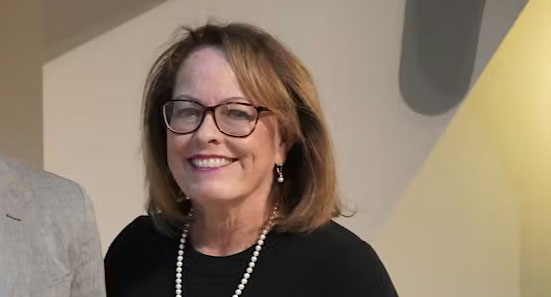
Welcome to the Good Government show. I’m happy to have Katherine Newcomer. She’s the president of the Fleming Awards Commission. And we are here for the Fleming Awards in Washington, D.C.. You have a very impressive and long title. Could you introduce yourself?
Kathryn Newcomer: Yes, I’m happy to. I am delighted to be with you today. I am Kathy Newcomer. I am a professor, but I’m also the director of the School of Public Policy and Public Administration at the George Washington University, where I’ve been for a very long time. I am also a fellow of the National Academy of Public Administration. And so being involved with the Fleming Awards, it helps that I’m involved in both.
So sure. I’m sure. So we at George Washington University essentially took over hosting and coordinating the whole awards, process of selection and ceremony about 25 years ago. This is the 76th year of the awards. And and I’ve actually been involved in a third of that time as we the awards go back a little early to 1948, when Arthur Fleming, who was an outstanding public servant already starting, you know, earlier part of his career, was asked, what was needed.
And he said, we need to do a better job of recruiting, but also retaining great leaders in the federal government. He served presidents from FDR to Clinton, and he led a variety of agencies, including. It was then now HHS president of several universities. And he exemplified the ultimate public servant who was all about doing it to better conditions for the public, and particularly those least, well-off in society.
David Martin: So we are the good government. Shall we call ourselves the voice of public service? And I’m embarrassed to say I had not heard of the Fleming Awards until, this year, fairly recently. How big a deal are the Fleming Awards?
Kathryn Newcomer: They’re a really big deal. They’re the oldest award from outside government, and they are totally separate from any partizan kind of activity. We and are not chosen by people within government there. It’s a very selective process. The winners must be nominated by their agencies, the head of the agency, it needs to sign off, and the agencies have a limited number of people they can, nominate.
Going back to 1948, some of the people that won back in the day, by the way, back.
David Martin: In the day.
Kathryn Newcomer: Back in the beginning, it was men under 40 that were, that were so late. But when we took over, we well, it changed to include women in the early 70s and actually.
David Martin: Listen to that long.
Kathryn Newcomer: Elizabeth Hanford Dole was the first woman, by the way. Oh, Liddy Dole. And then, when we took over, we said, can’t have age discrimination. But the point is this now, people may enter government, maybe when they’re out of college, but maybe when they’ve been a successful accountant or researcher and they enter later and that’s fine. We now continue to limit the, the awards to people who have only been in government 15 years or less, which means that they’re still at the.
David Martin: House of 50 years or less.
Kathryn Newcomer: Yeah. Instead of saying they have to be 40, right? Yeah. But the.
David Martin: Point is that so you a lot of young people or a lot of people who are sort of somewhat new to government or somewhat new to government.
Kathryn Newcomer: Service, well.
David Martin: Are the winners.
Kathryn Newcomer: Again. Arthur Fleming wanted to retain the best and the brightest. He didn’t want people who are doing wonderful things to leave. Right. That’s why he went to give an award to the people, to encourage them to stay in. Now, now, that might be an, again, an accountant or a doctor or a lawyer who has already had a private sector career and wants to do good for the public good, maybe get awarded and therefore encouraged to stay in as well.
The people who won are, early in their careers are people who you’ve heard of like, John John Chancellor, Neil Armstrong, Paul Volcker, Dean Darrow, whose they had just just finishing his 15th year as the head of Gao. Oh, Tony Fauci, Robert Gates, who later became, secretary of defense. These are people that were already doing.
David Martin: That impressive lineup. Well, you, Armstrong, Doctor Fauci.
Kathryn Newcomer: And we have also Bill Phillips, who won the Nobel Prize in physics after we gave him an award, by the way.
David Martin: And so you recognize his brilliance first?
Kathryn Newcomer: Yes, I did, and and what’s neat about Bill is that he’s still at the physics laboratory at Ernest, and he frequently will come to our award ceremony. And he says people always say, why do you stay in government? You can make more money outside. And he talks about how valuable it is to be in an environment where everybody’s working in the public good together.
They’re not doing it for the money or for fame, but because they enjoy doing the right thing for the right reasons.
David Martin: And I’ve talked to so many people in, in government who have echoed that. Those comments is, you know, this is my passion. Parks are my passion. Clean air. Clean water is my passion. That’s why I’m staying. That’s why I’m doing the most good I could do. You know, this is the 76 year you said. You know, I looked at some of the people that were award winners.
Some of them I still don’t understand exactly what they were doing, because it’s some of this work is extremely technical, technologically advanced. Real science, if you could just kind of which of these awards I know you I’m sure they’re all very important. Any of these stand out for you as being like, wow, I had no idea we were doing that.
Kathryn Newcomer: Well, the ones that I can’t understand the science are the ones that probably are the most impressive. Probably because,
David Martin: Because I don’t understand them either.
Kathryn Newcomer: Yes, they are, pretty crazy, but the there’s also it’s not just we have several categories. There’s basic science. Those like the ones we can understand. Right. There’s applied science. And that’s a lot of things with like into big data and and AI and so on. There’s legal achievement, there’s social science and, and research and there’s leadership and management.
And many times we you can understand the leadership and management. But there’s also important, leadership roles that people take within science organizations because, for example, they’re leading, task force that include people from a variety of agencies and other countries as well to do really good things. And sometimes we can actually understand what they’re trying to do.
You know, for example, last year someone came up with a better way to, to test the existence of diseases by, by tests of water in the, in the rivers in, in a locale, for example. Okay. So advances that make things easier and cheaper to accomplish for things that we want to do. The woman from the Indian Health Service this year, for example, has an amazing origin story she, her mother told about, being on the reservation and caring, big, you know, gallon jug of water to be able to have fresh water when she was young.
That woman now has is in a position where she can affect the, access to clean water on Indian reservations across the country. And and by just putting her head down and working and realizing, from her firsthand experience, the needs out there, it’s pretty incredible.
David Martin: I think I read that her mother would leave a note on the on the kitchen table and say, don’t drink the water today. Yes, yes, yes. And now. And apparently she’s turned into quite a government recruiter as well. Yes, yes. So we’re we will be talking with her. When you read through these, are you like what’s your reaction when you see some of these applications.
Kathryn Newcomer: So what’s interesting as I mentioned, the three different levels of judging. And we have first people that have the actual technical expertise to look at, for example, the science or the applied science and all of them really we have and people who have had government experience. Then it comes to our level. I’m the president of the commission, and then we send it to judges who select.
And it’s hard because there’s so many good people, it’s hard for them to, to select a narrow to just 12. We try to have.
David Martin: How many, how many do you. 12.
Kathryn Newcomer: Oh, well it depends. Every year it varies. But remember the agencies are limited to how many they can nominate. Right. There’s also there’s like.
David Martin: 100 or like 50 that you have to culture.
Kathryn Newcomer: More like 50. Okay. To get 12 and, and it varies, but.
David Martin: That means that there’s 50 people in the federal government who are Stuart, who are doing incredible work.
Kathryn Newcomer: Oh, there’s probably hundreds. We could add hundreds. Yeah.
David Martin: Because for the purposes of the award, there’s at least 50. Yeah.
Kathryn Newcomer: Well, because there are some agencies that never, get around to, to, you know, nominating. Oh, I think that the thing is there are awards within government. The presidential rank awards and so on, where within the agencies they’re used to nominating for that. Okay. But it’s hard for them, you know, and like, you didn’t know what the Fleming Awards were.
There’s still a lot of people. Thanks for bringing that up a good. Yeah. There I don’t know what they are either. Yeah. And that’s why we’re always trying to get more visibility because we want more nominations. There’s so many people that are deserving of of the kinds of accomplishments are pretty incredible. For example, we typically always have a winner from the Government Accountability Office, Gao.
And many people think, oh, wait, are they just the auditors? But no, in fact, they do all kinds of amazing research that helps to advance our understanding of where we need to, you know, do better or, what kinds of, of, coordination we need across agencies to better accomplish, what we’re doing. But typically the of the Gao award winners are, getting that for the amazing work that they’ve done, in terms of coming up with solutions, for example, this year, Heidi, a Nielsen, worked on, a way to, to estimate lump sum payments for previously uncompensated victims of the 9/11 attacks.
So you might say, well, wait, is this like historical research that we’re going back, but these are ongoing, challenges that the government is having. And there are lots of excellent researchers that ago I probably have 200 of my answers.
David Martin: In just a couple of blocks north of the Trade Center. Good for her. I hope she continues her work. I continue to get regular letters and mails from the, 911 victims compensation part. So good for.
Kathryn Newcomer: Her. Well, it’s.
David Martin: A good award, I.
Kathryn Newcomer: Think. Yeah. People aren’t aware, that the work that Gao, for example, does to continue to push the edge, to come up with solutions.
David Martin: So brag on a couple of people. Who else’s impressed you this year?
Kathryn Newcomer: So I also would mention, Nick McDaniel at who was previously at the Department of Justice in the Environmental and Natural Resources Division and basically did a which was led the effort. And by the way, these folks are always saying, well, I led an effort. I never do anything by myself, but led an effort to have a $1.675 billion Clean Air Act penalty for, an engine manufacturer.
Right. And the again, the people that are working on a daily basis, it Department of Justice to go and stop bad environmental, you know, damages. Right. On our behalf.
David Martin: That sounds like good government to.
Kathryn Newcomer: Me. It it absolutely is. And they win, you know, and they continue working on again to to push the edges.
David Martin: Who else?
Kathryn Newcomer: So for example, some young Pi, who’s a pediatric hematologist oncologist and physician scientists. So even their titles are impressive.
David Martin: Right. Right.
Kathryn Newcomer: Has worked on, the treatment of ultra rare inborn errors of immunity. And, so coming at, you know, looking into some of the ailments that that babies come into the world with, they’re doing some amazing research. And yet do most of us don’t even know he’s at the National Cancer Institute. Lots of research. Goes on.
David Martin: How many of these people just kind of went to work one day and looked at what they were doing and said, you know what, there must be a better way. And, you know, sometime later there are funding award winner.
Kathryn Newcomer: I think that that’s probably true. I think that Paul Volcker back in the day, Tony Fauci back in the day, Elizabeth Dole, they Elizabeth Hanford back then, were what we like to say is that the Fleming Award winners go beyond they we always say you don’t get a Fleming Award for just doing your job. And so, like you said, they are the ones that, for example, are very active in, in science fairs, bringing in high school students into the labs at Nest or wherever to expand the impact the of the federal government beyond just within the walls of government agencies.
David Martin: When you read these reports and you read these studies and the applications for the award, how often you come and say, I had no idea anyone in government was working on this. And how many times do you say, how did they think of this solution?
Kathryn Newcomer: Every year when I read the applications, it is amazing. And for example, a bunch of the award winners I work for the air Force, for example, and the Navy. There are people that are doing lots of amazing research in the Navy and Air Force and Army, and these folks are nominated each year. We have a winner this year who teaches at the Coast Guard Academy, but and has done amazing things as a Coast Guard officer who knew, who knew that, that there’s research in the public interest that’s going on in places that you didn’t even, you know, think.
David Martin: As president of the Fleming Awards Committee, is there something that that sort of unites all these people together, all these award winners.
Kathryn Newcomer: Clearly, is the commitment to the public service and to democratic governance and to state making sure that we have the best possible government to serve the public.
David Martin: We here in Washington, D.C., we were recording this, in November, a rough time in.
Kathryn Newcomer: This is the first time that we have ever celebrated the Arthur Fleming Awards during a government shutdown. And in fact, a month ago, I was running around like, are we going to do it or do it? Should we cancel? It’s been extreme. It’s very, very stressful time.
David Martin: Does the Fleming Awards, should it be something that should give us hope about government?
Kathryn Newcomer: Absolutely. The the all of these, these winners and the one winners from each all of the years before continue to do this outstanding work for the public interest despite what’s going on outside, despite the arguments that are going on, whether it’s in the Senate and the House and spill over, there, they continue to put their heads down and work the the folks in the physics lab at Nest are not concerned about what’s going on.
They just continue to do the work.
David Martin: I want to get into our are we we asked a series of questions that are here. I guess before I do that, there’s two things I wanted to ask you about. Apparently you’ve published ten books. One of them is U.S. inspectors general truth tellers in turbulent times.
Kathryn Newcomer: It’s funny you bring that up.
David Martin: Funny? I bring that up.
Kathryn Newcomer: Yes. So, yes.
David Martin: What do we need to know about inspectors general?
Kathryn Newcomer: So Inspector General’s, at, my book is about, along with Charlie Johnson, an excellent political scientist from Texas A&M. Our book basically tells everything you want to know about federal inspector general’s. They do have them at other levels of government, but they, they perform an amazing role to improve government agencies work by looking for ways to improve systems and reduce fraud, waste and abuse by coming up with solutions that may be, changing processes, but also maybe getting rid and prosecuting of bad contractors who were, you know, doing things in a fraudulent manner.
They have a unique role because they answer to both the Congress and to the president. So, as many have said, they walk a barbed wire fence between the two because should they be perceived to be too pro one agent one, either the Congress or the white House, then they lose their credibility. The we have had literally billions of dollars savings over the years due to the fantastic work of these inspector generals.
And as I said to many reporters back in December that it is very, very sad day for America that the attack on the inspector general has gone on and so many have been fired, and most recently their organization, Sigi, was removed.
David Martin: And without them. What what does that mean to government?
Kathryn Newcomer: We don’t have people that are constantly working to try to improve the processes contracting, for example, reducing fraudulent, behaviors and government. And it makes me very, very concerned.
David Martin: I’m going to change gears. Another book you wrote, it’s called Nonprofit Organizations Stewardship for Leading Change. Now, I’ve talked to lots of people in government, and one of the things that everyone emphasizes is a public private partnership. Is that what you’re talking about here?
Kathryn Newcomer: Actually, no. We’re talking about what does it take to lead change and change organizational cultures to be we call it change centric, to be constantly looking for ways to think outside the box, do things a different way to improve what they’re doing. So and as a matter of fact, I developed a whole class on change leadership within the public sector.
Most people think about that being a business school class that like, how do you change to get a better ROI within your firm, but dealing with in within the public sector, you have partnerships that involve public agencies, nonprofit agencies, as well as private contractors. So it actually makes it more complex to achieve goals. When you have a variety of partners that need to think, you know, along the same way to achieve,
David Martin: It sounds like you need to read the book. We have to talk again.
Kathryn Newcomer: Yeah.
David Martin: Okay. All right. That was the easy part. So coming up, we’re gonna get to the hard part. It was called The War to End All Wars. But it didn’t. Three royal cousins, all kings, one from England, one from Germany and one from Russia blundered their way into a war, a completely avoidable war that left millions dead in the trenches across Europe.
Good government show executive producer Jim Ludlow details the blunders, mistakes and bluster that started World War One that didn’t end all wars. The book The Royal Cousins details the events and creates an alternative history. Imagine if World War One never happened. It didn’t have to just read it yourself. Download the book today on Amazon. It’s just $0.99 and a timely look at the history.
After you get done with this episode, hear more good government stories with our friends at How to Really Run a City for mayors Kasim Reed of Atlanta and Michael Nutter, a Philadelphia, and their co-host, journalist and author Larry Platt talk with guests and other mayors about how to really get stuff done in cities around the nation. Check them out where you’re listening now or through their nonprofit news site, The Philadelphia Citizen.
Dot org slash podcasts.
So we have a question here. I like to, got to talk to folks about from where you sit, you’re a government professor. You’ve here in Washington define good government.
Kathryn Newcomer: Good government, consists of having very well trained personnel whose allegiance is to adhering to the Constitution of the United States and the to the rule of law, and to serving the American public to the utmost of their abilities.
David Martin: When people are frustrated by how government is working, either you know, in their town, in their city, in their state, or even federally, what should they do?
Kathryn Newcomer: They should make their views known. Go to the the City Council meeting on Monday night, or, contact the public Affairs office of the particular federal agency, whether it’s the post office or nest or wherever, but become knowledgeable about where are the your those, entry points to say something.
David Martin: That could be heart you got, you know, a job the family you know that’s hard. What do you tell those.
Kathryn Newcomer: Folks that, persist and find other perhaps, groups in their communities that are already doing this? They don’t have to start and do this on their own. There’s lots of of interest, good government groups. So to speak, good government, interest groups that are out there and, find one an affinity group that, for example, what do you what are you interested in?
Environment. There’s lots of of groups that you can go to that are already trying to make their views known to government agencies.
David Martin: What drew you into this world of public service?
Kathryn Newcomer: I was very fortunate to get a job in public, the public administration department at the George Washington University 40 years ago. And, I’m a political scientist, and I’m interested in how government works. That’s what I went to graduate school for. And I was able to teach students here in the nation’s capital that want to work in the public interest.
I couldn’t ask for a more rewarding career.
David Martin: Who inspires you?
Kathryn Newcomer: Leaders. People like, Thad Allen, who? One of my students who was common in the Coast Guard, led the response to, Katrina and then to the BP oil spill for example, who continues to speak out for doing the right thing in terms of our national defense, in terms of the law of the sea, people like him who though he’s retired from, his day job, is continuing to do fabulous work, to pursue the public interest.
David Martin: What would you like people to know about government that they probably don’t know?
Kathryn Newcomer: That there are dedicated, committed, and highly skilled people who they would be absolutely impressed to meet, to have dinner with, to be, to learn what they do and to just to read the the blurbs about our winners would probably shock most Americans.
David Martin: Okay, well, I like I said, I’ve read some of these and like this is impressive. I’m not quite sure I understand what this is, but it sounds important. This is a question I usually ask local mayors what I’m going to ask you anyway. You said you lived in Iowa. You’re from Nebraska. What’s your favorite dish? Where do you go?
Home. What? He.
Kathryn Newcomer: Well, well, I grew up in Nebraska, Omaha, Nebraska, and had meat and potatoes every single day of my life.
David Martin: And now.
Kathryn Newcomer: Now. Really good. Well done. Well prepared crab cakes.
David Martin: Crab cakes.
Kathryn Newcomer: Well, I live in Maryland.
David Martin: Yes. Okay, that makes sense. What do you do for fun when you’re out there with your dog? Reading the papers of worrying about government?
Kathryn Newcomer: Well, I have four children and 11 grandchildren, eight of whom are eight and under. Okay. And I see them all the time I went. I’ve gone.
David Martin: To babysitting detail every.
Kathryn Newcomer: Once in a while. Well, sort of. And I went to, I’ve gone to more baseball games than you can imagine. I’ve been to three this weekend for, oh, my, my, 12 year old grandson and watched him play, in Cooperstown, New York last summer for a week. All right. And I’ve gone to probably thousands of swim meets.
All four of my children, swam. And I always take papers to grade.
David Martin: Yeah. You’re the one sitting up there with a stack of papers of your life as you’re like, what is it? That’s you. Okay. All right. What’s the one thing you’d like people to know about the funding awards?
Kathryn Newcomer: We select heroes in the federal government. There are so many heroes who were never going to be able to acknowledge them all. But the fact that we already have acknowledged over 700, that any young man or young boy or girl could aspire to be heroes like them.
David Martin: This is called the Good Government Show and how he’s in this with good government. Tell me about a good government project that through the Fleming Awards that you saw that you went, wow, this is the one that that this is the impressive one.
Kathryn Newcomer: Wow.
David Martin: This I putting you on the spot. Is there is there is there something that you just when you said this and you went, you know, like looked at this and said, this is what government service is about. This is the one I’m going to use as an example in my class.
Kathryn Newcomer: You know, the Indian Health Service is something that probably most Americans have no clue exists. And the fact that they are still continuing to push forward and to figure out what kinds of better services and better ways to improve the quality of life of our Native Americans, maybe, perhaps tugs at my heartstrings, announced.
David Martin: Katherine Newcomer, the president of the Fleming Awards Commission, given in conjunction with the National Academy of Public Administration and a professor at the Trachtenberg School of Public Policy and Public Administration at George Washington University. Thanks for coming on the show.
Kathryn Newcomer: Thank you.
David Martin: Thank you.
David Martin: Want to hear more about good government? Check out another show I host Leading Iowa Good Government in Iowa cities. I host the show with Brad Cavanaugh, mayor of Dubuque, Iowa, and the immediate past president of the Iowa League of Cities. Together, we talked to leaders in Iowa cities. We talk about what works and what good government looks like in Iowa.
Join us right here. We listening now that’s leading Iowa. Good government in Iowa. Cities.
You don’t get a Fleming Award just by doing your job. These are people that go beyond. That’s what Kathy Newcomer, president of the Fleming Awards Commission for George Washington University and the National Academy of Public Administration, said they put their head down. They do the work. They don’t always worry about which party is in office, which party is in charge.
For the most part, these are the people you don’t see in government, but they do the work, they get the job done and more important, they advance government than science, environment, you know, good government. Well, that’s our show. Thanks for listening. Please tell your friends about good government and tell them about our show. Don’t forget to review us and check out our website.
Good government show.com for extras. Help us keep telling stories of good government in action everywhere. Join us again for another episode right here. I’m Dave Martin and this is the Good Government show.
The Good Government show is a Valley Park production. Jim Ludlow, Dave Martin, that’s me and David Snyder are the executive producers. Our show is edited and produced by Jason Stershic. Please subscribe, then share and like us and review us. That’s the best way to make sure we’re able to keep telling these stories of our government working for all of us.
Then listen to the next episode of The Good Government Show.
Narrator: This podcast is part of the democracy Group.
**This transcription was created using digital tools and has not been edited by a live person. We apologize for any discrepancies or errors.