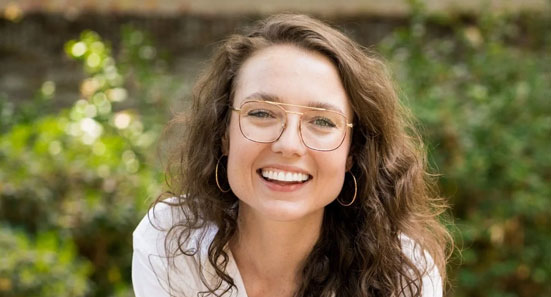
The mayor of West Hollywood, CA doesn’t own a car, she takes the bus, she walks. She says it’s the way for people to see her out in the city, like many of them are. And she talks about trees.
GoodGovernmentShow.com Thanks to our sponsors:
The Royal Cousins: How Three Cousins Could Have Stopped A World War by Jim Ludlow
- Ourco
- Good News For Lefties (and America!) – Daily News for Democracy (Apple Podcasts | Spotify)
- How to Really Run a City
- Leading Iowa: Good Government in Iowa’s Cities (Apple Podcasts | Spotify)
The Good Government Show is part of The Democracy Group, a network of podcasts that examines what’s broken in our democracy and how we can work together to fix it.
Executive Producers: David Martin, David Snyder, Jim Ludlow
Host/Reporter: David Martin
Producers: David Martin, Jason Stershic
Editor: Jason Stershic
Transcription
David Martin: This is the good government show.
Chelsea Byers: The palm tree is a big question for us. It’s such an iconic part of our landscape, and it’s such a problem to our landscape as well. But we continue to grow. Our cities continue to evolve, and housing that was suitable 50 years ago won’t continue to be suitable. And I don’t believe that we can solve all the world’s problems.
But if I believe now that I’m standing here looking at a future and saying, we can’t do that, and that’s part of the problem. I think it’s good for people to see that they have somebody who’s in leadership, who’s experiencing life, as most people do. Good government, to me, is the ability to collaborate in an egoless way for the benefit of our community.
We’re not a business with a mission. We’re not an organization that has a sole focus. We are here to serve, and service will always be an evolving form, and people are the reason we know what that evolution looks like.
David Martin: I really like talking to new mayors and young people who are elected to office. Chelsea Byers is both. She just wrapped up her year as mayor of West Hollywood, California. She’s not mayor now, but she’s still on city council. Welcome to the Good government show. I’m Dave Martin. First, help us share the message of good government by liking us and sharing us where we are.
On your favorite social media. Don’t forget to send this show to your friends. We all need to talk about good government. So this is going to be another show about my new favorite topic trees. This time we talked about palm trees. In many ways the symbol of Los Angeles. But they’re not native to Los Angeles, and they’re not actually trees.
That’s a problem. We talked about it. Former mayor bears one with the help of an organization called run for Something. It encourages people under 40 to run for office. Listen how it helped her. And here’s my favorite fun fact about Chelsea Bears. She doesn’t own a car. She takes the bus in Los Angeles. No car. If you haven’t been to L.A., just know this.
You got to drive. That shows real commitment to public transportation. And, well, she’ll tell you the rest. Since her term was only one year, she stepped down but cited a list of accomplishments. She said she was able to improve on climate resilience, invest in social programs, expand protection of animals, and you’ll hear about a small business program. She packed a lot into that year.
So coming up, the former mayor and current city councilwoman of West Hollywood, California, Chelsea Byers.
The Good Government Show is sponsored by our. That’s. Oh, you are for our community. Get involved. We hear that all the time from government leaders. Our co-brand with your governments name and logo. Your staff and the people you serve are connected and part of your community. From any device. Your members provide reliable data and meaningful feedback. Ask a question like do we want more parkland or better homeless services?
More engage conversations come through the our app. Visit our co that’s ou rco.com and book a demonstration. Once you wrap up this episode of the Good Government Show, give a listen to our friends over at Good News for lefties. This daily podcast highlights news stories that show there’s more good news out there. Other people in government are really trying to do the right thing.
That’s good news for lefties. Listen, we’re listening now. I’m happy to have with you Chelsea Byers, the new mayor of West Hollywood, California. Welcome to the Good Government Show. Thanks for coming.
Chelsea Byers: Thanks a lot. Good morning.
David Martin: Good morning. We are here at the Conference of Mayors. And what are the things I’ve been hearing from the Conference of Mayors yesterday? We are at the same breakout session. Trees, trees. You talked a lot about trees. Now, this is something I did not know until recently. The palm trees in Los Angeles, in Hollywood, in West Hollywood are non-Native and have become a problem.
Chelsea Byers: That’s correct. Yes.
David Martin: And you said when we were talking, you know, before we sat down and turned mikes on. This is something you’ve been mentioning and talking about for quite some time.
Chelsea Byers: Sure. Yeah.
David Martin: So this is I did not know this until recently. I just found out about this. Tell me, what’s the problem with contrast?
Chelsea Byers: Sure. Well, there’s a number. The fact that they’re non-native species is part of the problem. As we move to a more local bio species, we really want to make sure that we’re investing in what is native to the ground itself. It really helps make sure everything flourishes in a bigger way. But there’s bigger issues with palm trees, especially in an area like Los Angeles where we get these hundred mile an hour Santa Ana winds that rip through a real large portion of each year.
Those palm fronds are difficult to maintain. We see these trees that go way, way high into the air. People have to climb those trees to cut those branches. This is an economic issue for the scale that we’re talking about. And when the winds pick up and there are loose palm fronds, they can blow and cause a lot of damage.
We have external power lines all over this region that will catch those palm fronds and spark and create issues, and that’s what we saw unleashed with these fires. The palm fronds themselves become deliverers of this fire that blows throughout the region and creates a lot more destruction.
David Martin: And wildfires are one of the many serious problems facing citizens and residents in Los Angeles.
Chelsea Byers: Yeah, as we just saw in January.
David Martin: Sure, sure. And what was the palm fronds? Part of the third largest.
Chelsea Byers: Contributors to it? Absolutely. And when you see a palm tree on fire like that, this iconic symbol of Los Angeles just erupting in a blaze of flames, and then the winds are picking up around it. Your mind starts to go pretty crazy about what’s possible. And when people are looking outside of their apartment buildings at these big, dense, overgrown palm trees, knowing that the winds are just flapping those branches along.
The fear is really what’s accelerating a lot of the trouble that we’re dealing with as well.
David Martin: So let’s just delve into a little history here. Why did they plan palm trees there? Well, how did that start and why?
Chelsea Byers: I the whole story is, you know, the story of Los Angeles is people coming from all over places and really trying to make L.A. their home. There’s something really beautiful about that, I think. But now that we’re a hundred years into the lifespan of a tree that shouldn’t be there in the first place. And we’re really trying to decide what to do about making a more resilient community in a resilient region.
The palm tree is a big question for us. It’s such an iconic part of our landscape, and it’s such a problem to our landscape as well.
David Martin: Well, you’ve got I think palm trees are the symbol of half of the cities in L.A. County. And so, you know, their identity is palm trees. You go through Beverly Hills, you, you know, walk along the Strand in Santa Monica. It’s palm trees everywhere.
Chelsea Byers: I think it’s become such a representation of that sort of blend of cultures for us. But I think when we dig deeper, we recognize that it’s actually more symbolic of this idea that we’ve come from other places. We’ll find something else that actually speaks, so that identity in a stronger way than maybe the danger that the palm trees become.
David Martin: Even though they’re pretty. And I understand that they have a life span.
Chelsea Byers: That’s right.
David Martin: And we’re kind of at the end of the lifespan of most of the palm trees that are, you know, all over Los Angeles.
Chelsea Byers: That’s right. I live on a street where we’ve actually begun replacing them, and we had a pretty iconic palm tree right in front of my apartment building. I loved it, I have very many photos of it. I have a painting actually on this palm tree, and it’s gone now, and in replacing it is a beautiful tree that is actually going to create a lot more shade, which will actually make my neighborhood a lot more enjoyable in the long run.
David Martin: So you know this better than I, but my understanding is they take an incredible amount of water to maintain. They don’t filter the air as regular trees do. They don’t, you know, take in carbon dioxide and give off fresh oxygen. They don’t do any of those things. And you know, you mentioned that the hazards there. And then the other thing I saw read, heard is they are notorious for being resinous.
Chelsea Byers: Oh yes. Yeah. Yeah. That’s exactly right. And I just think about the danger. I’ve known people whose job it is to climb those palm trees. And you see human beings at the very top of these unbelievably tall structures, and they’re moving and swaying in the winds. And to think about the scale of human power we’ve unleashed to just take care of this tree, that isn’t really taking care of our region and all the best ways possible.
It really doesn’t make sense to me.
David Martin: And they’re not even trees.
Chelsea Byers: They’re not even real trees. They are beautiful, though. And so I really understand the tension and the grief that people are sitting with and thinking about what the next generation of Los Angeles will look like. But it’s not just Los Angeles. It’s truly how we make our communities more resilient from the natural environment that we’re already among.
David Martin: So what are you doing about that, Madam Mayor?
Chelsea Byers: Yeah, well, in the, aftermath of the fires, a lot of community members began reaching out to talk about how they in their apartment complexes, can deal with these buildings. We have a code that says that you have to maintain these. And so we’ve been making sure that our code enforcement team is out there, ensuring that the apartment buildings are taking care of them.
And that’s one thing, as I’ve already mentioned in my street, when they’re in the public right away, we’re beginning some of the replacement work. We actually just approved a project that replaced three palm trees for sidewalk expansion, and we’re doing other things to bring shade into that environment. So we’re thoughtfully. And each little moment we have a chance to finding ways to replace them with something that is more suitable to the environment.
Tree by.
David Martin: Tree.
Chelsea Byers: That’s right.
David Martin: What trees are you replacing them with?
Chelsea Byers: Depends. Really depends on the neighborhood and what’s suitable. We have a lot of red rose bushes. We have a lot of really beautiful, just more dense canopy sort of trees that are taking place in a all that are human scale in a different way than those giant palm trees are.
David Martin: What is the tree of Los Angeles that got replaced? What should be there?
Chelsea Byers: We have these beautiful jacaranda bushes, these purple flowering bushes. There’s pink flowers. We have so many of these streets that you’re really just drive down that become this iconic landscape because of that mixed coloring and that green canopy. We’re doing a lot of them, and I’m no arborist myself, so I couldn’t give you the tree name of them.
But when you see some of those streets, you know exactly what I’m talking about.
David Martin: I mean, but it’s also talking about, like, I totally don’t know, chestnut trees, elm trees. Yeah. I mean.
Chelsea Byers: Yeah, we just, you know, approved a public park with some big oak trees in it as well. And so to really give it new life, and we know it’s going to take time for these to grow and flourish into that space. But we have to start at some point.
David Martin: And I’ve learned a lot about trees. You probably have learned a lot more about trees, and I there’s a lot of benefits to these kinds of trees. We’re talking about canopies. That’s right. Lowering temperature. What am I missing?
Chelsea Byers: Just the environment. People getting out of their homes and enjoying the space there. And we talk about the need for third spaces. So often a third space isn’t just a concrete slab somewhere. We want this lush environment that we feel really enjoyed in. And I think trees are such a huge aspect of that.
David Martin: Wow. I, I did you know this much about trees, but you started out how did you how did you come into this?
Chelsea Byers: Trees are just an important part of the city landscape. And I think when you really look around and you start to think about the built environment and the infrastructure that’s there, the natural component of that is so important. And we pave concrete and asphalt, we build houses and the trees still stand. We actually were a city that adopted a really, I think a progressive policy that says when a building has to replace a tree, we are insisting that there are more trees than there were at the beginning.
So if a home has to take down a tree in order to be built, we will insist that there are more trees there than there were before.
David Martin: I do want to talk about things other than trees, but, just a few more things. Is there any pushback in West Hollywood from, you know, like, you know, you can’t take away my palm tree? And, you know, are you this is what you replace it with. That’s not the.
Chelsea Byers: Same. No, we don’t have. I haven’t heard that. I’m sure you know, at the scale we were talking about, it may start to come. And I think if we’re proving that what we’re replacing these trees with is something more suitable for the environment and appropriate for people, and it was going to improve the city in the long run.
People will be okay with it if we can communicate that.
David Martin: And are you communicating that?
Chelsea Byers: Absolutely. Yeah. Every year we do an annual tree planting event. We just in the fires because of the winds, had a tree that was broken in a park in a really beautiful spot. And when we rally the community and when we invite them and show them that we’re taking action to replace these trees and improve the environment, I think people get that you are.
David Martin: We always like talking with new, mayors and new city officials. And you have just recently been elected?
Chelsea Byers: Correct. In January, I was sworn in as mayor, and I was elected in 2022 to city council.
David Martin: So three years, just about just about three years.
Chelsea Byers: Goes by fast.
David Martin: And we talked about this a little bit. You got the endorsement of an organization called Run for Something. Tell us about run for Something that helps.
Chelsea Byers: Yeah. Run for something is a national network that is really helping encourage, especially young people get into the process. Traditionally, there are so many organizations and gatekeepers really, that play a role in helping encourage people to run for office or sort of block them off of that opportunity and run for something was a gate wide open for me and for so many young people across this country.
It provided a network of support and mentorship that encouraged and helped share resources and by way of experiences, people who had been there, who had done that before and now as an elected official, who had that experience of working with run for something, I get to have those same mentorship opportunities and help support people at scale.
David Martin: So are you supporting somebody there in their next run for office?
Chelsea Byers: Yeah, I am, and it’s a really nice opportunity to sort of share the best of the worst of’s and just, you know, have another relationship that you can really grow with.
David Martin: And did you have a mentor yourself? I did, you.
Chelsea Byers: Know, she was successful too. She, you know, won her role in office. And now we get to watch each other and root each other on. It’s really special.
David Martin: And, you know, you come to it. We’re here at the Conference of Mayors. It’s nice to meet other mayors and go, oh, I can call you.
Chelsea Byers: Yeah, exactly. The network is so essential. It really is. And to really think of it as a baton passing to the way that you run for something does people who are already in office, sharing those experiences with people who aren’t there yet to bring up that next generation. It’s pipeline work, and we really have to build it and run for some things out there doing it for young people all across this country.
David Martin: And we are the good government show. We call ourselves the voice of public service. You have been in public service almost your entire career.
Chelsea Byers: I think so, yeah. Okay. I was a kid that, you know, really wanted to help my community. I worried a lot and cared maybe in ways that weren’t healthy for myself and my parents knew, to throw me into volunteerism, to give me an opportunity to go out and help others. And I became a real addict at volunteerism. I just knew and felt so good.
Being out there, connecting with community and at an early age had opportunities to do that and just never wanted to stop.
David Martin: And you said you worked in housing?
Chelsea Byers: I do.
David Martin: You still, you still do? Yes. So are all the housing problems in West Hollywood solved?
Chelsea Byers: Not even close. But it’s continual. Because we’re continuous people, we continue to grow, our cities continue to evolve. And housing that was suitable 50 years ago won’t continue to be suitable. We have to continue to work at it. It’s always a problem. And right now it’s especially a crisis.
David Martin: So what are you doing?
Chelsea Byers: We’re doing, the first ever zoning reform campaign in our city’s history. It’s part of 116 strategies. Our city’s laid out in.
David Martin: Already 16 strategy.
Chelsea Byers: 116 strategies under a housing element plan that I was proud to work on before I was elected to office. We have a number of strategies, as I said, to ensure that we can reach a really ambitious target that the state has set for our state.
David Martin: I would say 116 strategies might be a little ambitious.
Chelsea Byers: I would say 4000 units of housing that the state assigned us to build in our 1.89mi² city in eight years is an ambitious target, and 116 strategies may be exactly what we need to get there.
David Martin: Are you optimistic you will get 4000 units?
Chelsea Byers: I’m only optimistic. Truly, I think we have to be to start posturing. An idea of defense will only hinder our ability to get to this goal that is reasonably set. I believe it is impossible to think a high resource city like West Hollywood, one that is a safe haven for queer community, cannot continue to grow. And I don’t believe that we can solve all the world’s problems.
But if I believe now that I’m standing here looking at a future and saying, we can’t do that, and that’s part of the problem.
David Martin: And now you were city council for two years, and now you’re the mayor. That’s right. What did you learn at city council that allowed you to be feel like you were confident enough to be mayor?
Chelsea Byers: You really learn how the public understands a meeting should run in different ways and what that expectation is. And in my city, the mayor is the one who oversees and runs the meetings, as in most cities. And that’s largely what the public experiences of my leadership is, how I run a meeting. And so for me, stepping into this role, it was essential to find ways that I can change the tone and really let people know that this is a welcoming, inclusive space.
I don’t use a gavel in my leadership. I haven’t used gavel ones all year long yet. Yeah, I don’t think I will. I really found ways to just engage with the public, communicate. You know, it’s time to sit down. That’s not part of the agenda. And I think communicating to people instead of sort of sounding an alarm every time we need to is, is working for me.
David Martin: You’re a young person, obviously you’re under 40 because you have to be to have the address on Rogers, I think. Is it hard to be a regular person and still be buried, move around town with your chair. Made sure I see you.
Chelsea Byers: Well, I haven’t driven a car in Los Angeles for almost nine years now. I’m somebody who takes the.
David Martin: I haven’t driven a car.
Chelsea Byers: I don’t own my own. I don’t own a car. So a lot. So I walk everywhere, or I’m taking the bus. And so I’m very public. I’m out there, I’m enjoying the community. And I think that people see their mayor being someone who’s out in the community in those ways is beneficial. I love being on the bus and connecting with folks out there.
I love posting videos and showing people that this is for everyone. I’m in our parks using the public Wi-Fi. That’s how I take my meetings and enjoy work that way, and I think it’s good for people to see that they have somebody who’s in leadership, who’s experiencing life as most people do.
David Martin: There’s a lot going on right now in Los Angeles. Has any it spilled into West Hollywood and what are you concerned about?
Chelsea Byers: Yeah, we’re a really tight knit region. 10 million people in Los Angeles County, 88 cities. It all feels like it’s impacting us. And while these Ice raids haven’t been in our backyard yet, they are in our neighboring cities. And that feeling of connection is absolutely felt right now. People are chilled, people are worried. People are rightfully concerned that their neighbors are disappearing, that the places of work and business that we enjoy are not going to be there, because the workers aren’t being there to serve us.
And I know when that taco stand on the street is no longer there for me. My life truly is upended in ways that it feels so silly and small. But it’s not. That’s the quality of life that we depend on what cities are about. And so absolutely everybody is impacted in a really deep way.
David Martin: Especially if you have to find the taco stand you have to drive to, that’s going to be a problem.
Chelsea Byers: Exactly.
David Martin: Okay. Well that was the easy part. So in a minute we’re going to get your true thoughts on government. So be prepared. Sure. It was called the War to End All Wars. But it didn’t. Three royal cousins, all kings, one from England, one from Germany and one from Russia blundered their way into a war, a completely avoidable war that left millions dead in the trenches across Europe.
Good government show executive producer Jim Ludlow details the blunders, mistakes and bluster that started World War One that didn’t end all wars. The book The Royal Cousins details the events and creates an alternative history. Imagine a World War one never happened. It didn’t have to just read it yourself. Download the book today on Amazon. It’s just $0.99 and a timely look at history.
After you get done with this episode, hear more good government stories with our friends at How to Really Run a City. Former Mayors Kasim Reed of Atlanta and Michael Nutter of Delphia and their co-host, journalist and author Larry Platt talk with guests and other mayors about how to really get stuff done in cities around the nation. Check them out where you’re listening now or through their nonprofit news site, The Philadelphia Citizen.
Dot org slash podcasts. So we have a few questions we’d like to ask everyone. It is our Good Government Show questionnaire. We always start with the hardest one first okay. Define good government. What is it?
Chelsea Byers: Good government to me is the ability to collaborate in an egoless way for the benefit of our community.
David Martin: In an ego this way. Yeah, that was a big caveat.
Chelsea Byers: I think it’s important. I think the way that we say, this is us, this is me, this is I, it’s about we, it’s about the community and the people. And if we aren’t listening and responding to those needs and really creating policy that is of the people, it’s not it.
David Martin: What is good government look like in West Hollywood?
Chelsea Byers: We are a very small community, 1.89mi² with a large impact for me. Good government is connecting across borders, across boundaries and across layers of government and ensuring that what we’re doing is in service of the whole region. That’s why I focus so much on housing and climate change, even though we’re just a small community, because I know if we keep our focus in those directions, it will serve such a larger part of the community, and it really allows other people to see our city in service of them as well.
David Martin: If people are frustrated with government, what should they do if they don’t like what you’re doing? If they don’t like what the city council’s doing, what should they do?
Chelsea Byers: They should first feel free to say that I think that’s essential. Dissent is absolutely the way we continue to improve and get better, and then they need to get involved, and they can get involved by raising that voice, by showing up and participating, connecting with their community and neighbors, building the parallel institutions that serve our community and the ways they dream.
All of that is so important.
David Martin: But something that’s really.
Chelsea Byers: Hard, it truly is. The barriers are absolutely there, and it’s why sometimes government has just continued to be stagnant.
David Martin: So what should they do? I mean, how do you tell how do you convince people to do the hard work?
Chelsea Byers: Well, we have to have that sort of moral crisis ourselves. And I think we’re in one as a, you know, as a country, we’re in this really big moral dilemma of who has been leading the charge, who has been doing the work. And maybe more of us need to show up. And part of that is so driven by our social conditions, our economic conditions, we’ve made it impossible for so many people to be able to expend that time because they’re so focused elsewhere, and I’m not insensitive to that reality.
And so for me, it’s really about going out and reaching out and finding ways that people can be exactly in the place they are and still give so much.
David Martin: What drew you to public service? What inspired you to who inspired you to get into public service, and what kept you in public service?
Chelsea Byers: I grew up in a family of people who worked really, really hard and still felt like we were struggling, and when I look around at, you know what this is all about? I believe that we were a country that was supposed to be taking care of each other, and I didn’t feel that happening. I grew up without health care, and I had an incident myself that really paralyzed my family in a way that I still have a hard time reckoning with.
And so for me, it was really about building a more responsive government, being more reflective of the needs of people, and being able to create those systems that could do that.
David Martin: You’re the mayor. Did you ever see yourself running for mayor? Being a mayor, being an elected official, or did you always just figure you would help people, you know, build more houses?
Chelsea Byers: I knew I would help people. I wrote a poem when I was in second grade that said I wanted to help the most people possible and see most of the world. So I was going to either be an astronaut or the president. Those are my ideas on how to do those things. And what I’ve learned is that by being the mayor, you are.
David Martin: Not going to be an astronaut.
Chelsea Byers: I don’t think so.
David Martin: So is it. It is a possibility still.
Chelsea Byers: I’ve gotten a great opportunity to see so much of the world through this experience, through traveling and learning from other communities and bringing that back to people. And I think that’s really what it’s all about.
David Martin: So were you the president, at least of your high school or your senior class?
Chelsea Byers: I was the student body vice president, okay.
David Martin: I did you were the president. Get a log where you’re like.
Chelsea Byers: I wish I had a great friend. So collaborative government the whole way through.
David Martin: All right. Good. What’s the best part of your job?
Chelsea Byers: Honestly, the best part of my job is being out there with the people and seeing the way that the things we do impact their lives, whether it’s events in the community or the social service programs they served on, the human services Commission before this role. And so I really understand the way that the direct services our city invests in change people’s lives.
And I think that’s the best part of it.
David Martin: What keeps you up at night?
Chelsea Byers: The problems that we still have to solve, which are many, innumerable. The future. Truly, I think about it all the time.
David Martin: So you two years in city council, you, one year, not even a year. Half a year as mayor, but a career in public service, you know, through mostly housing. What would you like people to know as a government insider? What would you like people to know about government? How it.
Chelsea Byers: Works. Government really works based on the people who are there and the values they show up with. And I think it’s so strange to think that this entity is only defined by the people and the values they bring to it, and that’s why we need more people. We need more diverse people representing government, because we are just a reflection of the people who are a part of it.
And that’s such a hard thing to understand. We’re not a business with a mission. We’re not an organization that has a sole focus. We are here to serve. And service will always be an evolving form and people are the reason we know what that evolution looks like.
David Martin: So I have been to Los Angeles many, many times. I’m sure I have been through, at least into West Hollywood. But if I’m coming to West Hollywood, we’re going to meet up. Where are you taking me? Show off the best of West Hollywood. What’s the what’s. I guess Mexican food is the official dish of West Hollywood.
Chelsea Byers: I wouldn’t say Mexican food is. That’s interesting. I would say make sure you’re driving down the Sunset Strip. Check out those iconic billboards. Feel the history of rock n roll all around you. We’re going to stop at dialog and grab a cup of coffee and walk down the hill to West Hollywood Park, where the heart and soul of the city really comes alive.
It is the grounds where protests and activism have happened. It is a place where the city was formed, and to sit in this park that is so historic and so a part of the fabric of our community is, I think, exactly the best look at West Hollywood.
David Martin: All right. What do you do for fun? I do go to the beach there you I beach girls, I.
Chelsea Byers: Love music, I live in a city that’s so full of it. The troubadour, the rainbow, the whiskey A Go-Go. To be surrounded by all of this. I’m so inspired by it.
David Martin: All right. You play music.
Chelsea Byers: Yourself? No, it’s a good thing.
David Martin: Oh, okay. But you’re you’re not. You’re not a.
Chelsea Byers: Surfer. No.
David Martin: Okay. All right. Well, we grew up in Arizona.
Chelsea Byers: You grew up in Arizona? Yeah. It’s hard to catch the waves.
David Martin: So this is the good government show. And we always try to bring it back to good government. Tell me about a good government project you’re working on now that you’re excited about. Now that you think it’s going to make a difference to the residents of West Hollywood? Sure.
Chelsea Byers: Well, there’s housing, there’s bike lanes, there’s so many priorities I care about. But I’m really excited about this one initiative. I learned, actually, from being a part of spaces like this and bringing back ideas to my community. And it’s something that sounds so simple, but I believe it’s pretty revolutionary and it’s a gift card program. So I’m asking residents to go out and spend $50 to $100 on a gift card that we will double that dollar amount right away.
So we have a $200,000 budget. And any time folks buy a gift card, we will double the amount. And the idea is that they go out and spend those dollars on our small businesses in the community. People we know are feeling it in their pocketbooks. The economy is tight. We have residents who are living in rent controlled apartments, who are feeling priced out of our economy, and we have businesses that are struggling because of a decline of foot traffic.
And so these two things will meet. And the city has the revenue and resources to invest back in this way. And by getting people to reconnect with this business and feel a part of it, I think is going to really transform people’s feeling of being able to live in West Hollywood and be a part of the successes that we’re celebrating.
David Martin: Okay, well, gift cards, local business.
Chelsea Byers: It sounds so simple, but it’s part of our we whole loves local program and it’s really about an economic driver that starts with the community itself. We’re such a tourism based economy, but we’ve been missing out the ways our residents can be a part of this economic engine, and we know that it may take a little stimulation. And if we can double the dollars through a gift card program, I think we can get folks back out there.
David Martin: And how’s it going so far?
Chelsea Byers: We are launching in July. All right, I’m back. I’ll be back to tell you. I’m tell you all we’re doing. The program that we’re using has so many different mechanisms to track, understand where people are spending those dollars, what hours of the day. And that data is also going to help us inform how we need to continue to shift our economy, how we can inform our businesses about what’s working, what’s not.
And it’ll be more information for us to continue to improve.
David Martin: Okay, Chelsea Byers, the new mayor, thanks to run for Something of West Hollywood, California. It was a pleasure to talk to you and to learn more about trees. Good luck with the planting. And, how long is your term?
Chelsea Byers: I will be running for reelection next year. And should the good people of West Hollywood wish you reelect me, I hope to serve for the all 12 years I can.
David Martin: All right, so you have a 12 year. You have a 12 year window. You’re early. You’re not even a year into it.
Chelsea Byers: That’s right.
David Martin: Good luck. Chelsea Byers, it was a pleasure meeting you. Thanks for coming.
Chelsea Byers: Thank you so.
David Martin: Much. Thank you. Want to hear more about good government? Check out another show I host leading Iowa. Good government in Iowa cities. I host the show with Brad Cavanaugh, mayor of Dubuque, Iowa, and the immediate past president of the Iowa League of Cities. Together, we talked to leaders in Iowa cities. We talk about what works and what good government looks like in Iowa.
Joining us right here. We listening now that’s leading Iowa. Good government in Iowa. Cities.
And here’s what Chelsea Byers said about her definition of government. She said the ability to collaborate in an equal this way. I like that eagerness. It reminds me of County Commissioner Austin Nesmith’s three Ugly E’s to avoid emotions, ego and entitlement dissent. That’s the way we get better. Well, that sounds pretty egoless to me. Impressive work from a young mayor and a government leader.
If you’re thinking about running for office, check out run for Something and our Good Government Show community. We asked you if you wanted to see fully driverless cars in your city, and the majority of you said you did well. Check out and join our community and give us your thoughts on questions we ask about local government. Go to the website and sign up.
Well, that’s our show. Thanks for listening. Please like us and share this with your friends and review us right here where you’re listening and check out our website. Good Government show.com for extra. Help us keep telling stories of good government in action everywhere. Join us again for another episode right here. I’m Dave Martin and this is the Good Government show.
The Good Government show is a Valley Park production. Jim Ludlow, Dave Martin, that’s me and David Snyder are the executive producers. Our show is edited and produced by Jason Stershic. Please subscribe, then share and like us and review us. That’s the best way to make sure we’re able to keep telling these stories of our government working for all of us.
Then listen to the next episode of The Good Government Show.
Narrator: This podcast is part of the democracy Group.
**This transcription was created using digital tools and has not been edited by a live person. We apologize for any discrepancies or errors.