
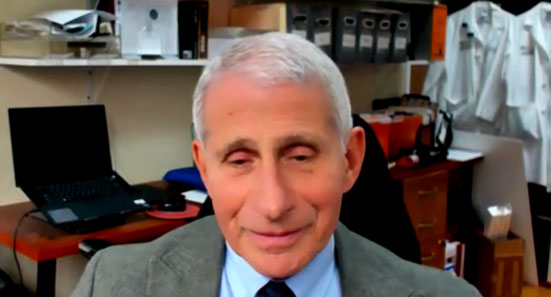
Dr Anthony Fauci spent 54 years in public health. He led the fight against HIV/AIDS and then COVID. He is what public service is all about. He talks about the current challenges in public health and his extraordinary career.
GoodGovernmentShow.com Thanks to our sponsors:
The Royal Cousins: How Three Cousins Could Have Stopped A World War by Jim Ludlow
- Ourco
- Good News For Lefties (and America!) – Daily News for Democracy (Apple Podcasts | Spotify)
- How to Really Run a City
- Leading Iowa: Good Government in Iowa’s Cities (Apple Podcasts | Spotify)
The Good Government Show is part of The Democracy Group, a network of podcasts that examines what’s broken in our democracy and how we can work together to fix it.
Executive Producers: David Martin, David Snyder, Jim Ludlow
Host/Reporter: David Martin
Producers: David Martin, Jason Stershic
Editor: Jason Stershic
Transcription
David Martin: This is the good government show.
Dr. Anthony Fauci: The feedback you get in appreciation. Throughout the world for what we do as scientists, as physicians and as public health people is something that’s priceless.
The lesson is always that when you mix science and politics, you get politics.
Disinformation and misinformation is the enemy of public health. It absolutely is.
Science is a process that gathers information, data and evidence as it exists at a given time.
I am not the poster child for a good work life balance. I’ve never been a doctor.
David Martin: Anthony Fauci truly needs no introduction. So welcome to The Good Government Show. I’m Dave Martin, first, to help us share the message of good government by liking us and sharing us where we are on social media. Make sure to review us. We all need to talk about good government. Doctor Fauci began his career by making one small choice.
When he graduated from medical school, the war in Vietnam was raging. He was told to make a choice of where he wanted to serve. He picked the US Public Health Service first, the Navy second. We all one when he was selected into the Public Health Service. He’s been honored so many times for his lifelong career in public health.
And he’ll tell you about being awarded the Presidential Medal of Freedom. HIV Aids, Ebola, H1n1 and Covid are just some of the epidemics he’s worked with. It’s truly an amazing career in public service. Listen to what he says about politics and public health and his concerns for the current leadership in public health. That’s all coming up with Doctor Anthony Fauci right after this.
The Good Government Show is sponsored by our that’s o u r for our community. Get involved. We hear that all the time from government leaders. Our co-branding with your governments name and logo, your staff and the people you serve are connected and part of your community. From any device your members provide reliable data and meaningful feedback. Ask a question like do we want more parkland or better homeless services?
More engage conversations come through the our app. Visit our co that’s ou rco.com and book a demonstration. Once you wrap up this episode of the Good Government Show, give a listen to our friends over at Good News for lefties. This daily podcast highlights news stories that show there’s more good news out there. Other people in government are really trying to do the right thing.
That’s good news for lefties. Listen, we’re listening now. Welcome to the Good Government show. I am very happy to have with me Doctor Anthony Fauci, a man who really, truly needs no introduction. I will do it anyway. For 54 years, the National Institute of Health, 38 years as director of the National Institute of Allergy and Infectious Diseases.
Welcome to the Good Government show. Great to have you with us. Thanks.
Dr. Anthony Fauci: Thank you. David. Good to be with you.
David Martin: So you have one. I don’t know where your trophy case is or what it must look like. Among other things, you were in Elliott Richardson, award winner for the National Academy of Public Administration. I’ll be going there next week for this award ceremony. But what’s it like to win a Presidential Medal of Freedom?
Dr. Anthony Fauci: It was extraordinary, a phenomenal experience, particularly what it represented because President George W Bush gave me the Presidential Medal of Freedom for working with him to put together and be the principal architect of the Pep fall program, the President’s Emergency Plan for Aids relief, which, as you probably know, over a period of more than 20 years, has been responsible for saving the lives of about 25, 26 million people.
So it was particularly important not only because it’s such an extraordinary award, but because it was bestowed upon me by the president, who is deeply involved with what I had done to get that award. So it was sort of a double honor.
David Martin: Well, you jumped right into the middle. I, I was going to get to that a little bit, but since you brought it up perhaps far, this was, you know, the pro the Aids relief program. Yeah. I think I read somewhere that the US government invest over $100 billion in a global Aids and HIV responses. Is that number correct?
Dr. Anthony Fauci: That is correct. Over 100 billion. Yes.
David Martin: So that’s a lot of money. How is that government money well spent?
Dr. Anthony Fauci: Oh, I think David, regardless of what your persuasion is politically, when you look at government money well spent and look at the investment in the Pep program and the number of lives, clearly that was saved by the investment in Pep, far over a period of more than 20 years. As I mentioned, it is responsible for saving the lives of over 25 million people.
So I would challenge anyone to look at any other public health program that, for the amount invested, resulted in that extraordinary, extraordinary result of saving the lives of so many people, not only because every life is precious and worth saving if you could do it, but for the United States, it is served as an extraordinary form of soft power, where our image throughout the world, particularly in sub-Saharan Africa, in the Caribbean, countries, in countries in Asia, and those who have benefited from the pep up program, it has done more for the image of the United States as a country that really cares about the rest of the world, I think, than almost any other program.
David Martin: There are people who would argue, currently in government today that spending, you know, that soft power doesn’t really matter, and spending money outside of the US is a waste of of U.S. government dollars. You know, what’s your response to that?
Dr. Anthony Fauci: Well, I, I totally disagree with that. The reason is I, you know, I’ve, I’ve spent the last 55 years or more, 54 years at the NIH, 38 years of which I was the director of the National Institute of Allergy and Infectious Diseases, which by the very nature of the discipline for which I was responsible for, namely infectious disease, and naturally, as an extension of that global health, I have seen over the decades how investments in research and public health endeavors like malaria and tuberculosis, and in this case, HIV, has resulted in saving so many lives and all you need to do, which I’m sure you have done or at least have interviewed people who
have done, David, is to talk to people who have gone to these countries in the developing world, who have been the recipients of assistance from the United States in arenas of malaria, TB, HIV, neglected tropical diseases. You’ll see that, you know, that essentially outstrips any kind of other influence by force or otherwise. And that’s why they call it soft power, right?
Because you don’t coerce anybody for anything. You don’t attack anybody for anything. You just help them to save their lives, which I think is something that we should be very proud of.
David Martin: You had a very long service in public health. Are you fully retired now? What are you doing?
Dr. Anthony Fauci: No I’m not. I’m actually just.
David Martin: Do you even understand what retirement means, doctor?
Dr. Anthony Fauci: For justice. You know, like, just 20 minutes ago, I just came back from making clinical rounds at Georgetown University MedStar hospital, just here in Washington, DC. So I’m on the full time staff. I have a joint appointment in the School of Medicine and the McCourt School of Public Policy. So I continuing in my interest in medicine, but also my interest in policy, which I’m, you know, developed over the past few decades.
David Martin: So 54 years in public health. Why did you go into public health and more importantly, why did you stay in public health?
Dr. Anthony Fauci: Well, a career in public health, David, by no means is for everyone. So it isn’t as if you don’t have a career in public health. Therefore you don’t have a noble or worthy profession. There are so many noble and worthy professions that people have, but if you have an interest in having a broad impact on the health of people throughout the world, that is the reason that I stayed in it for over half a century, because I’m fundamentally a scientist and a physician by nature of the fact that I then went into the position as the director of an institute responsible for the research involved in infectious diseases and immunology, which I was the director
for more than 38 years. The feedback you get in appreciation throughout the world for what we do as scientists, as physicians, and as public health people is something that’s priceless, David. And that’s the reason why I and I’m not alone in this. And so many of my colleagues have essentially spent their entire careers, in the arena of medicine, science and public health.
David Martin: So what would you like people to know about the folks you work with at NIH and NIAID? You know, there’s a huge staff of people. Some stay forever, like you said, for entire careers, some not for their entire career. What would you the people know about these folks?
Dr. Anthony Fauci: Well, you know, if we had this conversation a few years ago, my answer would be a little bit different, okay than it is now. And I think that there are two things, because there has been a considerable politicization at the NIH, where people who are leading the NIH and leading institutes are not as people who have been picked for their scientific, clinical or public health capability and accomplishment.
There has been a degree of politicization, but the core people that are at NIAID and the core people that I know, yeah, are still phenomenal group of people, very devoted, very committed to making the world a better place. So the answer to your question is the NIH is still a great place, despite the fact that there has been an unfortunate degree of politicization that has gone on there right now.
David Martin: So let’s just talk about public health today. You know, there is an anti-vaccine movement and there is politicization of of public health. What do you say to that? And are you concerned?
Dr. Anthony Fauci: I’m extremely concerned for a number of reasons. I mean, just take a subset of the disinformation and misinformation, which is always the enemy of public health. I mean, know people better than I have made that statement before over many years, that, you know, disinformation and stigma and and misinformation are the enemies of public health. When you get to something specific like anti-vax, that’s even more serious, because that’s a very concrete, specific situation that results in the loss of lives.
We know that. We know when people do not get vaccinated with the highly effective vaccines that we have, particularly the childhood vaccines, vaccines for measles, mumps, rubella, hepatitis, come off Louis, etc., etc., that when the level of vaccine goes below a certain level, people get infected with very serious diseases, some of which have a degree of morbidity and mortality where lives will be lost.
And measles, for example, is one of them. This idea and the disinformation out there, it isn’t just.
David Martin: Isn’t just disinformation. Is that all we’re dealing with, or are there legitimate claims from the anti-vax crowd?
Dr. Anthony Fauci: Well, it depends on what the claims are. Okay? I mean, tell me a claim and, you know.
David Martin: Refute, right? Well, I’m not a doctor, so I can’t do that. But but I, you know, I mean, reassure the people are vaccine safe overall.
Dr. Anthony Fauci: You know, with this, if you look at interventions, medical interventions and the risk benefit of a medical intervention, vaccines shoots to the top of the pile. Okay. And the most effective and the safest now where people get in trouble is that no intervention, nothing taking an aspirin, taking a vitamin, you know, taking an x ray, going to get your blood drawn.
Nothing is 100% without some rare adverse event. So all their adverse events with vaccines, yes, they are very, very rare because the testing that goes into a vaccine to determine both its efficacy, namely, does it really work as well as its safety is a very, very extensive process. Let me give you an example, please. When we were helping to develop and test the mRNA Covid vaccines that was tested literally on tens of thousands of people before it was even approved, and subsequent to the approval, it was given to billions of people worldwide.
So the benefit versus the risk of a Covid vaccine is unquestionably proven that the benefits far, far outweigh the risks.
David Martin: Well, there are a lot of people who said that it was rushed too quickly, that it went through the process way too fast. What’s your response to that?
Dr. Anthony Fauci: The answer is it didn’t. I mean, it’s simple. Yeah, it wasn’t too fast. And the reason it was able to be shown to be safe and effective is because we were in the middle of the outbreak. Right. And it is very easy to prove or disprove the efficacy and safety of a vaccine when you’re testing it in the middle of an outbreak that you’re trying to prevent.
You get your answers very quickly and very definitively. And that was the situation we were testing the Covid vaccine in the middle of a historic outbreak of Covid. So it wasn’t rushed through. It was tested on tens of thousands of people before approval and proven to be safe and effective in the billions of people who received the vaccine.
David Martin: So, you know, in our current climate, how should people react or what faith should they have in organizations like the CDC or NIH?
Dr. Anthony Fauci: You know, again, I have to say, if you asked me the question a few years ago, I would have somewhat of a different answer. Okay. Traditionally, the CDC was the institution for which you could get science based and evidence based information about everything from vaccinations to any other public health intervention. You don’t need me to tell you this.
You could just take a look at what’s going on, okay? I don’t.
David Martin: Want to. Both of you. But we have you.
Dr. Anthony Fauci: I don’t want to be the messenger.
David Martin: Okay?
Dr. Anthony Fauci: All right. But it is very clear that the CDC has been politicized. There’s no doubt about that. The CDC has a degree of anti-vax around it. That’s unjustifiable based on evidence and data about the safety and the efficacy of vaccines. So right now, many in the medical community practicing pediatricians, practicing physicians, and health care providers are relying on other organizations like the American Academy of Pediatrics for the American Academy of Obstetrics and Gynecology, or the Vaccine Integrity Initiative to get their information about vaccines.
Whereas a couple of years ago, without a doubt, the CDC was the place to go. I do hope. David. Yeah, it’s sometime soon the CDC will return to the place where actually people thoroughly relied on their recommendations.
David Martin: You’ve been in government for 54 years. Do you think that will happen?
Dr. Anthony Fauci: Yes, I do, I think that we are also in a somewhat of an aberrant situation here where people who are public health officials are actually anti-vax. That is almost an inherent in intrinsic, oxymoronic contradiction.
David Martin: When you when you see like the the you know, you talked about the, the measles rates when you see those go up and you hear what people in government, you know, are spewing this anti-vax stuff, it must make you want to scream from the rooftops.
Dr. Anthony Fauci: Well, it’s not just.
David Martin: Mad as hell. I can’t take it anymore.
Dr. Anthony Fauci: Yeah, right. I’ve had enough. I can’t take it anymore. Well. No, David, it’s very painful. Let me again. I’m not alone. I speak for myself, but also for the so many, many, many of the physicians and health care providers, including pediatricians and others throughout the country who are very troubled by the fact that there’s a greater percentage now of people who are not getting vaccinated and unvaccinated their children.
And that’s the reason why we’re seeing an outbreak of measles in this country that has now exceeded 2000 cases. And we very well.
David Martin: And it’s preventable.
Dr. Anthony Fauci: And it’s almost inevitable that we are soon going to lose our designation as a measles free country, that a country that has eliminated measles.
David Martin: And again, that must make you crazy.
Dr. Anthony Fauci: It makes me sad. Yeah. You know, I tend not to try and go crazy. It makes me sad because.
David Martin: But you were there, Doctor Fauci, and you were standing up, you know, in front of the American people, and you were, you know, talking about science and research and, you know, medical breakthroughs and people around you were saying just the opposite. How do you deal with that?
Dr. Anthony Fauci: Well, you deal with it by continuing to speak and make recommendations, if you will, that are based on solid data, evidence and information that has been analyzed, quality controls and peer reviewed. And what we’ve seen of late is statements about public health issues that have no foundation in science. That is very troubling because science, by its very nature, is based on truth, evidence and data.
Data that’s been verified, right? Data that’s been examined and scrutinized, and peer reviewed.
David Martin: So you in your background, one of the first areas where you came into, you know, national prominence was in HIV Aids prevention. You also dealt with Ebola, H1n1, the swine flu epidemic. And then, of course, Covid. Did we learn anything from the 80s with the HIV positive ization of that and to the, Covid outbreak, did we learn anything?
Dr. Anthony Fauci: Well, we had, about.
David Martin: Taking politics out of medicine. Yeah.
Dr. Anthony Fauci: Well, yeah, I mean, the lesson is always that when you mix science and politics, you get politics. So you you really got you really got to keep political considerations out of, you know, the pure analysis of scientific information and data upon which you make your recommendations. You know what we learned? You know, it wasn’t as dramatic as what we’ve seen with Covid is that disinformation and misinformation is the enemy of public health.
It absolutely is.
David Martin: Was Covid your biggest challenge?
Dr. Anthony Fauci: You know, each medical and public health crisis that I have been deeply involved with over the past more than 40 years is different enough, David, that it’s a little unfair to say one is a greater challenge than the other.
David Martin: Okay.
Dr. Anthony Fauci: I mean, if you go back to the 1980s, I began seeing persons who had what we ultimately found out was HIV. I was taking care of, you know, hundreds of desperately ill, mostly young gay men with a disease that at the time didn’t have a name, and it certainly didn’t have an etiology because HIV was not discovered until 1983 and then proven to be the cause of Aids in 1984.
So that, to me, was extremely challenging from a personal standpoint because I was the physician taking care of desperately ill people. Number one. Right. And number two, I was the researcher trying to do studies to enlighten us a bit about this disease so that we could wind up doing something about it. And then in 1984, I became the director of the National Institute of Allergy and Infectious Diseases, which was overwhelmingly the primary institution responsible for performing and supporting research on HIV Aids.
That was very challenging. Sure, different than the challenge of Covid. You know, we it was our responsibility and we were successful in that responsibility to develop a vaccine in record time in less than 11 months, to develop a highly effective and safe vaccine. That was quite challenging.
David Martin: I want to go back to, Covid just for a minute or two. There was a lot of discussion and a lot of talk, and you came under a lot of fire for sort of your changing position on masks. I, I’ve read a little bit about this, and I’m sure you can enlighten us a little bit more, but at one point you said we don’t need masks and you have a lot of solid reasons why not.
And then later on you said, yeah, we should wear a mask. It seems to me like it was because you were learning more as you went on. Does science change? Does your opinion change as you get deeper into the. Yeah, challenge for dealing with this?
Dr. Anthony Fauci: Yeah, the answer is yes. But let me fine tune that. Sure a bit for you, David, because it’s really important for people to appreciate when when you describe what you described, some people say, well, the scientists are flip flopping, therefore you can’t believe them anymore because, you know, they say one thing and one month and then five months later they say something else.
The science doesn’t change because people need to appreciate that science is a process, okay? It gathers information, data and evidence as it exists at a given time. And if you are asked to make recommendations based on information that you happen to know in, let’s say, January of 2020, right? When the evidence that we had was a little bit misleading.
First of all, there was a shortage of masks, and there was a concern that if the general public bought up all the masks, the healthcare providers who would need them wouldn’t have them, right. We didn’t fully appreciate that this virus was spread predominantly among asymptomatic people. We didn’t appreciate the aerosolized nature of it. Early on. So that led to a feeling that maybe you don’t need masks.
However, as the months went by and we learned a lot more about the virus and we didn’t have a shortage of masks, and we learned that asymptomatic people spread it. And we learned that was aerosolized, spread. Then it became much more convincing that you should use masks. So the science itself, which is a process.
David Martin: Right.
Dr. Anthony Fauci: Didn’t change the information that the scientific process allowed us to accumulate change.
David Martin: And it’s your obligation to change with it. Correct?
Dr. Anthony Fauci: Of course. Yeah. I mean, that’s innate. No, you probably heard this said because it’s very true that science is a self correcting process. Okay. Because the process who looks for information and if the information changes the process allows you to self correct.
David Martin: What does it say about someone in your position who’s served the federal government for 54 years, and suddenly you’re a pariah and you need security?
Dr. Anthony Fauci: Well, I’m a pariah to some people, and I hear a lot of people, okay, start off. So make sure you.
David Martin: I, I I’m I’m on the hero side. Doctor.
Dr. Anthony Fauci: Your terminology. Yes. I mean, it’s unfortunate that someone who spent his entire life. And again, I’m not alone. I have colleagues who are somewhat in the same position. Yeah, I’m a little bit more visible than most because I was a very visible person during Covid. It’s obviously disconcerting and disappointing that there was some people based on disinformation and misinformation and conspiratorial theories, who have a really distorted view about what happened and particularly about me personally.
But unfortunately, given, as they say, it is what it is. Yeah.
David Martin: Okay. Well, I picked up a copy of your book on call. Nice picture. You on the cover. You’re talking about. See, ever Koop, the former surgeon general. You guys are both from Brooklyn, as am I. So nice to talk to another Brooklyn guy. You said, your advice was when coop came to Washington, you said welcome to Washington.
And you told him about the Washington traumatic stress syndrome. It’s that.
Dr. Anthony Fauci: Well, when I switched state, I became chick coop C Everett Koop, the surgeon general. Yeah. During the Reagan administration, I became his physician. Okay. He was came to Washington from.
David Martin: I don’t care who you are. That’s got to be a little intimidating to be the physician for the surgeon general.
Dr. Anthony Fauci: Well, you know, he, he left the Children’s hospital of Pennsylvania chop, where he was a legend. Yeah, yeah. Trick surgeon. And you came down to be vetted to be surgeon general. And the people who were liberal progressives like Ted Kennedy and others who misinterpreted a bit chick who, because they thought he would be a highly conservative person because he was a right to life person, because he did a lot to save the lives of children with very difficult surgically correctable diseases.
And when he came to Washington, there was a big push. Yeah, on the part of liberals to not have him be surgeon general. And he was very, very stressed and he was taking medications that he shouldn’t be taking. And he had gone to multiple doctors. So I spent some time doing a very detailed medical work up. I’m him.
And I found out that he really had nothing wrong with him except he was terribly stressed. So he asked me what his diagnosis was. And as I said in my memoir, I told you, you have the welcome to Washington stress syndrome.
David Martin: All right.
Dr. Anthony Fauci: So I created a brand new disease.
David Martin: Congratulations. Now they could do it after you. So every day, everybody who comes to Washington should give you a call, I guess. Listen, I could talk to you all day, but we do have some questions I’d like to ask everybody. I want to get to those in just a moment.
It was called The War to End All Wars. But it didn’t. Three world cousins, all kings, one from England, one from Germany and one from Russia blundered their way into a war, a completely avoidable war that left millions dead in the trenches across Europe. Good government show executive producer Jim Ludlow details the blunders, mistakes and bluster that started World War One that didn’t end all wars.
The book The Royal Cousins details the events and creates an alternative history. Imagine if World War One never happened. It didn’t have to just read it yourself. Download the book today on Amazon. It’s just $0.99 and a timely look at history.
After you get done with this episode, hear more good government stories with our friends at How to Really Run a City for mayors Kasim Reed of Atlanta and Michael Nutter, a Seattle delphia, and their co-host, journalist and author Larry Platt talk with guests and other mayors about how to really get stuff done in cities around the nation. Check them out where you’re listening now or through their nonprofit news site, The Philadelphia Citizen.
Dot org slash podcasts. So this is our Good Government show questionnaire 54 years in government. I’m sure you’re going to be able to answer all these. What is good government to you. Define it.
Dr. Anthony Fauci: Well. Government is an organization that serves the people you know. It is by the people, is for the people, and it serves the people, and it serves it in a way, in an organized way to have an organized approach towards the social order. And I think governments, good governments, are important for the social order.
David Martin: Who inspires you in government and who inspired you to get into government service instead of just, you know, going the usual.
Dr. Anthony Fauci: Route? You know, I don’t think there was a particular person that was in government that inspired me. I just got inspired by the concept, you know, of what our country is. You know, I have a great deal of love for a country. And any way that I could serve a country, I thought that that would be for me.
And one of the ways, not the only way, but one of the ways to serve your country is to get into government and be an official person representing the country.
David Martin: If people don’t like what they see in government, if they if they feel frustrated by government, what should they do? Vote okay, that only works every four years. In the meantime, any advice?
Dr. Anthony Fauci: Well, every two years. Okay.
David Martin: All right, all right. Every two years. You gotta go where you live. Sure. Did you ever consider running for office?
Dr. Anthony Fauci: Never. Never? No. Not even close.
David Martin: Did you always see yourself going into public service when you.
Dr. Anthony Fauci: You know, I did not. I mean, I was interested in going into the practice of medicine. And when I graduated medical school and did a few years of residency training in New York City and internal medicine, I came to the NIH because I wanted to do a fellowship in infectious diseases in immunology, and that was my introduction into the federal government and into public service.
And when I finished my fellowship, I had to make a decision. Should I go into practice or should I stay in the government and continue with a research career? And I made the decision to stay in government and continue a research career. And that was the beginning of a 54 year career.
David Martin: So 54 years in government and 38 years running the National Institute of Allergy and Infectious Diseases. What would you like people who aren’t in government to know about government specifically? And, you know, the health field, public health.
Dr. Anthony Fauci: You know, David, it’s it’s a phenomenal opportunity to make the world a better place by serving in the government. And in in my lane, which was health science and medicine that with the support of the government, you could make contributions that could help people. And that’s what I and so many of my colleagues are motivated by, of doing good, helping people and making the world a better place.
David Martin: What advice do you have for all of us, really, to restore the our faith in government?
Dr. Anthony Fauci: Well, I think the broader concept that government will run is is such an important value added to a country. The way you get trust back is to get people in government who are really devoted purely to serving the country, and you do that by the voting process.
David Martin: Okay. What was the best part of being the director of the NIAID?
Dr. Anthony Fauci: I think the best part was being a public servant of serving others, doing things, getting up in the morning, going to work, and then working towards something that ultimately turns out to be perhaps an intervention, a vaccine or a drug or a understanding of a disease that ultimately helps persons alleviate suffering and maybe even save some lives.
David Martin: All right. Now, this is the question I usually ask mayors, but I think it’s appropriate to ask you. You’re you’re you’re born in Brooklyn and grew up here. Who’s got the best pizza? And how’s the Italian food in Washington?
Dr. Anthony Fauci: You know, not bad. Okay. I got to tell you, when I, when I first came to Washington, when it came to, you know, pizzas and Italian food and things like that, it wasn’t so good. But over a period of several decades, I think Washington is an underrated place for good restaurants.
David Martin: All right, well, I got to go to Washington next week. Well, well, I’ll ask you about your favorite Italian. Unless you want to.
Dr. Anthony Fauci: Tell me that I won’t say it on the air because I don’t want comfort.
David Martin: So do you come back to Brooklyn for a slice every once in a while or prior to todos or someplace?
Dr. Anthony Fauci: I do. All right.
David Martin: Good. What do you do for fun? What does Doctor Fauci do to relax?
Dr. Anthony Fauci: You know, that’s a good question.
David Martin: Because you don’t retire.
Dr. Anthony Fauci: Clearly, I am not the poster child for a good work life balance. I’ve never been.
David Martin: Okay, so I’ve.
Dr. Anthony Fauci: Been devoted. But, what I do to relax is that I have an incredible wife. Was, you know, my lover and best friend, and I just hang out with her. We we both are athletically inclined.
David Martin: Okay, good.
Dr. Anthony Fauci: So we do things like, you know, running marathons and running races. Now that we’re getting a little older, we go on long walks together. All right. You like nature? Okay. So I have a lot of fun with my wife.
David Martin: You did the New York Marathon.
Dr. Anthony Fauci: I did the New York Marathon. I did the Marine Corps Marathon a couple of times.
David Martin: Okay. How was your time? How’d you do?
Dr. Anthony Fauci: The Marine Corps Marathon here in Washington was three hours, 47 minutes.
David Martin: All right, you’re running the whole time.
Dr. Anthony Fauci: Was four hours and six minutes.
David Martin: You’re still running.
Dr. Anthony Fauci: A little bit more hilly in Washington. Yeah.
David Martin: All right, all right. Well, I live on mile four, so they they. All right. Bye bye. Neighborhood in Carroll Gardens. This is the good government show. We always bring it back to a good government project. Tell me about something you did in your 54 years in government that, you know, people may not have heard of that you’re really proud of.
Dr. Anthony Fauci: You know, there were a few things because I wore multiple hats, David. I was a basic scientist. I did clinical medicine, and I believe I was involved in saving a number of lives. I ran the Aids program, which, together with the pharmaceutical companies, led to the development of drugs that has now literally saved millions of lives worldwide because HIV was almost a fatal disease.
In 1981, when I first started studying and taking care of patients. And right now, in 2026, you have drugs that can have people live essentially a normal life. But one of the things I really am proud of is the role I played in putting together the Pep program, which we know has resulted in saving about 25 million lives.
And I credit President George W Bush with giving me the opportunity to do that.
David Martin: Doctor Anthony Fauci, the former, head of the National Institute of Allergy and Infectious Diseases, 54 years in government service and public service, and the National Institute of Health. It is an absolute pleasure to have you on the show. Thank you so much for joining us.
Dr. Anthony Fauci: Thank you so much, David. It’s been very good to be with you.
David Martin: Thank you. It’s good to be with you. We appreciate it. And of course, you know, the Presidential Medal of Freedom. Where is it? I got to ask. Where do you keep it?
Dr. Anthony Fauci: It’s in my office. In my office in Georgetown.
David Martin: All right. You got a big trophy case, doctor Fauci. Thanks for coming on, I appreciate it.
Dr. Anthony Fauci: Take care. Thanks a lot.
David Martin: Thank you. Want to hear more about good government? Check out another show I host leading Iowa good government in Iowa cities. I host the show with Brad Cavanaugh, mayor of Dubuque, Iowa, and the immediate past president of the Iowa League of Cities. Together, we talk to leaders in Iowa cities. We talk about what works and what good government looks like in Iowa.
Join us right here. We listening now that’s leading Iowa. Good government in Iowa. Cities.
Here’s what I just learned. Doctor Anthony Fauci was and is a truly dedicated public servant. I’m a scientist and a doctor. He said that was his guiding star to serve science and to serve all of us. When you mix science and politics, politics wins, he says. It should be the other way around. Once again, in this show, we talk to someone who spent their professional career working for all of us.
It’s called public service because they serve all of us, the public. In Doctor Fauci’s case, it was fighting diseases that sometimes we never heard of before. That’s truly public service, a really inspiring conversation with one person who helped make government a little better in some cases a lot better for all of us. Well, that’s our show. Thanks for listening.
Please like us and share with your friends and review us right here realistic and check out our website good government show.com for extras. Help us keep telling stories of good government in action everywhere. Join us again for another episode right here. I’m Dave Martin and this is the good Government show. The Good Government show is a Valley Park production.
Jim Ludlow, Dave Martin, that’s me and David Snyder are the executive producers. Our show is edited and produced by Jason Stershic. Please subscribe, then share and like us and review us. That’s the best way to make sure we’re able to keep telling these stories of our government working for all of us. Then listen to the next episode of The Good Government Show.
Narrator: This podcast is part of the democracy Group.
**This transcription was created using digital tools and has not been edited by a live person. We apologize for any discrepancies or errors.