
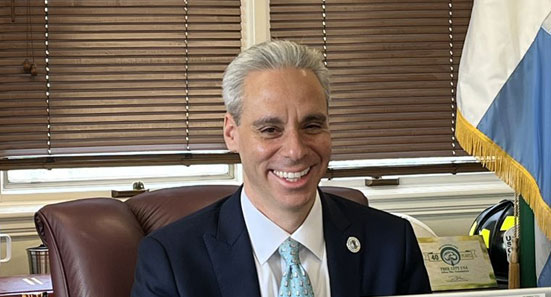
When nearly 100 people move into your city every day, the city has to plan for that and do it with smart plans and an eye toward the future, Mayor Scott Singer discusses just that on this episode.
GoodGovernmentShow.com Thanks to our sponsors:
The Royal Cousins: How Three Cousins Could Have Stopped A World War by Jim Ludlow
- Ourco
- Good News For Lefties (and America!) – Daily News for Democracy (Apple Podcasts | Spotify)
- How to Really Run a City
- Leading Iowa: Good Government in Iowa’s Cities (Apple Podcasts | Spotify)
The Good Government Show is part of The Democracy Group, a network of podcasts that examines what’s broken in our democracy and how we can work together to fix it.
Executive Producers: David Martin, David Snyder, Jim Ludlow
Host/Reporter: David Martin
Producers: David Martin, Jason Stershic
Editor: Jason Stershic
Transcription
David Martin: This is the good government show.
Scott Singer: We had some very large office parks dating back to the days of IBM, when their headquarters were in Boca Raton, and they invented the personal computer there. We’ve now introduced housing to be near those offices and retail uses to cut down traffic. So cars are coming off the road entirely, and also vehicle miles are being reduced. And we’ve seen some success there.
I’m looking to help you improve your life. Like so many thousands of people have done and moved to Boca Raton from New York. Good government is providing outstanding services to residents at the most efficient means possible, and being responsive to the direction that a city needs to constantly evolve to go to. I think what you’re seeing now in the zeitgeisty of 2025 is that the residents and the citizens of this nation want to have a voice and a seat at the table, and I think that that’s affecting all levels of government.
I would call myself a public servant. Every now and then I have to engage in politics to get in office. But there’s a difference.
David Martin: Every day, nearly 100 people moving to Boca Raton, Florida. It’s easy to see why. It’s a coastal city in South Florida. Great weather, great beaches, and a favorable business climate. I want to know how they handle all that growth. So I sat down with Mayor Scott Singer to talk all things Boca. Welcome to the Good government show. I’m Dave Martin.
First, help us share the message of good government by liking us and sharing us where we are. We’re on Facebook, X, YouTube, Instagram and blue Sky. Please share our show with your friends or any of us where you’re listening, and join our Good Government Show community. Check out our website for the link. If you’ve listened to a few episodes of The Good Government Show before, and I hope you have.
So either listen to a few and come back, or listen to more after this one anyway. If you’re a regular listener, you know that I have a strong connection to Florida and South Florida. I’ve been in Boca Raton many times, so I was glad to get an inside look at the city I’ve been to. Of course, when you’re talking about good government challenges in South Florida, you have to talk about growth, housing and managing that growth.
We do. We talked about how housing has changed and how Messinger is working on that. One of the project he talks about is the construction of a new city campus. That’s going to include a new city hall and a new community center. While the project is moving forward. City residents are going to have a say in how this develops through an upcoming vote.
Mayor singer talks about the appeal of Boca for residents, but also for business. He recently made a direct appeal to New York City business owners, urging them to relocate to Boca Raton. He said, quote, the future of finance is moving south along with other industries, and Boca Raton is eager to welcome you, pitching Boca Raton as a city to relocate to.
He listed some of the benefits. He said, quote, we’ve kept our government lean and our taxes low because we focus on real governance, getting the trash picked up. Having world class services at every level, end quote. We also talked about his proposal on a new government in Boca Raton and in Palm Beach County. And make sure you listen to the end and learn how the city got its name.
Spoiler alert it’s not what you think. So coming up, Boca Raton Mayor Scott Singer. That’s coming up after this. The Good Government show is sponsored by our. That’s o u r for our community. Get involved. We hear that all the time from government leaders. Our co-branding with your governments name and logo. Your staff and the people you serve are connected and part of your community.
From any device your members provide reliable data and meaningful feedback. Ask a question like do we want more parkland or better homeless services? More engage conversations come through the our app. Visit our co that’s ou rco.com and book a demonstration. It was called the War to End all Wars but it didn’t. Three royal cousins, all kings, one from England, one from Germany and one from Russia blundered their way into a war, a completely avoidable war that left millions dead in the trenches across Europe.
Good government show executive producer Jim Ludlow details the blunders, mistakes and bluster that started World War One that didn’t end all wars. The book The Royal Cousins details the events and creates an alternative history. Imagine if World War One never happened. It didn’t have to. Just read it yourself. Download the book today on Amazon. It’s just $0.99 and a timely look at history.
Welcome to the Good Government Show. I’m happy to have with me the mayor of the city of Boca Raton, Boca Raton, Florida, Scott Singer, welcome to the show.
Scott Singer: Thanks for having me, Dave.
David Martin: Thanks for being here. And I, as I mentioned, when we just chatted a moment ago, I was just in your town a few weeks ago. This is January. We’re in Washington, D.C. at the Conference of Mayors. I was in Boca last week, so things look good.
Scott Singer: They certainly look good. I’m glad you’re down there. So many visitors are coming. But more importantly, since the pandemic especially, we’ve continue to attract major investment. Have many residents come in? We’ve been, you know, struggling to keep up with the demand is still keep our low density, traditional city growing responsibly.
David Martin: One of the problems that Florida has continually is managing growth. And I know that Boca is a very upscale community, a very nice city. And I’m sure you have demands. How do you manage the growth?
Scott Singer: It’s just about doing it responsibly. And for those who don’t know, Boca Raton is a city in Southeast Florida, in the Miami metro market. But we’re 100,000 people with a business. That presence of a much larger city. We punch above our weight when it comes to business. We have 39 publicly traded headquarters, more office activity, and.
David Martin: You wouldn’t want to be headquartered in bulk.
Scott Singer: Amen. More and more office activity and leasing than West Palm Beach and Fort Lauderdale combined. One of the lowest tax rates of any Full-Service city in Florida. And with no state income tax, people been flocking to us, particularly the last four years. We are pretty built out as a single family, primarily community. We’ve added some, introduced, introduce some new types of housing, including some affordable housing is mixed use, but we’re pretty built out.
What we’re seeing is growth around the region. That’s been challenging for us because as the counties open up new lands to development, they’re not building roads to keep pace with what we need so that traffic comes to onto our roads.
David Martin: For those who don’t know, Boca Raton is on the Atlantic coast, 95, the Florida Turnpike run north south. How far west as Boca go past the turnpike?
Scott Singer: It does not go past the turnpike, which is not where 29mi² are, roughly six by five. Five miles east of the turnpike. Okay. And for our geography, we’re 35 miles north of Miami, 20 north of Fort Lauderdale, 20 south of West Palm.
David Martin: So west of Boca is unincorporated Palm Beach County. And correct.
Scott Singer: But the world. But. Yes, and but a lot of people think that’s Boca Raton, since they use the Boca Raton mailing address. I mentioned 100,000 people plus in our city limits, about 120,000 plus who live outside of the city, but use that as a mailing address. So we get some confusion there.
David Martin: Boca Raton is, not an inexpensive city to live in. Again, you talked about, you know, mixed use and other, higher density properties. How is that going over in your in your city? Well, it’s going well.
Scott Singer: And by the way, high density for us means 15 to 17 units per acre, maybe 20. We’re still very low density compared to all the other cities up and down the coast where you’re in the triple digits. We’re nowhere near.
David Martin: There. Okay.
Scott Singer: And we manage it well, that way we’ve introduced new uses. You know, we had some very large office parks dating back to the days of IBM, when their headquarters were in Boca Raton, and they invented the personal computer there. We’ve now introduced housing to be near those offices and retail uses to cut down traffic. So cars are coming off the road entirely.
And also vehicle miles are being reduced and we’ve seen some success there. For example, I love Chipotle. And instead of going to Chipotle, that’s four miles from my home, I go to the one that’s two miles of my home in one of these districts in this plan mobility district nearby.
David Martin: Okay. We’re going to we’re going to talk about food in Boca later on. What other challenges do you have? Because you’ve got a you’ve got a beautiful town.
Scott Singer: Well thank you. We do I mean again, our I think other cities would be eager to have our problems are crime rates remain at 40 year lows. We have all A-rated schools in a partnership with the school district. One of the things that was proud that we did, my idea that got put into fruition is that we partner with the school district to give them land for a new school.
The money was in the budget, but they had no location, so we were able to snag 1200 additional student seats to meet. Keep up with the rising demand. As our city has gotten younger, our median age is now in the mid 40s, and that’s compared to Palm Beach and other affluent community in Palm Beach County. Their median age is 70.
David Martin: Okay, so everything’s fine in Boca.
Scott Singer: I think things are going really well in Boca and we’ve got some great opportunities. Just recently we went out for a response to two unsolicited offers for some major investment partnership and redevelopment. Our downtown campus. We’ve got 30 acres downtown, and we’re going to transform what was a dilapidated city hall and community center, hopefully this year into ink the agreements to create a new community center and city hall befitting our new city, our our different city from the 1960s, but also residential office to take advantage of the transit oriented community.
We’re building New York Brightline high speed rail station, along with retail restaurant hospitality is the.
David Martin: I have not been there or it’s been a while and I don’t remember it is the old city Hall, classical Florida structure or is it,
Scott Singer: It is not or is actually mid-century modern, built in 1964, added on in 1981. But it it’s well past its useful life. Our community center is just a small one from one a river, a city, a 10th of our size. Our residents demand and expect more and we’re going to provide it to them.
David Martin: How does having Florida Atlantic University in your town affect you?
Scott Singer: It’s been tremendous. We’re very proud to have three strong universities for Atlantic Linen and Everglades universities, but Florida Atlantic has really taken off. I think the whole nation was captivated by our Cinderella run to the Final 4 in 2023, but it actually increased applications by a third and they really try to level up. We have a great partnership, a town and gown relationship, but they’re in the midst of finding a new president and look forward to working with the new president to advance our community and take advantage and capture that talent we have, keep all of those great graduates working in Boca Raton.
That’s actually why I ran for City council ten years ago, to make sure we had a great enough job opportunities for younger people.
David Martin: Okay. Are you a graduate of Florida Atlantic yourself?
Scott Singer: I’m not, but I’m a South Florida native, and when I was growing up in the 90s, a lot of us felt that we didn’t have the job opportunities. So many of us went elsewhere. I started my career in New York, moved back nearly 15 years ago, and, wanted to make sure that our children and other future generations felt that this would be a great place to live at all stages, and we’re getting on our way to doing that.
David Martin: So you did it right. I did it wrong. I started my career in Miami. I thought I’d go up to New York for a little while and come back and here we are, 35 years later, I’m still New York.
Scott Singer: Well, it’s not too late. Why pay 14% income taxes? Why deal with congestion pricing? Why deal with higher crime and crumbling schools when you can be in South Florida? Avoid all that and you can do your broadcast from anywhere.
David Martin: I could, I could, but we have better Italian food. We have a subway.
Scott Singer: I’m not so sure about the better, the better Italian food. I mean, we’ve had some great New York restaurants come down recently. El Molinos in Boca Raton, too.
David Martin: You’re killing me. Yeah, it’s a Boca. Where’s.
Scott Singer: It’s in Boca. Right in the heart. Over downtown on Palmetto Park Road. Steps from the beach.
David Martin: So, Polito. Very, very, very upscale high end Italian restaurant in New York.
Scott Singer: And that’s just one of the ones we’ve attracted to words. And since you’re talking Italian, we’ve gotten, Casa Rosebud from Chicago. We have ten other great restaurants in Boca Raton from Ramon at all. You know, I’m not looking to help you. I’m looking to help you improve your life. Like so many thousands of people have done. And move to Boca Raton from New York.
David Martin: So I think I saw this the other day that a thousand people a day moving to Florida.
Scott Singer: That’s right.
David Martin: How do you that’s an incredible number. How do you manage that?
Scott Singer: Well, it is and I think it’s a you know, Florida’s.
David Martin: I mean, that’s the real challenge you have in Florida and in your city, right?
Scott Singer: Yes. If I were the governor who’s done a great job, governor DeSantis has been great in drawing people here through the pro-business climate and other environment. Florida is still the second largest state geography east of the Mississippi. So there’s land. They’re not moving all to Boca Raton. They’re moving out to lesser developed areas throughout the state. In Palm Beach County, we have about 90 moving today.
But Palm Beach County is again the largest, county in area, east of the Mississippi and south of Montreal. So we’re a very big county.
David Martin: So beach is the largest county in the state, right?
Scott Singer: Yes. And but not just our state everywhere east of the Mississippi River and south of Montreal, the only ones east to the east of the Mississippi that are bigger an area or a couple in Minnesota and a couple in Maine.
David Martin: Has there ever been a discussion about splitting it up?
Scott Singer: Yes, there has. But getting back to that, so we you know, we can we have we have 90 day we can process them, but they’re moving west of our city. The problem I mentioned earlier, but we’re larger than Rhode Island. And geography and more people to, 1.6 million people. We had some talks years ago about a separate county.
I would love it because Boca Raton tends to be, contribute more to the tax base of the county than services we get back.
David Martin: Okay.
Scott Singer: So if we had our own county, Atlantic County was talked about, that would be an interesting proposal.
David Martin: So what would that be? Probably Boca. Delray Boynton.
Scott Singer: Could be. Yes. The southern part of the county could split the county in half, probably have about 800,000 in each county. It’s not being talked about seriously. But maybe the good government will help get the word out.
David Martin: So you’re in favor of this idea?
Scott Singer: I’m in favor of exploring ideas to to better deliver, values and services to residents. And because I represent Boca Raton and I know what we could accomplish, I think it merits consideration.
David Martin: So you heard it here. The good government show the mayor of Boca is looking to make his own. Create a new county out of Palm Beach County.
Scott Singer: Well, I mean, if we’re going to put this in the national context, we’re talking about annexing Greenland with 50,000 people. Boca Raton alone has 100,000. So it merits some consideration.
David Martin: So there’s you could make a case for this. What else is going on about it?
Scott Singer: So many great things I mentioned.
David Martin: Are play tennis.
Scott Singer: I don’t play tennis, but pickleball is booming in Boca Raton. It’s huge. We’ve had recently so several things on pickleball just alone. We’ve had two private providers come in to create indoor pickle and paddle courts. We’ve just hosted another international tournament and the national, the NPL. The National Pickleball League is the senior league for players 50 and over.
There are national tours. They’re on ESPN teams in 12 cities. The Boca Raton Pictures with the 2024 regular season and postseason champions, did.
David Martin: You invite them to City Hall or do they get a key to the city or say, I.
Scott Singer: Absolutely did get a key to the city? It was our first, national championship in a professional sports league in our memory. Wow. And, yes, we have continue to have athletic excellence to go with our excellence in arts, culture, business, all qualities of life.
David Martin: How’s the fishing in Boca?
Scott Singer: Fishing’s good. I don’t fish that much myself, but I have people go out through our Boca Raton Inlet off the intercoastal, and they’re catching big, beautiful fish every day.
David Martin: My buddy, who I have a buddy who lives in Boca, top goes out and fishes several days a week. Yeah. So he’s out there catching fish, bringing it back every day. Well, we.
Scott Singer: Are, and there’s, you know, for people who love Boca Raton, there’s so much to see. We have 49 parks in the city of 29mi². We were long known as a city within a park, and we only added our green space and enhanced our waterway. We created three new waterfront parks in the last four years. We’re trying to make the water accessible to everyone.
David Martin: Three new waterfront.
Scott Singer: Parks?
David Martin: Yes. Are they hard to build?
Scott Singer: It takes some challenge. We are very proud of how we proceeded with one. We reclaimed what had been silted over canoe trails and created new kayak and canoe trails, planted thousands of native trees, remove thousands of non-native trees, and enhanced the natural CC great environments for our natural habitat.
David Martin: Hurricanes certainly are an issue in South Florida, but that hasn’t had a direct hit. I don’t believe in a while, but this is something you absolutely have to plan for. How do you do that?
Scott Singer: Thank goodness. Well, we work a whole range of things. First, the state continually updates its building code. I think the whole state learned the lessons after Hurricane Andrew in 1992, and that code quickly became the most strenuous in the United States. They’re constantly revisiting it. We we work with, our building inspectors to implement that code. And in light of the Surfside tragedy in 2021, when there was a building collapse which was not from a hurricane, but just reminded people of some issues.
David Martin: That was Surfside, Miami Beach, the the building just basically collapsed.
Scott Singer: Pancake. Yes. Unfortunately, yeah. We we were the first city in Florida to adopt an enhanced building recertification ordinance that provided a model for the state later. Was that the next year? Yes, it was. It was our idea. Yes. And I guess I was the mayor to introduce it. My my council colleagues all agreed, but we were the first to act, created the pave, paved the way for the state to come in with a comprehensive, statute the next year.
But we’re doing that to reassure residents about the integrity of the buildings, you know, as they do face the weather.
David Martin: And, you know, I mean, I know it’s a beautiful town. Everything’s beautiful. You said we have no problems. Everything’s great. I’ve got it all solved. The other aspect of hurricane preparedness is, sea rise and high tides and king tides and water backing up through the system. The water system. How are you dealing with that?
Scott Singer: We’re continually preparing for that. We at our city properties have been raising sea walls. We’re part of the South Florida Climate Compact, where we work with other cities to get standards there. That will be a challenge. Fortunately, we have a higher altitude a little bit, just a few feet difference than, say, some of our cities to the south where they have more water intrusion.
We don’t, but we also work with our.
David Martin: Boca sits on a bluff, does it?
Scott Singer: Not really. On a bluff, but no. But like it’s it’s a slight difference when you’re, when you’re at five feet above sea level versus three feet above sea level or even at sea level, it makes a difference. Bear Island seems to be a little bit higher up than some others. Okay, but even off the barrier island west of the Intracoastal Waterway, there are still issues.
We’ve relocated well, fields strategically to prevent water intrusion. We’re constantly reinvesting in our utilities. We’re in the middle of an $850 million capital campaign to improve our underground networks of utilities and pipes, and that’s all without a tax increase, while maintaining the lowest tax rate of any full service city in South Florida.
David Martin: I know that Fort Lauderdale has a problem, and Miami Beach has a problem. When they have high tides, the water backs up onto the street. Is does that serve as a as a model for you about what not to do and what to be prepared for?
Scott Singer: I think it’s just a lesson for all of us. It’s not that they plan differently, or any less well than we have. We’re all doing that. We will occasionally. A couple times a year. King tides will come in and they will flood some streets near the water. We’re working just trying to prove the sea walls and the systems there.
But that’s been going on. I remember being as a kid, having my, kindergarten class evacuated because of King Tides, and it was nothing out of the normal. It was just that time of year. Yes.
David Martin: All right. But these are all things that you have to be prepared for, more so than other communities because of the challenge of where you are and the low level.
Scott Singer: And we do we keep we keep healthy reserves on our balance sheet, particularly for storm. We work constantly to rebuild our storm resilience. We’ve got redundancy on city facilities, you know, because we’ve have you in in 2017 when we didn’t get a direct hit, our communities without a power for a week. And I gave great credit to kudos to city staff then, because we were maintaining all of our 140 roughly traffic signals that did not power, we had backup generators operating when City Hall was out of power.
And we’re still providing the basic services people rely relied count on.
David Martin: As the mayor, how do you justify spending money for things people can’t really see, touch, or feel? Knowing that you need this for the future?
Scott Singer: Well, I think it’s easy. One, we budget very legally. I mentioned that $850 million that came without a tax increase. In fact, over the last ten years, we’ve only lowered or tax rate. We haven’t raised it in more than a dozen years. And I think residents understand that we, you know, we’ve not invested, we are not lavish. Our city hall is outdated.
That’s why we’re looking potentially for a private partner for a public private partnership. And in terms of selling it, it sells itself because our tax rates remain low. But that’s only part of the cost of services for doing business.
David Martin: And there’s always people that say, why are you spending money on this? We everything’s fine. We don’t. We haven’t had a flood.
Scott Singer: Like I get very few people complaining about that. And they’re, they are looking even for as rains get heavier and we have more thousand year storms now, maybe on a 100 year cycle. They want us to improve our water rate, our roadways. We’re doing that. And our water rates are one sixth of some of the peer cities we have in South Florida, because we we just continue to invest in the system.
So we don’t have bridge collapses. Typically we don’t have water main breaks. Often we don’t have sewer main breaks. That that’s a rarity in other cities have had that more frequently. So they’re seeing it. All right.
David Martin: We’re going to come back and we’re going to get your thoughts, your true thoughts on government. So get ready.
Scott Singer: Great. Thank you.
David Martin: Once you wrap up this episode of The Good Government Show, give a listen to our friends over at Good News for lefties. This daily podcast highlights news stories that show there’s more good news out there. Other people in government are really trying to do the right thing. That’s good news for lefties. Listen, we’re listening now.
After you get done with this episode, hear more good government stories with our friends at How to Really Run a City for mayors. Kasim Reed of Atlanta and Michael Nutter of Philadelphia, and their co-host, journalist and author Larry Platt talk with guests and other mayors about how to really get stuff done in cities around the nation. Check them out where you’re listening now or through their nonprofit news site, The Philadelphia Citizen.
Dot org slash podcasts. So we have a good government questionnaire that gets to the heart of your philosophy of government. Are you ready?
Scott Singer: Yes.
David Martin: All right. There’s no homework here. So here we go. How long we’ve been there?
Scott Singer: Six and a half years before that.
David Martin: City council.
Scott Singer: For four.
David Martin: All right. Ten years in. Define good government.
Scott Singer: Good government is providing outstanding services to residents at the most efficient means possible, and being responsive to the direction that a city needs to constantly evolve to go to.
David Martin: And how easy is that?
Scott Singer: It’s very challenging. It’s challenging on all fronts, and it’s challenging trying to govern when you have conflicting opinions and ideas. But you have to chart a course on the type of community you want to be. We have a great base in Boca Raton, but we can never rest on our laurels and we don’t.
David Martin: At the end of the week, how do you know if you did a good job that week or that month?
Scott Singer: It’s about creating a tangible plan of action for success and then measuring that success. It’s about delivering on the results that residents need and expect, and we have to have milestones and make sure we’re hitting those.
David Martin: So if people don’t like what you’re doing, what do they do? How do they hold you accountable? How do they keep you in mind?
Scott Singer: I think they hold us accountable by the one at the ballot box periodically, but periodically we invite public comment. We have a very rich tradition of citizen involvement in our city, and I think that makes us stronger. They give us ideas, they give us their feedback, and we implement. It doesn’t mean that we agree with residents all the time and even if we don’t, we have to try to chart out a course.
We factor in the information they give us, but choose the best path.
David Martin: If people don’t like what they’re seeing in government from your government, from city council, from government in general, what should they do?
Scott Singer: People should get involved. You can do it a lot of ways. You can run for office, but you don’t have to run for office to have an impact. You can get together, you can communicate with your elected leaders at all levels of government. You could advance ideas. You could propose things you know. Woe to the public official who doesn’t think that the public can offer opinions that are of value.
I greatly value my public input. I was the first councilman in decades to have a regular townhall series, which I’ve continued as mayor, because having that exchange with residents can better inform everyone’s idea. And I can also explain to residents why I think things are important. I’ve convinced some people that way. Some people convinced me, and I think that that is the way government should work.
I think what you’re seeing now in the Zeit Geist of 2025 is that the residents and the citizens of this nation want to have a voice and a seat at the table, and I think that that’s affecting all levels of government.
David Martin: As an elected official, ten years in government, you have to call yourself a politician. At this point.
Scott Singer: I would call myself a public servant. Every now and then I have to engage in politics to get in office. But there’s a difference.
David Martin: What would you like people to know about government? As an insider.
Scott Singer: I would like to know that I think government is largely composed of people who really give their all and believe in the mission of delivering outstanding services to residents, and rarely have I seen people with bad intent. I’ve seen a little complacency. We worked hard in Boca Raton to make it more efficient. We’ve had 21 streamlining initiatives, but it’s that can do attitude and that need to do attitude that needs to get there.
And I think the cities provide a stark contrast to what you see at all levels of government, particularly in Washington.
David Martin: Right. And that’s what everybody was saying here at the conference. You’re sort of the front line of government, right?
Scott Singer: We are the front line of government, but they’re the government that’s most trusted and most responsive. Why? Because we are so responsive within your community. We don’t have divisions and agencies and bureaus and departments full of unelected bureaucrats who’ve been there for 30, 40 years, who no one knows who are regulating the heck out of everything. We have low regulations in our cities and typically in cities across the board, because we’re focusing on delivering services in the most effective way.
We can’t.
David Martin: Where do you get your news from? Is there still a book of news?
Scott Singer: Well, we have two local newspapers that cover us at the like, widely distributed. We’ve got some online publications as well, but I get my news from all sources, and I encourage everyone.
David Martin: Do you read about yourself?
Scott Singer: On occasion, I don’t. I don’t seek it out. But if I’m in the paper and I happen to read, I’m reading everything. Okay? I read voraciously, but I encourage everyone to seek out all forms of news, particularly young people. I’m holding my phone in my hand and realizing that we get our news curated now from all the different sources, and the algorithms are funneling information based on us, so it creates echo chambers.
It is vital for our country, for our democracy, that people get their news from different sources. And I think X and Twitter have been very effective in that. I think that, again, had an effect on the last election where it wasn’t old line media necessarily controlling the message. There’s a level of distrust. If you want to enhance trust, then find trusted sources and amplify them and try to combat misinformation.
David Martin: Well said. Who’s your political hero? Who inspires you?
Scott Singer: A lot of people have inspired me. Lincoln, who who led our nation through trying times. Theodore Roosevelt was always a hero of mine as a kid because he was such a, a larger than life figure who believed in the American ideals and what it meant to be an American. But, you know, really took on some interesting causes and, and, you know, led with vigor, Ronald Reagan was a young hero growing up to me.
And I think there’s even inspiration. You know, I, I’m optimistic about the incoming administration. I think there’s a good deal of zeal, from I know a lot of people going in who are going to be effective in trying to implement an agenda that it brings some American prosperity back home.
David Martin: Okay. Did you always envision a career as an elected official? Were you president of your high school class? Is this something you always thought you do?
Scott Singer: Well, it’s funny, I was drawn to it. I lost seven straight class elections from third to ninth grade.
David Martin: Oh, no. I finally got to ninth grade.
Scott Singer: I finally got elected, and then I became student council president in my last year. But didn’t envision a role necessarily an elected role. I started my career as a lawyer, which I still am in, in private practice, never governmental work, but something was calling to me. And when I moved back to Boca, I looked at my one year old son and said, what are we doing to attract businesses here?
I’m trying to build my career now. I’m back in South Florida, so I went to a city council meeting, and the mayor then was talking about what we’re trying to do to attract younger people and keeping businesses in Boca Raton. I would just second meeting in a third meeting and said, I think I could enjoy doing this and be good at it.
Ran for city council, won, ran another term and won that and then decided to run for mayor. And here I.
David Martin: Am. Here you are. All right. Well, this is, kind of an odd question for me because I sort of know the answer already, but I’m going to ask you, I’m coming to Boca. We’re having we’re having a meal. What’s the what’s the best thing to eat in Boca? What’s the what’s the Boca cuisine? For people who are not familiar with Boca Raton.
What are we having for dinner?
Scott Singer: Well, Boca Raton takes the best of all cultures and brings it there. You mentioned.
David Martin: You.
Scott Singer: Mentioned Italian restaurants in New York. We have them in spades. Steakhouses. I mean, we’ve got ten high quality steakhouses, seafood, everything. And I could name checked restaurants from New York, from Dallas Fish out of Rio Romano and so many others, even Luis. But there are different cuisines of all types. We just opened up a new, you know, high end Peruvian restaurant to all six continents.
I think, where they’re serving food. Maybe. Maybe Oceana, not as much, but the five larger continents, there is great food for everyone and whatever your palate.
David Martin: And a lot of fresh seafood.
Scott Singer: Absolutely.
David Martin: A lot of fresh seafood because you’re at to sea. This is called the Good Government Show. We always bring it back to good government. Tell me about a project that you got underway that you’re excited about.
Scott Singer: I’ll give you one. I mean, I started with our public private partnership, but we haven’t gotten that done yet. But we move the ball significantly. I mentioned our partnership with the school district. It was the first time a city had donated land to the school district in more than 30 years, and that was a result of hustle. I saw that there was money in the school district budget sitting there.
When another site fell through. I called our school board chair and said, if we give you land, will you give us the school? And he said, yes. And we worked for a year on that, even despite some opposition to the state to get it done, even though there was no state money at the time. This is under the prior governor, but we got it done.
And then, we partnered with Brightline. Brightline is a high speed rail network. They were passing through our city with no station. I went to their CEO and said, you need a station in Boca Raton and explain to them why we were our own business market and, and, you know, market for this premium train offering. I drove their executives around and they saw it.
And within a year, we had a deal for a station. Within two years, even during Covid, they, you know, delayed construction a little bit. We had a station open in less than two and a half years later.
David Martin: I cannot let you go without asking this question. Where on earth does the name Boca Raton come from?
Scott Singer: I’m glad you asked. So it’s a misnomer. A lot of people think it means mouth of the mat, or mouth of the rat, or mouth of the mouse. It doesn’t rot. Raton is mouse in Spanish. Boca. It was actually comes from Boca Raton, which was a nautical term used on 17th century Spanish maps. Boca, meaning inlet of inlet of water and rottenness, were jagged rocks because they were like mice that would not the bottom of ships.
There was a rocky inlet, and the first map from the era actually puts Biscayne Bay, which is near Miami, as Boca Raton is. Somehow that name got applied further north to where we are, and that’s where the name came from. Boca Raton is you’re looking at my card, which has our city seal, which is an old spelling Spanish sailing ship and a rocky inlet with Boca Raton is written on it.
And that dates to our city was incorporated in 1925. We’re celebrating our centennial this year, so we’re very excited.
David Martin: We’re big.
Scott Singer: Big year, big year, Memorial Day weekend. We’ve got some signature events. We’re very excited, but we’re going to have events all through the year as we look into our second century. But it’s great that you asked a question that lets me in on our tradition and our history. They’re very proud of it.
David Martin: Yes, well, I will I will leave it there. One of those questions you always wonder about Scott Singer, the mayor of Boca Raton, which has nothing to do with rats. Thank you very much. It’s a pleasure to have you on.
Scott Singer: Thanks for having me there.
David Martin: Thank you. I want to hear more about good government. Check out another show I host leading Iowa good Government in Iowa cities. I host the show with Brad Cavanaugh, mayor of Dubuque, Iowa, and the immediate past president of the Iowa League of Cities. Together, we talk to leaders in Iowa cities. We talk about what works and what good government looks like in Iowa.
Join us right here. We listening now that’s leading Iowa. Good government in Iowa. Cities. I’m a public servant that every now and then engages in politics. That’s a good answer from a mayor on the question. So are you a politician? And I liked his representation on what local government is. He said it’s more responsive, the front line of government for most people.
And good luck to this years Boca Raton pictures. It’s tough to repeat a national championship in any sport. I said it before, growth management is the number one issue in South Florida and in Boca Raton. It looks like Mayor Scott Singer knows that. And is working to do it smartly. And that’s good government and that’s our show. Thanks for listening.
Please like us and share this with your friends and review right here. We’re listening. And check out our website. Good Government show.com for extras. Help us keep telling stories of good government and action everywhere. Join us again for another episode right here. I’m Dave Martin and this is the Good Government show.
The Good Government show is a Valley Park production. Jim Ludlow, Dave Martin, that’s me and David Snyder are the executive producers. Our show is edited and produced by Jason Stershic. Please subscribe, then share and like us and review us. That’s the best way to make sure we’re able to keep telling these stories of our government working for all of us.
Then listen to the next episode of The Good Government Show.
Narrator: This podcast is part of the democracy Group.
**This transcription was created using digital tools and has not been edited by a live person. We apologize for any discrepancies or errors.