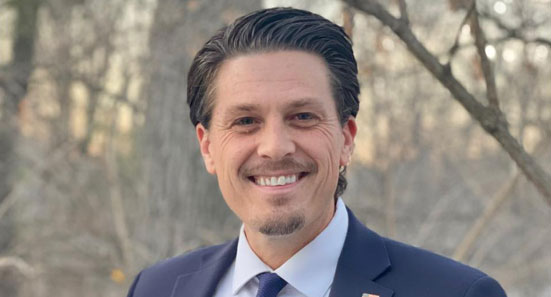
Ok, not everything, but Mayor Ethan Baker talked about how he works to make his city work well and work better.
GoodGovernmentShow.com Thanks to our sponsors:
The Royal Cousins: How Three Cousins Could Have Stopped A World War by Jim Ludlow
- Ourco
- Good News For Lefties (and America!) – Daily News for Democracy (Apple Podcasts | Spotify)
- How to Really Run a City
- As Fate Would Have It (Apple Podcasts | Spotify)
The Good Government Show is part of The Democracy Group, a network of podcasts that examines what’s broken in our democracy and how we can work together to fix it.
Executive Producers: David Martin, David Snyder, Jim Ludlow
Host/Reporter: David Martin
Producers: David Martin, Jason Stershic
Editor: Jason Stershic
Transcription
David Martin: This is the good government show.
Ethan Baker: Everybody in any elected role, whether it’s a governor or whether it’s a county executive commissioner or mayor, that we all share the similar experiences that we feel like at times we just don’t have enough power to do things that we know our communities are constituents really want us to do. We you know, it’s hard work to be in public service and not just in elected office.
However you define public service, but we always need good people in government. And if you can have good people, however you define the good people aspect, you’re going to have a good government. I always say local government especially, probably affects your daily life more than any other form of government, and people don’t often think that a lot of the attention is focused on the federal government, because the news covers that the most little bit on state government, that the local governments are where we deal with your water, where we deal with your streets and roads that you use every single day.
You know that if the public safety, the police and fire EMS, I mean, those are the things that really, really can make or break your life.
David Martin: When I met the mayor of Troy, Michigan, he joked that everything was fine. Good government all around. So I had to ask more questions. And you know what, Troy is doing well, welcome to the Good Government show. I’m Dave Martin. First, help us show the message of good government by liking us and sharing us where we are on Facebook x YouTube, Instagram and Blue Sky.
Please share our show with your friends and reviews where you’re listening and check out our Good Government Show community. Check out our website for the link. Good government in Troy. It all starts with the mayor, Ethan Baker. Okay, he’ll tell you it all starts with the city workers. And as you’ll hear, he says, the people that work for Troy work hard and do indeed work to make sure the community is doing well, he says.
As mayor, he’s worked to make sure the people of the city know what the city’s role is in government, and that means what they can do and what they can do. I met Mayor Baker at the Conference of Mayors annual conference, and now he’s on the advisory board for the mayor. So he’s getting a view of government across the nation.
He’s also looking beyond the U.S. he’s currently the chairman of the Great Lakes Fisheries Commission. The commission is a joint US Canada organization that collaborates on management of this $6 billion fishing industry, that Troy is a Detroit suburb. And we talked about the city’s relationship with Detroit, including the Lions. We recorded this much earlier this year. The Lions didn’t make it to the Super Bowl last year, but they’re still in the playoff picture this year.
Speaking of sports, as part of a new five year parks plan, Troy just built eight new pickleball courts. The city’s also opening up a new dedicated cricket field this year, the first in the Midwest. Mayor Baker says they have a large foreign born population, and he says that provides an excellent way to bring new residents into American government.
So coming up, my conversation with Troy, Michigan Mayor Ethan Baker.
The Good Government Show is sponsored by our that’s o are for our community. Get involved. We hear that all the time from government leaders. Our co-branding with your governments name and logo, your staff and the people you serve are connected and part of your community. From any device your members provide reliable data and meaningful feedback. Ask a question like do we want more parkland or better homeless services?
More engaged conversations come through the our app. Visit our Co that’s ou rco.com and book a demonstration. It was called the War to End all Wars but it didn’t. Three royal cousins, all kings, one from England, one from Germany and one from Russia blundered their way into a war, a completely avoidable war that left millions dead in the trenches across Europe.
Good government show executive producer Jim Ludlow details the blunders, mistakes and bluster that started World War One that didn’t end all wars. The book The Royal Cousins details the events and creates an alternative history. Imagine a World War one never happened. It didn’t have to just read it yourself. Download the book today on Amazon. It’s just $0.99 and a timely look at history.
Wasn’t too good. Government show I have with me Ethan Baker who is the mayor of Troy, Michigan. Welcome to the show.
Ethan Baker: Hey, Dave. Glad to be here. Good opportunity.
David Martin: Glad to have you. Now, I understand that everything’s fine in Troy. There’s no problem. Everything’s great. You’ve solved all the problems. Congratulations.
Ethan Baker: That’s how we did it. We did good government, and we made it perfect in every way. Perfect. Everything’s perfect. We’re very fortunate to have a really well-run city on a number of levels, from city staff all the way throughout the elected officials. And we’ve got great residents and business owners that really keep things on a good place.
David Martin: So when you stepped into the office, there was no problems?
Ethan Baker: No, of course I’ll take full credit for everything that’s happened since said no, full credit. We’re not without problems. We are a city of 90,000 people. So you can imagine there’s there’s always issues that come up. But we have worked really hard to actually stabilize city government to make it more transparent. More just reliably open and and honest.
So people have some faith in government. And we know at the local level that’s probably easier said than done, in a number of ways, because we’re we’re facing things every day. We’re facing our residents everywhere we go.
David Martin: Do people have faith in government?
Ethan Baker: I think they do. In the city of Troy, probably more so than they do with the state of Michigan or the federal government. Okay. And I’d like to take person I would like to take some credit for some of that, because I’ve worked really hard to to always be a positive, factor for the city of Troy and to sure, people share with people what they need to know about the city and also do a lot of education campaigns.
We’ve focused a lot on educating our residents and business owners of what the purpose of local government is, what we can and can’t do, and things that are going on. So when something does come before them, they feel like they know the facts, they have some trust and faith in us, and they know that we’re we’re not trying to mislead them anyway.
David Martin: So educating the population sounds like good government. How did you do it? What did you do?
Ethan Baker: I think a lot of it goes to really just being out there, out in the community, meeting with lots of different groups and groups of people who represent all kinds of different interests and factions. We are about 29% foreign born in the city of Troy.
David Martin: Okay.
Ethan Baker: At this point, which brings an opportunity for us to, often teach, you know, the American form of government to, a population of people who have very different experiences back in their home country. So that’s been a big, challenge, but also an opportunity for us to, to spread our good work and our education programs throughout the city.
David Martin: One of the things you said when you educated people was things that we could do and things we could not do. How did that how do you explain things you cannot do?
Ethan Baker: That’s always a little bit of a challenge. But really, you know, we’re a home rule city in the state of Michigan, which gives us, some flexibility. But a lot of things come from Lansing, our state capital, and we really just don’t have a say on how to do certain things. You know, certainly state statute will trump us on any issues that, don’t give a specific powers under the Home rule law.
So we spent a lot of time trying to say, look, we understand that you’d like us to limit fireworks, for example, to certain time frames or certain days or throughout the year. But we can’t because state law says we have to allow this this much or these days. So that’s just an example. But, it’s a challenge to try to explain to people why we don’t have the power.
They see me as the mayor. They think I can make it happen if they need it or. But, you know, just do this. Yeah. Right. Right. I mean, it’s you I hear different. I’ve heard a couple times even, recently about everybody in any elected role, whether it’s a governor or whether it’s a county executive commissioner or mayor, that we all share the similar experiences that we feel like at times we just don’t have enough power to do things that we know our communities, our constituents really want us to do.
David Martin: Troy is part of the Detroit.
Ethan Baker: Metro Detroit.
David Martin: Metro Detroit. Yeah. Okay. So we all know that Detroit fell in very, very hard times. A lot of industry pulled out. I think that at one point they said that Detroit was actually prairie again. Because there are so many people had left the inner city. How much of that affected Troy, and how do you deal with having, you know, the sort of economic driver for the region as a next door neighbor, more or less not going in the right direction?
And how do you how do you manage that in your city?
Ethan Baker: Well, that’s a really good question. I first, I should say Detroit actually has a had a major resurgence. Managers are doing much, much better than it was 15 years ago, even ten years ago. Yep. And, you know, there’s a lot of good reasons that happened in part of Troy’s success early on, frankly, was due to the demise of Detroit by people leaving the city of Detroit.
They came up.
David Martin: We’re not Detroit.
Ethan Baker: Well, well, in a certain sense, that was part of it, right? People, as the interstate system expanded, people moved up out of the city and into the suburbs and really had a fresh start on a lot of things, and that made a big difference. And so I think the for years there was a big competition between our suburbs like Troy and the city of Detroit.
And, you know, we thought, well, if it was good for Detroit, then it was going to be bad for Troy and vice versa. Today it’s a very different picture. We know that as a region, we all will do better. Frankly, if we’re all doing better in Detroit is actually getting the attention and, respect it needs and deserves.
And it’s helped us as we see more and more, people focus on the good parts of Detroit. You see a lot of national coverage on it. There’s a lot more conferences. There’s a lot more people coming to the city, which then, of course, filters out into our local economy. We our southern border of Troy, is only six miles north of the northern border of Detroit.
David Martin: Okay.
Ethan Baker: So often it feels like a world apart. There’s a lot of bleed over, so if you have hundreds of thousands of people coming into the city of Detroit and really experiencing wonderful things down there, a lot of them are going to come up and stay in our hotels, use our restaurants. We’ve got world class shopping in Troy.
So it’s been a good thing. So I, as the mayor of Troy, I really want to see Detroit do really, really well. And I think what it does. So the way.
David Martin: We are talking in January at the Conference of Mayors in Washington, there’s a playoff game coming up. How are you feeling about the Lions?
Ethan Baker: Lions? We know we’re very excited. I mean, it’s a big, big deal for metro Detroit. Obviously to us.
David Martin: It’s only a couple of years ago they were not the best team in the NFL.
Ethan Baker: It was very recent. That’s very very recent. And you know we’ve got a back. Tonight’s the game. Obviously this isn’t going to air tonight. But we’ve got the Lions playing the Washington Commanders. And it’s going to be wild I was at the Lions game their last home game a couple weeks ago with my son. And it was just a madhouse at Ford Field in a wonderful way.
Really, really fun to see everybody come together and just have a good time for the Lions.
David Martin: And I you know, I know this is a Detroit issue, but they’ve got that downtown complex of Ford Field next to the Tiger Stadium, next to the, hockey and basketball arena. That’s a real you know, it’s a.
Ethan Baker: Sports and entertainment district that really rivals anyone in the country. I think as far as really quality and a good experience, and you can feel it when you’re down there for any of those events. You love the energy on the streets. My son and I parked about 15 minute walk from the stadium when we were there, and it was freezing cold, but we were walking back among, you know, thousands and thousands of people who were kind of overtaking the streets.
David Martin: With silver everywhere.
Ethan Baker: But it was really, truly no, but it really was just the energy was good. And you didn’t have that in Detroit, just not that long ago. I mean, there was a time fairly recently that you didn’t go in there, you didn’t go into the city if it was dark and you certainly didn’t. You know, people talk about we wouldn’t even stop at stoplights in our cars because we were afraid of carjackings and bad things happening.
I mean, it’s a very different Detroit than it used to be, which is great.
David Martin: And how is that helped? Troy?
Ethan Baker: Again, it it keeps us growing. It makes us more attractive. And, you know, some people prefer to live in suburbs, obviously. So. And they like to go into downtown Detroit. If you’ve got a great suburb like the city of Troy and a great city like Detroit doing well again, people are going to take advantage of both opportunities.
David Martin: Is the auto industry based in any part in Troy?
Ethan Baker: We have a lot of auto related industry still here, but we know we don’t have any of the big three or the major. We have a lot of suppliers, obviously, and our economy is really diversified over the years. So we’re not so heavily focused on the auto industry anymore. We have a lot of health care, a lot of them hospitality and retail and just of educational type things, a big mix.
But we certainly do feel the effects of the auto industry doing well or not doing so well in the city of Detroit, just based on the number of businesses that we have that are related.
David Martin: You said you started at City council. What got you involved?
Ethan Baker: Good old neighborhood issues. I started first on my HOA. I really like people. I mean, you know, and you learn things as you go along, and it just kind of felt like a good fit when I started getting involved in the city, city business, I worked really hard. I had young kids at the time. I was concerned about the kind of city they were going to grow up in, and I wanted to make sure it stayed, you know, moving forward in the right direction and gave them the opportunities that a lot of people had, in generations before.
And so I kind of just worked toward that goal. And I’ve worked really hard to do it. And I think my kids are having a good life in the city, and a lot of other residents are, too.
David Martin: You said you were not born in Michigan. What brought you to Michigan? What brought you to Detroit?
Ethan Baker: My, Well, Troy. So this is my wife is from Michigan. She’s our parents actually are in Michigan, now. And when we started having kids, we did not want to raise them in Southern California, where we were living at the time. I grew up in Northern California, okay. And then moved to L.A. to go to school.
But, you know, we had our first baby and we thought, you know, this is okay. But as soon as we had our second one, we said, let’s, let’s go back to Michigan and, and raise kids and really a wonderful place. And my wife’s family was there. So that made.
David Martin: To have slightly better weather in Southern.
Ethan Baker: California. You know, you say that they do, but they don I don’t know, there’s something beautiful about seasons and there’s something beautiful about what would that West, change, positive change. You know, we joke about it and everybody, you know, if you live in LA, there’s some, you know, it’s either super, super hot or mild for the most part.
Sometimes it’s called the rainy, but, you don’t really get to enjoy the weather when you work. You know, when you’re when you’re an adult with responsibilities and you spend, you know, 40 plus hours a week in an air conditioned office, it doesn’t really matter what it’s like outside.
David Martin: And the cherries are better in Michigan.
Ethan Baker: Absolutely right. Absolutely.
David Martin: Do you go to the Upper Peninsula?
Ethan Baker: You know, not not often up to the U.P. it’s pretty far. I mean, people don’t realize how big of a geographic area Michigan is, but certainly we go up to Mackinaw, which is right, you know, in the Mackinaw Straits in between and spend some time up there. And, of course, Traverse City. You’re talking about cherries. It’s a, yes, beautiful part of our state.
And it’s actually really had a resurgence in many ways because it’s Covid. People learned a lot about Upper Michigan up north and Traverse City, and so they’re experiencing an extreme amount of development and growth, probably more so than the locals really want. But it’s a beautiful place.
David Martin: Do you have any issue in your city of of growth and the right growth? And by that I mean development that people want?
Ethan Baker: Absolutely. And I think, you know, one of the downsides of having a good government or having a good city is that people want to be there.
David Martin: Right?
Ethan Baker: And when you kind of max out on space or you you develop pretty much all this there, you know, we’re landlocked. It’s not like we’re expanding out into prairies and everything that it’s there. I mean, we’ve got cities around us. There’s a huge focus on that infill development and what’s good for the community, what’s good for the residents.
And you’ve got competing interests. You’ve got people. Younger families especially, are not even families, but single people who would love to live in Troy for all that it has to offer, but can’t afford to pay for a traditional colonial type home or single family residential. So they prefer more multifamily or even townhomes. But then you have the people who have lived there for years and have these, you know, beautiful tree lined neighborhoods and single family homes who don’t really want apartment buildings or townhomes being built.
You know, nearby where they’ve always had and for example, you know, some woods or parkland or on a corner that’s already busy with traffic. So we face a lot of development type tension on those issues.
David Martin: And how do you deal with that? You’re the mayor. How do you how do you how do you run that?
Ethan Baker: You listen to everybody. But a lot of that is education, right? And you know, you can change zoning laws and you can do things, but none of that moves fast. People. People are learning that, you know, you can’t change that stuff too quickly.
David Martin: You more than anyone, right?
Ethan Baker: But also, you know, the the the interesting thing is it people have a hard time understanding why there’s change in property suddenly and people don’t realize it. You know, some families hold on to land for, you know, decades and then decide to sell it. And a and a proactive developer will come in. And if it’s zoned for, you know, multifamily development or for something different than what’s there now, people have a hard time with that.
But we’ve got private property rights in our country and our city, of course, and that’s a big part of our education component. And sometimes, you know, there we’ve got some different development tools that do both, protect woodlands and trees especially, but also incentivize developers to do things that, will help us out as a city. And some of that, we call it cluster development, for example.
But sometimes we spend a lot of time educating our community. You know, it might be better to have a little bit more density here to save a certain amount of, you know, trees and tree scape than letting them clear cut everything and just build single family homes.
David Martin: That’s a hard thing to sell, though, isn’t it?
Ethan Baker: It’s an extremely difficult thing to sell. But if you can show, if you can show truly what it’s going to look like with a competing plan, often that really does the trick. But again, getting those that information out to the right amount of people and the right people can be a challenge.
David Martin: And I would imagine when you do that, you feel pretty good about what you did that week.
Ethan Baker: When it’s a success and people who were pretty upset or complaining about a development project see it the other way and understand why this is actually better for them, that’s a huge good feeling, a huge success. And of course, the alternative of that is can be frustrating if you can’t make everybody happy in any and any role in government, which is a challenge also.
But we do our best to try to to make sure people understand that we’re doing it for the right reasons.
David Martin: What is your biggest challenge in delivering good government? And Troy.
Ethan Baker: I think it’s similar to what everybody else faces right? Rising costs and everything from, you know, our health care in the city of Troy is going up 9% this next year, which has a real budgetary impact. Sure. Public safety is always our number one priority. I, I think any local government should focus on that, you know, delivering those services at a time when it’s harder to recruit people into those types of jobs, police and fire, that’s always a challenge.
So you find there you’ve got some great police officers and great firefighters, but they’re being stretched thinner than they probably should. So this is the challenge.
David Martin: Of hiring police officers.
Ethan Baker: We’re always hiring police officers. I mean, I think anybody pretty much is that, you know, in a in a position like us because you have we’ve faced retirements and we’ve had a big drop of retirements over the past ten years. And I think that’s probably just generational. Yet a lot of people coming out of the military after Vietnam and in that time period, a lot of people got into public safety.
There’s never been a backfill of that same kind of mindset since.
David Martin: You said you were a lawyer. Did Elvis prepare you to be, an expert on housing and, staffing and, the trees, you know.
Ethan Baker: Not specifically on the issues, but, you know, being a lawyer, we researched a lot as lawyers are good lawyers, too. So I that definitely helped me, try to find the answers and research and research and I always I you I remember campaigning back in 2014, 2015 for this role and I would explain on the lawyer. And my job as a lawyer is to analyze people’s problems and find a solution.
And, you know, it’s a similar thing in government. So I always thought it was kind of a good crossover.
David Martin: Okay, coming up, we’re going to get your real philosophy of government. So think about that.
Ethan Baker: Oh.
David Martin: Once you wrap up this episode of The Good Government Show, give a listen to our friends over at Good News for lefties. This daily podcast highlights news stories that show there’s more good news out there. Other people in government are really trying to do the right thing. That’s good news for lefties. Listen where you’re listening now.
After you get done with this episode, hear more good government stories with our friends at How to Really Run a City for mayors. Kassim Reed of Atlanta and Michael Nutter of Philadelphia, and their co-host, journalist and author Larry Platt talked with guests and other mayors about how to really get stuff done in cities around the nation. Check them out where you’re listening now or through their nonprofit news site, The Philadelphia Citizen.
Dot org slash podcasts. Here we go. This is a good government show questionnaire. The hardest question is the first question how do you define good government?
Ethan Baker: I think good government is a government that works for the people it represents. And I do believe there’s got to be a lot of transparency in government, and people get into trouble when you are not transparent. And also a good government is full of people that are really there to serve, not just themselves. And that’s harder to harder to find these days.
But, you know, we really need to focus on why we’re doing and why are you.
David Martin: Not here for the glory? Is that what you’re saying?
Ethan Baker: Well, you don’t get me wrong. I love the glory like anybody else. That’s what I should glory. But it’s, you know, it’s hard work to be in public service and not just in elected office. However, you define public service, but we always need good people in government. And if you can have good people, however you define the good people aspect, you’re going to have a good government.
David Martin: Okay. Do you have good people working with you?
Ethan Baker: We have wonderful people in the city. Troy. Right, I think, is.
David Martin: It true you solve every.
Ethan Baker: Problem? We solve every problem. I think the strength of our success, though, is the fact that we’ve got great city staff. We’ve had a long history of city staff and department heads who really give their all for our community, and that makes a big, big difference.
David Martin: I know that you’ve solved every problem and everything’s going wonderfully, but how do you decide week to week if you’re doing a good job?
Ethan Baker: That’s a good question. I hope you’re done.
David Martin: Before I go.
Ethan Baker: There. You know, I do.
David Martin: I, I get the big money. Hey, I made it for the glory.
Ethan Baker: Yeah, I know you are. You know, that’s funny. Sometimes, you know, when you’ve done a good job and sometimes you feel things are a little bit off. And I some of that’s just feedback from community members. You know, if, I, I tend to think I’m doing a fairly good job if I’m not actually getting interrupted the grocery store as much or hearing complaints about things.
So some of it’s just measuring statistics on how many emails I’m getting and how much.
David Martin: So if you walk through the Little League.
Ethan Baker: And everyone’s just happy and smile, I know it’s no, I mean that’s that’s a key component of.
David Martin: It. Are you out in the community?
Ethan Baker: Are you everywhere community at.
David Martin: So you said you had kids.
Ethan Baker: With three kids and you know, we’re right. I spent a lot of time in transporting toy businesses. So I see a lot of people on a daily basis.
David Martin: Do you work at Troy or do you work in Troy?
Ethan Baker: I my offices in Detroit too. So, yeah, I mean, I think that’s a big part of it. I get a lot of feedback. Some of the, you know, social media, of course. You tend to see the worst of things or how people are viewing things in social media so that that can be tough sometimes, but even that there’s good nuggets out there.
David Martin: If people don’t like what you’re doing, if they don’t think you’re providing good government, how should they hold you accountable? What should they do to you?
Ethan Baker: Well, I think ultimately, you know, elections are the truest, measure of that. I’m I’m all about open communication. I would love to hear what you’re unhappy with in our city. And we can talk about it and work through it. And often, you know, I again, I joke about our city being perfect, but people make mistakes. Humans make mistakes, right?
And sometimes, you know, a resident can provide a perspective or a business can provide a perspective that helps us do our job better. They share that information with us. I my my guarantee is always to follow up on it and to look through and find, you know, how we can do things better when there is something brought to my attention like that.
David Martin: The people, if they don’t like what your government is doing and the direction you’re taking as mayor, what should they do?
Ethan Baker: Well, I think you see it time and time again with grassroots organization, right? People will rise up. They will form their own groups. They will come to us at public comment. Obviously, you start to see things happen, online or in, you know, in community gathering places. And, and I think that is what the people should do anywhere.
If you’re unhappy with the direction of what your leaders are taking, the best thing you can do is organize to try to educate them on what they’re doing wrong. And if it doesn’t work, you keep going strong and you’ll see that at the federal government, you’ll see it wherever it is.
David Martin: Okay? You’ve been a city councilman. You’ve been mayor for how many terms now.
Ethan Baker: I’m in my second term, so it’s my sixth year. My six.
David Martin: Year. What would you like people to know about government that you now know from the inside?
Ethan Baker: I think honestly, you know, government workers take a lot of flak. You hear about, you know, there’s a there’s a perception that they take advantage of the system or they don’t work very hard. I mean, and I’m tell you, I see government employees who really give their all and aren’t just working government type hours. They take that work home with them and their mind and their stresses, and they’re always trying to make sure the community is doing well.
And I it’s important to, to respect our city employees. And also, I think the other thing is I always say local government especially probably affects your daily life more than any other form of government. And people don’t often think that a lot of the attention is focused on the federal government because the news covers that the most little bit on state government.
But the local governments are where we deal with your water, where we deal with your streets and roads that you use every single day. You know that the public safety, the police and fire EMS, I mean, those are the things that really, really can make or break your life. And and that’s at the local government level. So pay attention to your local elections.
A lot of people will vote in a federal election, and we won’t even know there’s a city election. Our city elections are on off years, so we they get even less attention. It’s really important to pay attention to the candidates that are running and ask a lot of questions. Be involved. Pay attention before you know something happens to you that you don’t like.
That’s the big thing.
David Martin: That’s one of the reasons why we put the show together was to highlight the fact that there are people who do get up in the morning and they don’t make the papers, and they don’t get all the glory that you get, but they work hard.
Ethan Baker: Extremely hard. And that’s the best thing about our society and our forms of government, is that there are people who work day in and day out to make sure you have a better life.
David Martin: So we should keep doing this show.
Ethan Baker: Keep doing.
David Martin: It. Okay, good. All right. So you make news in your town, are you is there a local paper or does the local Detroit papers cover you? What do you read? Where do you get your news from? And do you read about yourself?
Ethan Baker: I do, yeah. We have a we have a local paper. It’s a weekly paper. So it’s not a big circulation in the city of Troy are Detroit and, Detroit Free Press and Detroit News. They cover Troy a fair amount because we are a powerhouse in the region. So I’ll show up in there sometimes. And then our local, TV affiliates, which I can’t remember off the top of my head.
What what how big the market is from a national standpoint. But our, you know, our local channels coverage really quite a bit. And we have some great journalists locally in metro Detroit that.
David Martin: Have a good relationship with the local press.
Ethan Baker: I do thank you. I think that’s important. And, you know, it’s a mistake. You can you can complain about the press, but I think you get far better. You can go much farther if you’re if you have a relationship with them because, yeah, they’re going to cover the bad that may happen, but you also want them to cover the good.
David Martin: Sure. And you know, there’s no you speaking say antagonistic with the local paper because they’re, they’re they’re not going away. Right.
Ethan Baker: They’ll win. Yeah.
David Martin: So when you were growing up, did you envision, running for office? Did you think of yourself as going into politics or going into government or running for anything?
Ethan Baker: No, not at all. I mean, I, I mean, I think, you know, I at one point I wanted to be a quarterback like Joe Montana. So that didn’t happen. Sorry. Yeah. I, I, you know, I did some theater and some, performance type stuff, but even that wasn’t really that. I use that now more than people probably realize, but I didn’t really get involved in or didn’t think I would be a candidate for anything.
David Martin: Were the movie business when you were living in Southern California?
Ethan Baker: I did some acting. Did you really? Yeah. I don’t know, like, that’s like the reasons I was down there. All right. I was not a successful actor, so I had.
David Martin: A fall back, lost.
Ethan Baker: I it worked out okay. But, you know, you know, it never really occurred to me, I always thought, politicians were something different than they were. And I grew up, you know, in a poor household, a single mom, some issues and things. So it never really. I didn’t seem like as a kid or as a young person, that I was even growing up the way that I thought our politicians did.
David Martin: Okay. Are you a politician?
Ethan Baker: Yeah, I guess I by the nature of it, I hate that word. But of course, you know, it’s silly to run away from it. And, you know, the longer you do things, the less you know, you’re not so much of a citizen politician anymore. You become part of the establishment or as the problem, as people like to say.
But there’s something to be said about experience problem.
David Martin: You keep saying there’s no problems.
Ethan Baker: Oh, there’s a lot of interesting perception out there about what people think of.
David Martin: So, I been to Detroit. I have not been to Troy. I know one of the big, culinary dishes in the Detroit area is a Cody. Yeah. If I’m coming to Troy, what do we have? Where are we going? What’s the dish? That’s that’s ultimate. Troy.
Ethan Baker: Gosh, we’ve got so many restaurants. That’s right. Oh, truly, we’re known for our restaurants and everything from corporate steakhouses down to mom and pop kind of whole on the wall restaurants. We have some really great, middle Eastern cuisine and, like, Southeast Asian Indian food that I really I couldn’t pick just one. There’s, there’s a few of them are really are good.
And that’s part of our foreign born population. But, come eat and try. You could spend a week.
David Martin: And eat.
Ethan Baker: A different restaurant, a different type of food, three meals a day, and still have plenty to choose from on your next trip.
David Martin: Where do you go?
Ethan Baker: You know, I try to, we go through phases. My wife and I are my family, and I. I mean, I love some of the, I love some of the Middle Eastern places that serve some really good bowls and shwarma and things like that. I, I like that other times, you know, there’s some diners. There’s a place called known as grill that’s got great huge portions for a reasonable price and all that.
Okay. You can make two meals out of and just good people, good family run business.
David Martin: So this is the good government show. And we always try to bring it back to good government. Give me an example of a good government project you were able to put together.
Ethan Baker: I think we’ve done a really good job with some communications planning lately, and I think that goes to good government communications is so big. We, we hired a new communications director. Schorr. I didn’t really have one for a number of years. I really never formalized that position. It was kind of always a hodgepodge of different people. But we knew the value of bringing somebody, and that was really dedicated to communications and communication strategy and planning for the city.
Because again, I go back to that. Education is so important. So while that’s not a specific project about, you know, development project or something, although I’ve got some of those too. Just the fact that we’ve really.
David Martin: I can certainly get behind having a communications director.
Ethan Baker: I like the communications director and community engagement focus that, this Courtney is her name is broad, has been really great, and I am already we’re already seeing the rewards, of just people being more engaged, but in a healthy, positive way.
David Martin: So maybe Courtney will listen to the show and tell everybody else, too.
Ethan Baker: I’m hoping so.
David Martin: You all right? Ethan Baker? The mayor of Troy, Michigan. Thank you very much. Pleasure chatting.
Ethan Baker: Thank you. I appreciate it.
David Martin: And the city of Faith, Texas. They don’t leave good government up to, well, fate. Join me in for another show I host. As fate would have it, my co-host is David Billings. The former mayor of fate who shares his opinions and thoughts on what good government is and fate. As you’ll hear, they don’t leave it up to fate.
So listen right here we are listening now to. As fate would have it.
See, I told you, everything is just fine. And Troy. But I do like his focus on local issues and talking to a citizens that can only lead to good government, or at least keep government moving in the right direction. And he’s right when he says we all need to pay attention to local elections. While the big national elections do get more press, it’s the local elections that have a more direct effect on all of our lives every day, day in, day out.
So it’s good to hear that Mayor Ethan Baker is out and around and talking to people in Troy, Michigan, because that’s good government. Well, that’s our show. Thanks for listening. Please like us and share with your friends and review us right here where you’re listening, and check out our website. Good government show.com for extras. Help us keep telling stories of good government and action everywhere.
Join us again for another episode right here. I’m Dave Martin and this is a good government show.
The Good Government show is a Valley Park production. Jim Ludlow, Dave Martin, that’s me and David Snyder are the executive producers. Our show is edited and produced by Jason Stershic. Please subscribe, then share and like us and review us. That’s the best way to make sure we’re able to keep telling these stories of our government working for all of us.
Then listen to the next episode of The Good Government Show.
Narrator: This podcast is part of the democracy Group.
**This transcription was created using digital tools and has not been edited by a live person. We apologize for any discrepancies or errors.